



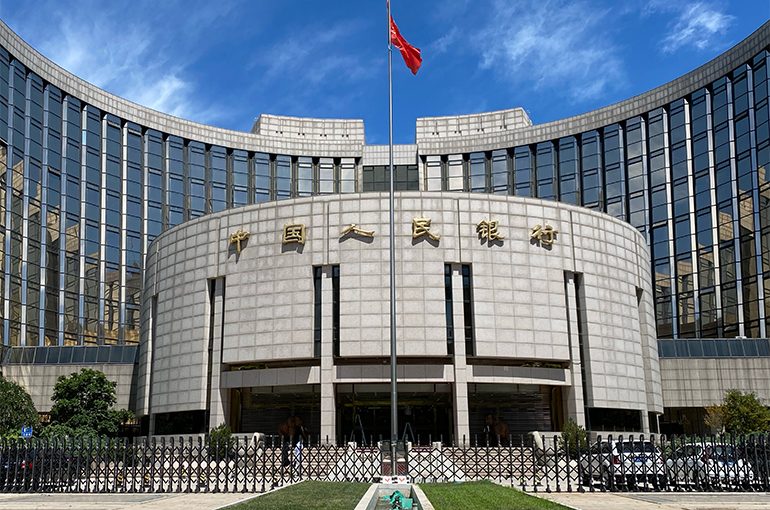
 Chinese Gov't Bond Futures Fall After PBOC Says to Borrow Bonds From Dealers
(Yicai) July 2 -- Chinese government bond futures dropped after the People's Bank of China said it will borrow government bonds from primary dealers to maintain market stability, following concerns over the recent dip in bond yields.
The most active contract for 30-year government bond futures closed down 1.1 percent at CNY108.44 (USD14.91) yesterday, after earlier jumping 0.4 percent to a record high. The most active 10-year government bond futures fell 0.4 percent at CNY104.92, after rising 0.1 percent also to a record high.
The PBOC will likely sell the borrowed government bonds in the secondary market to stabilize the recent unexpected overheating of long-term special government bonds, according to industry experts.
"To maintain the sound operation of the bond market, the PBOC decided to borrow Chinese government bonds from primary dealers of open market operations in the coming period, based on prudent observation and assessment of the current market situation," China's central bank announced on its website yesterday.
The PBOC has taken frequent actions to manage expectations for long-term bond yields and warned of risks since April, Governor Pan Gongsheng noted at the Lujiazui Forum on June 19. Attention must be paid to the maturity mismatch and interest rate risks of a large number of medium and long-term bonds held by some non-bank entities, he added.
However, market institutions are still scrambling to buy long-term bonds, and long-term bond yields have repeatedly dropped below the 2.5 percent interest rate floor.
There has not been enough effective financing demand this year, resulting in an asset deficiency to some extent where some small and medium financial institutions find it difficult to lend money effectively, said Dong Ximiao, chief researcher of China Merchants Bank-China Unicom Consumption Finance.
In addition, market credit risks have risen, and financial institutions are under great pressure of asset quality reduction, Dong noted. Against this backdrop, government bonds are backed by national credit and thus are safe, becoming an important option for financial institutions to allocate assets, he added.
A 2.5 to 3 percent yield is a reasonable range for long-term government bond yields based on the normal operation of the market in recent years. But, medium- and long-term government bond yields have often deviated from the policy rates. The yields of 10-year and 30-year government bonds fell to 2.21 percent and 2.43 percent, respectively, on June 28, with the 10-year government bonds yield hitting a 20-year low.
The PBOC can sell government bonds it borrows from primary dealers in the open market in the secondary market to lower the prices of government bonds and boost government bond yields, according to Wang Qing, chief macro analyst with Golden Credit Rating International.
The market monitors how many government bonds the PBOC will borrow, when to sell them, and the impact on long-term government bond yields. Some investors believe the central bank will borrow a limited number of government bonds, which will also have a limited impact on the market.
The PBOC did not say it would borrow government bonds only once or it would not use other policy tools to guide long-term government bond yields to rise, noted Zhang Xu, fixed-income chief analyst of Everbright Securities. If the bond yields fail to follow the monetary authority's expected trend, it will be reasonable for the bank to borrow and sell government bonds again or use other policy tools, he added.
Editor: Martin Kadiev





