



 Chinese Hospitals Reintroduce Online Diagnosis, Treatment as Covid Cases Surge
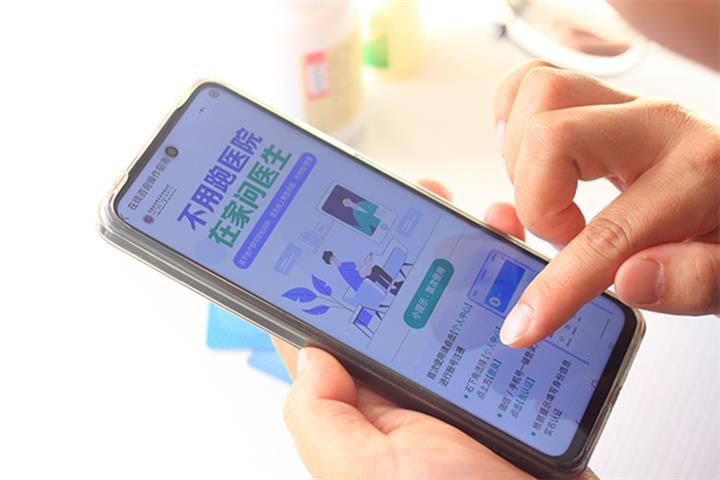
(Yicai Global) Dec. 15 -- Many hospitals around China are starting to offer internet-based first-time diagnosis, treatment and prescriptions again to people who think they have caught Covid-19, following a previous ban on such services, as cases spiral amid a relaxation of pandemic prevention measures.
Peking University Third Hospital, the Affiliated Hospital of Shandong University of Traditional Chinese Medicine and online medical platform Guizhou Yunzhong Hospital have all said that people can receive both initial and subsequent diagnoses online, according to media reports. Prescriptions will also be issued online and drugs delivered to patients’ homes.
The Chinese government relaxed its rules on Dec. 12 to avoid putting overwhelming strain on medical resources as the number of cases jump. Prior to this, the National Health Commission stipulated that first-time diagnosis and treatment of suspected Covid-19 patients should not be carried out online and people could only do online consultation for return visits.
“As the pandemic continues to spread, we have shifted from social-level management and control towards professional prevention. This puts great pressure on medical institutions,” Chen Qiulin, deputy director of the Chinese Academy of Social Sciences’ research center for the development of the healthcare industry, told Yicai Global previously.
To avoid excessive strain on hospitals, the online diagnosis and treatment of symptoms similar to the novel coronavirus are being made available, and the previous ban on first-time diagnoses has been lifted, he added.
The Fifth Affiliated Hospital of Southern Medical University in Guangzhou launched its digital hospital yesterday. However it is only offering diagnosis and treatment to suspected Covid-19 patients, and will not issue prescriptions online during the first visit
While Internet-based diagnoses and treatments are convenient, the National Health Commission has emphasized that doctors should advise patients to visit brick-and-mortar hospitals for further treatment, if their condition deteriorates or if they happen to have other conditions that cannot be easily diagnosed or treated online.
Editors: Zhang Yushuo, Kim Taylor





