



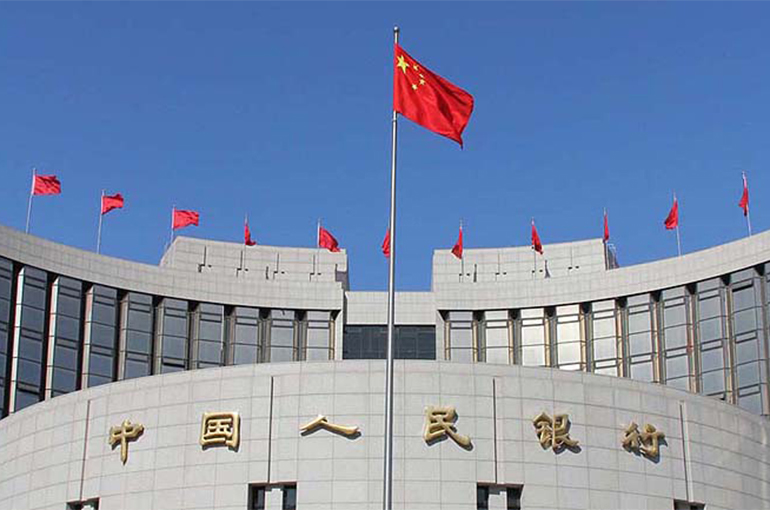
 Chinese Stock Markets Spring Up After Central Bank's RRR Cut
(Yicai) Jan. 25 -- The Chinese mainland’s two key stock markets rebounded after the country’s central bank announced it will lower the reserve requirement ratio for the first time this year by double the amount of the cuts in the past two years.
The Shanghai Composite Index jumped 1.6 percent as of 10.35 a.m. today, after closing up 1.8 percent yesterday to reverse a 1 percent drop. The Shenzhen Component Index rose 1 percent as of the same time today, after closing 1 percent up yesterday.
The People’s Bank of China will trim the RRR for financial institutions by 50 basis points from Feb. 5, Governor Pan Gongsheng announced at a press conference yesterday. In the past two years, each RRR cut was 25 bps.
China’s average RRR is 7.4 percent at the moment, meaning that there is still ample room for cuts compared with major international economies, Pan said. But according to the PBOC’s website, the RRR will average 7 percent after the reduction on Feb. 5.
The RRR is an efficient tool to supplement liquidity to the banking system, Pan noted, adding that the move is expected to inject about CNY1 trillion (USD140 billion) of long-term liquidity into the market.
The Chinese mainland stock markets have accelerated their decline since the beginning of the year. On Jan. 22, the State Council, China’s cabinet, proposed at an executive meeting to implement stronger measures to stabilize the capital market and boost investor confidence.
The doubled RRR cut compared with those in the past two years exceeded expectations and implied a significant increase in the counter-cyclical adjustment of monetary policy, which will drive a rapid growth in credit issuance in the first quarter, Wang Qing, chief macroeconomic analyst at Golden Credit Rating, told Yicai.
The monetary policy will also play an important role in the next step, as the government bond issuance will speed up, and the infrastructure investment may maintain a fast growth of about 6 percent in the first quarter, Wang predicted.
The PBOC will also cut the refinancing and rediscount interest rates for agriculture and small enterprises by 25 bps to 1.75 percent from today in an effort to reduce comprehensive financing costs, Pan pointed out yesterday.
The cuts in refinancing and rediscount interest rates will help reduce the loan prime rate, Pan said. Market participants generally expect the Federal Reserve to change its monetary policy, which is also conducive to China’s expansion of monetary policy maneuvers, he added.
The PBOC may cut the medium-term lending facility rate by 10 bps to 20 bps in the short term, which will lead to synchronized cuts in the one-year and five-year LRP, effectively stimulating consumption and investment demand, Wang noted.
Editors: Dou Shicong, Futura Costaglione





