



 Colombia's Energy Transition Opens Door for Chinese Firms to Enter Latin America
(Yicai) April 1 -- Colombia, a leading global exporter of coffee and flowers, has been promoting its economic transformation, particularly in the energy sector, bringing new opportunities for Chinese photovoltaic and electric vehicle firms looking to expand into Latin America.
Colombia's energy transition direction is quite clear, with the key to the market for new energy companies lying not in short-term trends, but in long-term policy orientation and legal frameworks, Bao Mingqian, head of international business process management at Jinko Power Technology, who has years of experience in the country, told Yicai at the Opportunities From Colombia's Sustainable Development multilateral matchmaking event held as part of the inaugural Overseas Investment Fair in Shanghai from March 25 to 28.
Colombia's economy has maintained a steady growth trajectory over the past decade, ranking it as the fourth-largest in Latin America, following Brazil, Mexico, and Argentina.
A country's clear strategic positioning in optimizing its energy structure, promoting green development, and supporting renewable energy provides the essential conditions for long-term investment, Bao noted.
Solar Energy
Colombia has traditionally relied on hydropower, which accounts for about 70 percent of its electricity generation. However, the drawback of this energy source is that it can lead to electricity shortages during dry seasons.
Given Colombia's abundant sunlight resources, solar energy can serve as an effective supplement, so the government has implemented various policies and regulations to promote the development of renewable energy.
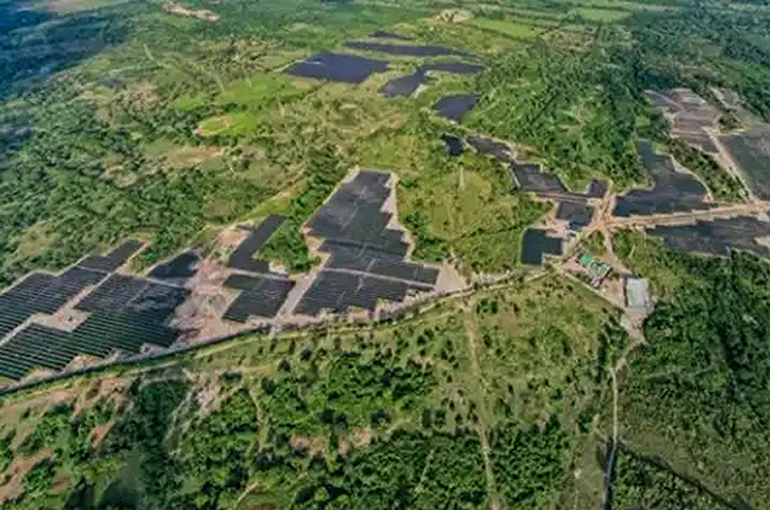
The 148 megawatt PV project of Power Construction Corporation of China, or PowerChina, in Escobales was fully connected to the grid earlier this month, becoming the largest PV power station built by a Chinese company in the South American country.
For companies venturing overseas for the first time, Colombia should be more than just a single project opportunity, Bao said. More importantly, it can help businesses establish their first localized management system in Latin America, Bao pointed out.
EVs
The Colombian government will promote the gradual replacement of about 54,000 taxis with electric vehicles to accelerate the green transformation of the country's transportation sector, President Gustavo Petro said in January.
Driven by government incentives and an increase in consumer awareness of environmental protection, EV demand in Colombia has been rapidly growing. Chinese brands, including BYD and Great Wall Motor, have significantly grown sales and brand penetration in the market.
BYD's Colombia sales surged 137 percent to 1,142 new cars in February from a year earlier, ranking seventh in the market, according to data released by the country. Tesla sold 296 units, leaving it out of the top 10 list.
In addition, Chinese EV brands hold a dominant position in Colombia's pure electric bus market, with thousands of their units running on the streets of Bogotá, Medellín, Cali, and other cities.
Other Opportunities
Chinese companies have also made significant achievements in infrastructure construction in Colombia. For example, the Bogotá Metro Line 1 is the largest single relevant public-private partnership project invested by Chinese firms in Latin America.
The elevated line, the first metro in the capital of Colombia, uses Chinese technology and trains. It is expected to significantly ease local traffic congestion when it becomes operational in 2028, helping to realize the country's 80-year "metro dream."
Editor: Martin Kadiev





