



 ConnectAI Takes Center Stage at MWC 2026 as Focus Shifts From Big Models to Real-World AI
(Yicai) March 3 -- ‘ConnectAI’ is in the spotlight at the 2026 Mobile World Congress, which kicked off in Barcelona yesterday, as the industry focus shifts from generative artificial intelligence and ever-larger models to agent-based and physical AI applications.
AI is no longer being showcased on its own, but is being placed in real-world scenarios, such as being integrated in enterprise workflows, embedded in device systems and involved in actual execution, rather than just being talked about on a conceptual level.

In line with this trend, conference organizer the Global System for Mobile Communications Association is hosting discussions at the Fira Gran Via exhibition center on agentic AI systems, AI services capable of autonomous decision-making, and AI-native capabilities for telecom operators.
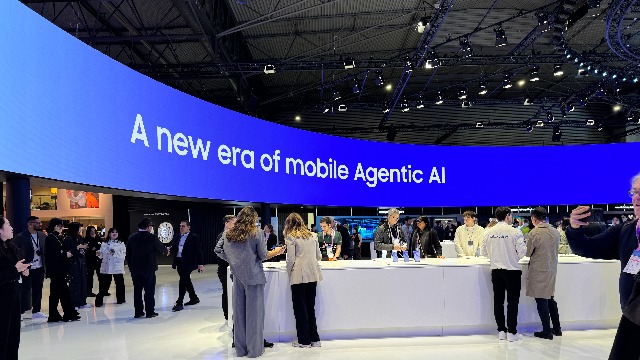
This change can be directly observed on the exhibition floor. Smartphone makers still have a big presence, but the focus is no longer on individual handsets. Many manufacturers are highlighting AI capabilities, multi-device collaboration and integration with other hardware. Samsung is showcasing Galaxy AI and its cross-device ecosystem, where the phone acts more like a gateway than the main attraction.

AI is also reshaping discussions in the telecom industry. It will be too naive to assume that Europe will continue to have stable access to the most advanced AI capabilities over the next decade, said Marc Murtra, chief executive officer of Spain's Telefónica. He believes that Europe needs to scale up, accelerate regulatory processes and hike investment in autonomous capabilities and talent. In this context, AI is no longer just a product but is being discussed as part of broader industrial strengths and competitiveness.
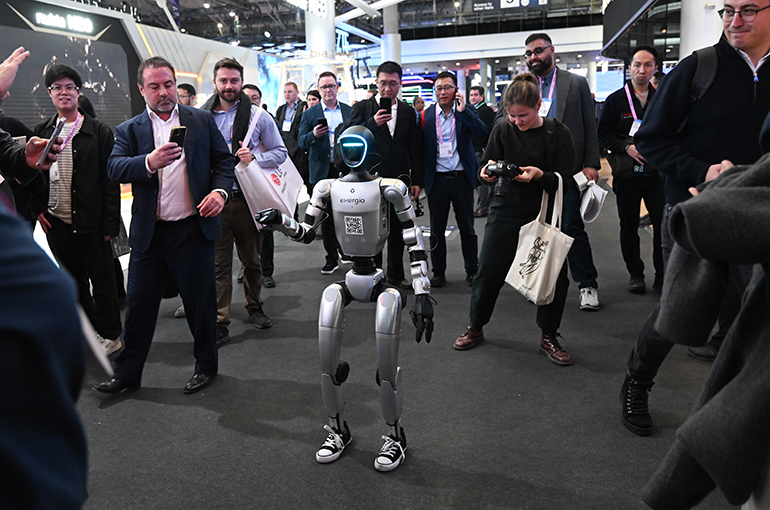
In the robotics section, there is a noticeable increase in humanoid robots, many of which come from Chinese manufacturers. Some, like Unitree Robotics, already have international recognition, while there are other lesser-known Chinese brands making their European debut. People speaking Chinese can often be heard in the hall, and Chinese exhibitors have a strong presence.
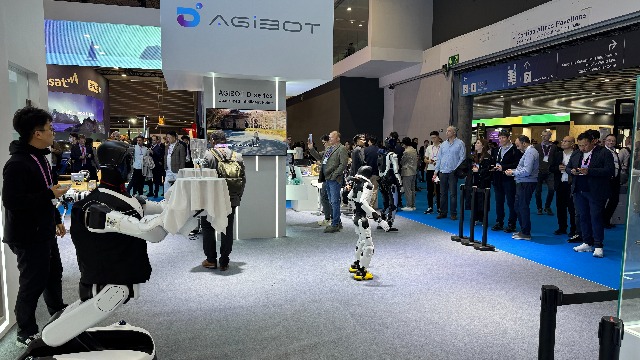
Chinese robots have a clear advantage in price and performance, Joan Melchor Lladó, founder of the Spanish association Aperta Robotics, told Yicai. There are relatively few European robotics firms, while US products tend to be more expensive. He has purchased two humanoid robots made by Chinese firms for testing in offices and he has yet to see US tech giant Tesla’s humanoid robots being deployed in real-world scenarios, he said.

In the drone sector, Chinese drones hold an “absolute dominant” position in both the industry and the market, making them hard to beat, said Carlos Matilla Codesal, CEO of Spanish drone maker FuVeX. However, European drone industry professionals like him are not giving up. Instead, they are focusing on collaboration and promoting their own long-range and hybrid-power industrial solutions while working closely with Chinese suppliers and partners. China’s strengths in industrial manufacturing and supply chains remain essential for their product development.
Editor: Kim Taylor





