



 China's AI-Skilled Job Postings Triple in Week After Lunar New Year Break
(Yicai) March 5 -- The number of job roles explicitly requiring proficiency with artificial intelligence tools more than tripled in the first seven days following the end of the Chinese New Year holiday from a year earlier, boosted by the launch of multiple new applications during the period.
Job openings with AI skills as a must surged 215 percent from Feb. 24 through March 1, according to the latest Talent Supply and Demand Report released by recruitment platform Liepin. The average annual salary for such positions reached CNY273,400 (USD39,635), generally higher than that of roles with no such demands.
Technology-driven development will be the main theme of this year's recruitment based on signals from the first workweek, Liepin said. The deep integration of AI and high-end manufacturing will continue to drive structural growth, keeping demand for technical positions high.
In addition, companies will increasingly prioritize composite, digital, and efficiency capabilities, leading to more detailed job descriptions and refined competency requirements. Competition for recruitment efficiency will also intensify.
AI proficiency is no longer limited to technical roles, but is rapidly spreading to product, operation, creative, and other functions, becoming a general workplace competency, the report said.
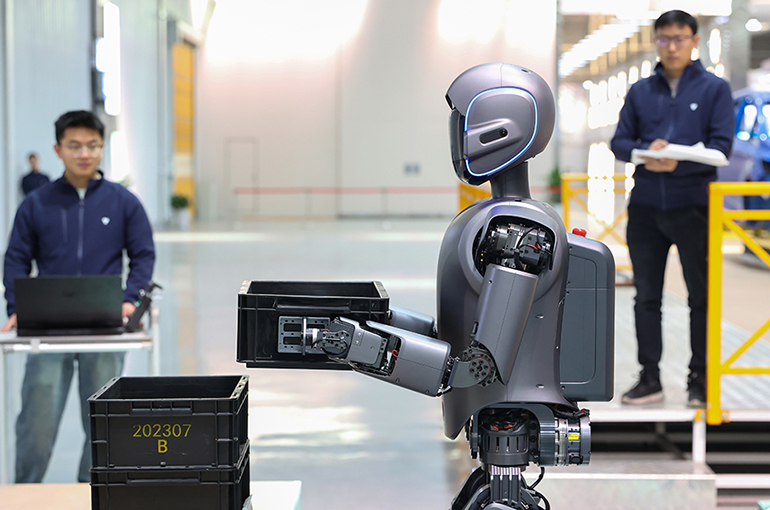
New job openings in the embodied intelligence sector rose 74 percent last week from a year ago, far exceeding the industry average, according to Liepin's big data. The average annual pay of CNY333,800 continues to attract outstanding talent to this cutting-edge area.
Embodied intelligence is no longer a single technical concept, but is deeply integrated with autos, manufacturing, logistics, and other real industries, Liepin noted. Demand for workers in hardware manufacturing, core algorithms, and basic components has seen explosive growth, so firms must formulate targeted talent strategies to cope with the situation.
Shanghai, Shenzhen, and Beijing ranked top in terms of the proportion of new job openings due to their comprehensive strength, remaining the core recruitment hubs. However, major central and western cities such as Wuhan and Changsha are growing rapidly.
Overall, talent recruitment is accelerating to spread from first-tier cities to surrounding satellite cities and industrial belts, optimizing the spatial allocation of talent resources and providing new opportunities for industrial upgrading and talent development in different areas.
Several new big cities, including Wuhan, Chengdu, Chongqing, Xi'an, and Zhengzhou, have seen rapid economic development and population agglomeration, Peng Peng, executive president of the Guangdong Province Society of Economic System Reform, told Yicai. They are transport hubs with rich cultural heritage, many universities, sound education and medical care, abundant job prospects, and lower living costs than first-tier cities, attracting more and more talent, Peng said.
Editor: Martin Kadiev





