 Developing Sustainable Fuels Is China’s Next Step in Decarbonization Push, WWF Climate Chief Says
(Yicai) June 15 -- As China takes a leading role in the global energy transition through advances in renewable energy and electric vehicles, the next key step toward achieving its dual-carbon goals will be developing sustainable fuels to decarbonize the shipping and aviation sectors, according to the head of climate and energy practice at the WWF.
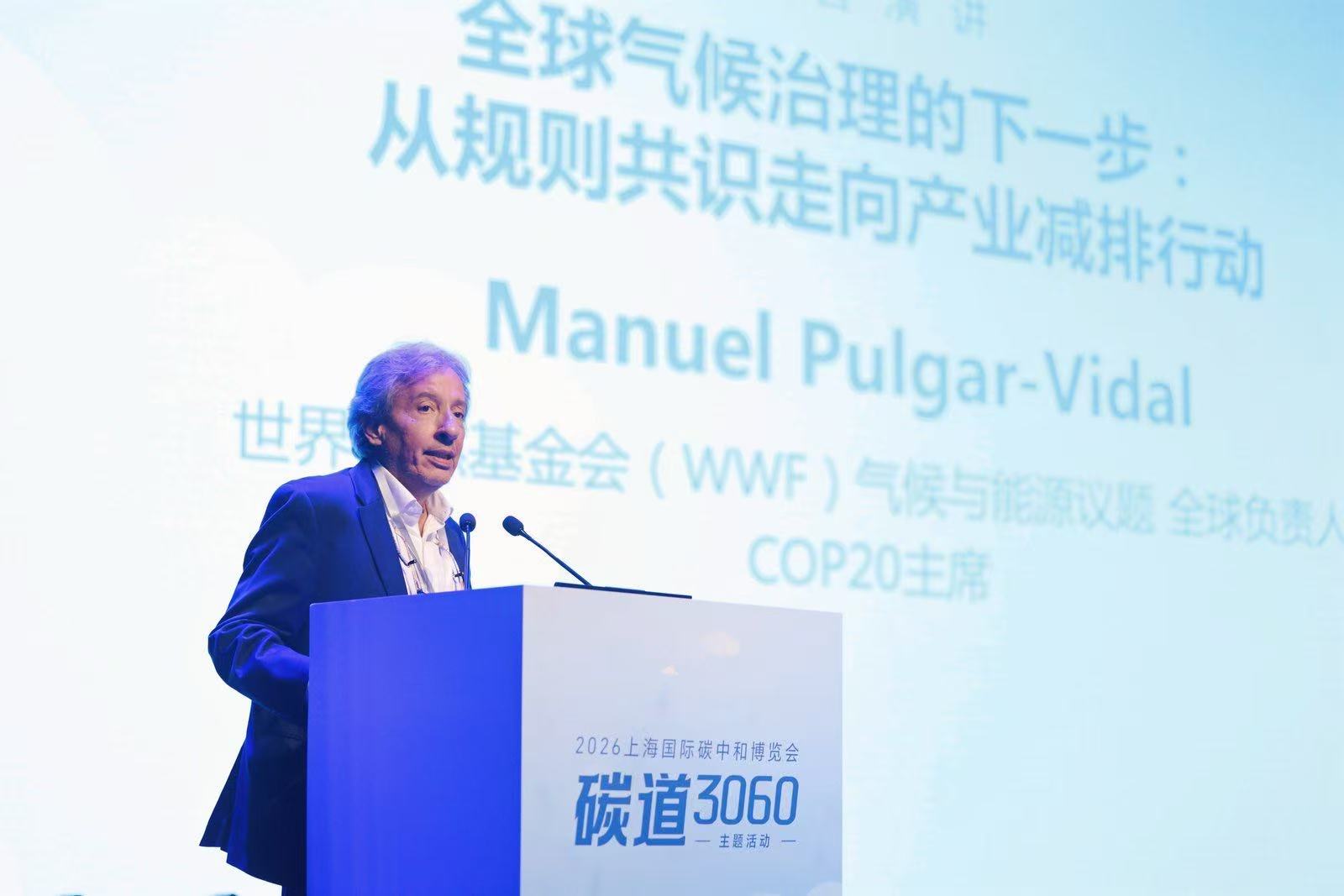
“China can develop sustainable fuels based on its existing strengths. The rapid deployment of wind and solar power has made abundant green electricity available, which can be used to produce green hydrogen and ultimately synthesize e-fuels.,” Manuel Pulgar-Vidal, who previously served as Peru’s environment minister, told Yicai at the “Carbon Path 3060” event in Shanghai on June 11.
At the event, Pulgar-Vidal, representing WWF, joined partners including China’s largest shipping company COSCO Shipping and Shanghai Jiao Tong University in officially launching the Initiative for Building an International Sustainable Fuel Coalition. The coalition aims to promote in-depth cooperation between industry, academia and social organizations to accelerate the research, development and commercial application of sustainable fuels.
Shipping and aviation are two of the most energy-intensive industries and among the most challenging to decarbonize, Pulgar-Vidal said. The difficulties are related to costs, as high investment is needed to develop sustainable fuels for ships and planes, and the prices of sustainable fuels are yet to compete with those of fossil fuels. Technological development is also needed to build ships and planes that are able to use more sustainable fuels, he added.
China has demonstrated its ability to address these difficulties as it has a large consumer base and extensive experience in developing green technologies, Pulgar-Vidal said. Renewable energy used to be expensive, but prices came down after China started to develop the technology, and now people around the world have more access to green energy.
“This is a good example that sometimes we do believe that it could be almost impossible to achieve an objective, but then we realize that when we insist, that is possible,” he said.
Still, more work is needed for China to achieve its dual-carbon goals, which is peaking carbon emissions by 2030 and reaching carbon neutrality by 2060, and the best way to do this is if there is collaboration across all sectors, Pulgar-Vidal said, adding that he expects more partners to be invited to join the coalition, including those from the aviation and steel sectors.
As the world’s leading organization in protecting biodiversity and promoting sustainable development, Switzerland-based WWF has expanded its footprint in China over the last 46 years, working to protect endangered species like the giant panda and wild tiger, and helping local governments to establish nature conservation reserves and draw up ecological policies.
Editor: Kim Taylor