



 [Exclusive] China-US Ties Prove More Resilient Than Expected, Tsinghua Scholar Says
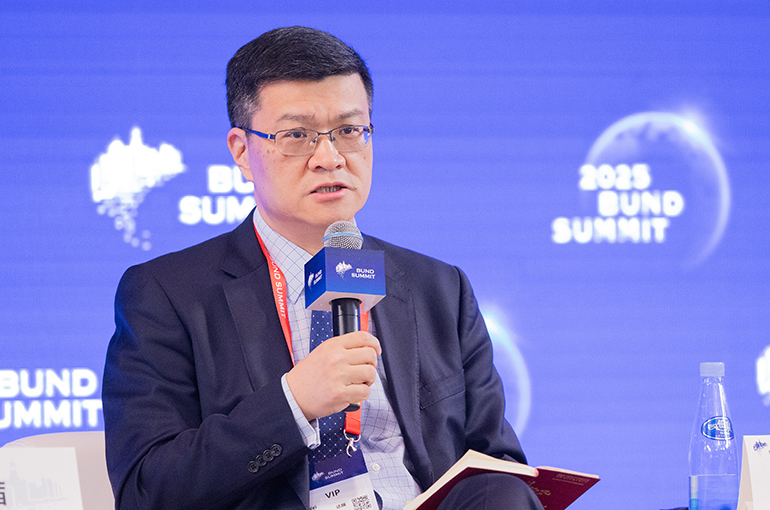
(Yicai) Nov. 10 -- The China-US relationship is demonstrating greater resilience than many people had anticipated, according to Da Wei, director of the Center for International Security and Strategy at Tsinghua University and a professor in its Department of International Relations.
The US midterm elections, in which the Democratic Party has regained control of both the Senate and the House of Representatives, have introduced new variables into the future direction of US policy toward China.
For Chinese companies going global, the key challenge is how to establish a deeper local presence, genuinely integrate into local markets and develop mutually beneficial, win-win business partnerships.
Meanwhile, competition between major powers in artificial intelligence continues to intensify, even as opportunities for cooperation emerge. The future of collaboration involving China, the United States and the wider international community is likely to evolve in new ways.
Below are excerpts from Yicai's interview with Da.
Yicai: Despite several rounds of trade tensions between China and the US, bilateral trade volume remains at a relatively high level. How do you explain this resilience?
Da Wei: The resilience of China-US economic relations is stronger than we had anticipated. At one point, many people in the US may have believed that economic decoupling from China was both possible and manageable. However, experience has shown that economic confrontation and decoupling come at an extremely high cost. Both sides have recognized this, and the US in particular has come to understand that this is not a viable path.
I believe the mainstream view in the US has now shifted towards the recognition that China and the US cannot, and do not need to, completely decouple economically.
In some cases, decoupling can even be self-defeating for the US. This is particularly true in high-tech industries, where severing economic ties with China does not necessarily serve US interests.
I would argue that much of the decoupling that was going to happen has already taken place. The economic ties that have remained intact over the past eight years are likely to continue to stay connected. In fact, if the economies of both countries perform well, bilateral trade and investment could even increase. That remains a possibility.
Yicai: The wording of US policy toward China keeps changing. What do you see as the real logic behind this? Or is it simply a case of adjusting to circumstances and taking things step by step?
DW: I think the overall logic is still clear. Whether we talk about decoupling or de-risking, I personally believe that unconditional globalization does have problems. Unconditional interdependence has problems as well. That was a view specific to a particular era.
Today, everyone is recalibrating. You need a balance, so there must be a balance between security and development, and the boundary between security and development needs to be defined.
Yicai: The US has imposed tariffs on multiple countries, while progress on World Trade Organization reform remains slow. Global trade rules are clearly undergoing changes. For China, which is deeply integrated into globalization, does this round of changes present more challenges or does it also create opportunities to reshape the rules?
DW: I believe the challenges outweigh the opportunities, at least initially. In the past, we operated in a relatively favorable environment for globalization, and China was still in the process of becoming more deeply integrated into the global economy. We also hoped that, through this integration, Chinese companies could gradually move up the global value chain.
However, the current environment is no longer as supportive. That is why I see the challenges as the more immediate concern.
There are opportunities as well, but realizing them will require action. For example, China needs to consider how to resolve disputes and maintain cooperation with Europe, Southeast Asia and other countries under the current circumstances. The rules and frameworks for future cooperation will emerge through these interactions.
However, these issues still need to be negotiated. My impression is that we are at a relatively early stage of this process.
Yicai: The European Union is also pushing for de-risking, and with the frictions between China and the US, do you think global supply chains have already shifted from “efficiency first” to “security first”?
DW: In the past, efficiency was definitely the priority. Of course, now everyone agrees that security is important. But if you put too much emphasis on security, it becomes too costly. So sooner or later, we will have to seek a new equilibrium point.
The old equilibrium was one in which you could say it was 100 percent efficiency and zero security. Now we may need to find a new equilibrium. I don’t know whether it will be 70 percent development and 30 percent security, or something else. But in any case, you need to find a new balance. China and Europe are clearly in that process now.
Yicai: Both China and the US are investing heavily in artificial intelligence. Could AI become a new frontier where competition and cooperation coexist? Is there room for dialogue on AI safety and governance?
DW: I believe AI has already become the most important issue between China and the US. Although the two countries are competing in many areas, they have also begun engaging in dialogue.
Competition in AI is particularly intense, and I expect it to become even more so in the future. From a certain perspective, the China-US AI rivalry is almost a zero-sum game, which leaves little room for negotiation.
At the same time, however, AI also brings many challenges. For example, there is an issue that has attracted considerable attention in recent discussions, which is whether AI could become uncontrollable.
Another is preventing the malicious use of AI. For example, it could be misused by companies, or by non-state actors, whether terrorist organizations or certain individuals, who could exploit the technology to invade personal privacy or generate illicit profits.
In fact, both China and the US have common interests in addressing these risks.
I believe that future negotiations between the two countries on AI governance will increasingly focus on these areas of shared concern.
Yicai: Looking ahead over the next three to five years, what will be the most certain trend in China-US relations? Which uncertainties should be watched most closely?
DW: I believe the most certain trend over the next two and a half years, or the remainder of the Trump administration's term, is that both China and the US will seek to stabilize bilateral relations.
The outcome of the US midterm elections, with the Democratic Party gaining control of the House of Representatives and both chambers of Congress, will have implications for US domestic politics. These developments will also affect strategic stability between China and the US.
Over the longer term, much will depend on who becomes the next US president.
In the short term, particularly during the first year of a new administration, there could be significant challenges for China-US relations.
Nevertheless, I believe that after a year, or perhaps even two years, bilateral relations will stabilize.
Editor: Kim Taylor





