



 Foreign Coffee Brands Are Upbeat on China's Specialty Coffee Market
(Yicai) April 3 -- Many overseas coffee brands express optimism about China, especially regarding specialty coffee demand, while conducting market testing during an international exhibition in Shanghai.
Specialty coffee that focuses on quality and consumer experience is seizing the market while the "price war" and the extensive expansion wave in the industry gradually dwindle, several Chinese experts focused on such coffee told Yicai during the annual Hotelex Shanghai Coffee & Food Festival. This is also an important reason why overseas practitioners are vying to debut in China this year, they added.
Almost 500 exhibitors from the upstream and downstream of the coffee industry attended the event, held at the National Exhibition and Convention Center from March 30 through tomorrow. The number of overseas exhibitors this year has significantly increased, including African coffee bean suppliers, Japanese and South Korean specialty coffee brands, as well as Omani coffee roasters.
Ambaye, a coffee merchant from Ethiopia who brought local specialty green coffee beans to the expo, told Yicai that his company has mature overseas market channels in the United States, Australia, and other countries, but has a particularly upbeat view on China because of its huge consumption volume and development potential.
Specialty coffee is usually one that scores over 80 points in Coffee cupping (observing the aromas and flavors of brewed coffee), maintains high standards from planting to brewing, has a higher quality and lower defect rate of beans, and is more cautious when tracing the origin of the plantation estate.
Ethiopia is one of the world's major producers of specialty coffee. China imported 72,000 tons of coffee beans from the African country last year, more than quadruple that in 2024, making it one of its biggest sources, according to data from the General Administration of Customs.
Azura, an Omani coffee roasting brand, mainly sells specialty roasted coffee beans. A local green bean supplier helped the firm's young staffers in introducing its products to visitors at the event because they did not speak Chinese.
Several outstanding coffee roasters have emerged in China, but Azura has confidence in its market competitiveness and plans to enter the country's specialty coffee market segment, one worker said to Yicai.
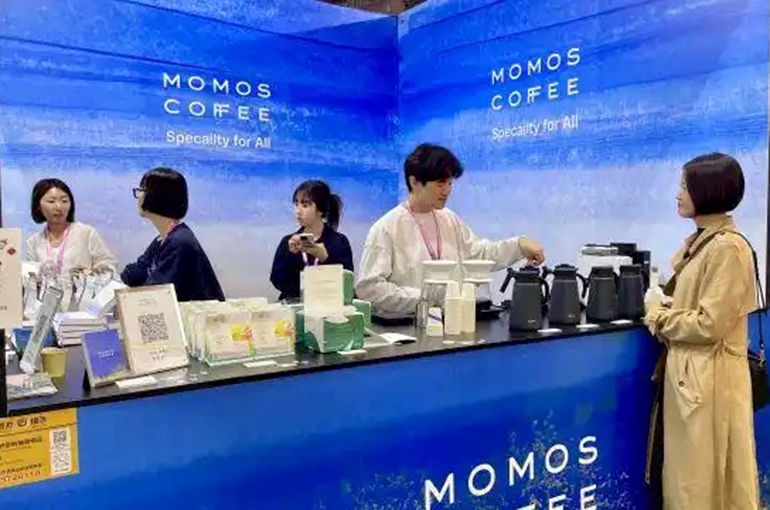
A continuous stream of visitors was trying to taste the coffee at the booth of specialty coffee brand Momos from Busan before it sold out. At the same time, some came to discuss cooperation opportunities.
China's coffee market has witnessed explosive growth, with competition also becoming increasingly fierce.
"The industry has gone through price wars, takeout battles, and a sharp rise in coffee futures over the past one to two years, making it so difficult for many players to survive," a Chinese coffee trader told Yicai. "Competition is intense in the commercial coffee sector, while the specialty coffee market shows a better momentum.
"Many specialty coffee brands from Japan and South Korea have come to the event because their domestic markets have become sluggish, while that in China has been rising steadily, so they seek new opportunities here," the person added.
The price wars and large-scale store expansion of leading Chinese coffee brands have not only lowered the average value per order but also diverted some of the specialty coffee consumers, the person noted. However, the price wars also played a role in market cultivation, attracting many new coffee drinkers and expanding the consumer base for domestic specialty coffee, the person pointed out.
The customer acceptance and popularity of specialty coffee have increased this year, with higher-quality raw materials becoming increasingly sought after, a specialty coffee shop owner in China's Jiangsu province said to Yicai. "More and more customers will ask about the flavor, origin, and plantation estate of coffee beans when ordering. My store only uses beans from specialty plantation estates."
The Chinese specialty coffee market reached almost CNY28 billion (USD4.1 billion) in 2024, according to the data from the Hongcan Industry Research Institute. Despite slowing that year, the compound annual growth rate exceeded 20 percent from 2020 to 2024.
Editor: Martin Kadiev





