



 Global Imbalances Can’t Be Fixed Solely by Exchange Rates, China’s Central Bank Governor Says
(Yicai) Oct. 19 -- Global imbalances cannot be corrected by exchange rate adjustments alone because they are influenced by a range of factors, including economic growth, monetary policy, financial markets, geopolitics, and sudden risk events, the governor of the People’s Bank of China has said.
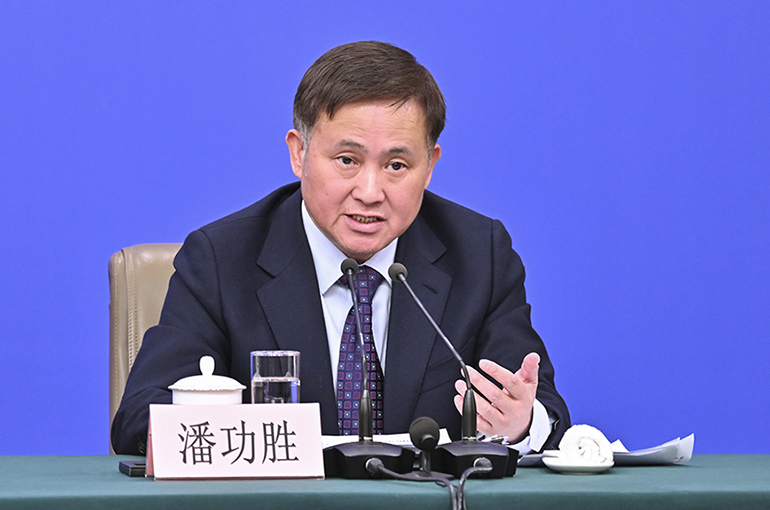
All parties should adopt a more comprehensive analytical perspective, looking beyond the current account to also consider the impact of financial channels, Pan Gongsheng said at the G20 finance ministers and central bank governors meeting held in Bangkok on Oct. 15, when addressing the issue of global imbalances.
As global financial integration deepens, the influence of financial factors, such as capital flows, on global imbalances warrants greater attention, he noted.
No simple linear relationship exists between exchange rates and the current account, Pan pointed out, adding that countries running current account deficits and those running surpluses should work together to achieve a dynamic balance in the global economy.
Escalating geopolitical conflicts remain the biggest uncertainty for the global economy, he noted. Sharp swings in the sovereign debt markets of certain countries and the risk of valuation corrections for assets linked to artificial intelligence have heightened financial vulnerability, he said.
Pan stressed that modernizing financial regulation should not be interpreted as easing oversight, nor should it compromise the stability of the financial system or its capacity to withstand risks. He urged all parties to fully leverage the G20’s financial cooperation platform to strengthen economic policy coordination and collectively address global risks and challenges.
The Bangkok meeting covered the global economic outlook and financial sector reform, and other issues, according to the PBOC. Participants agreed that the world economy remains generally resilient, but still faces multiple risks and challenges.
Trade frictions and protectionism are weighing on global growth by disrupting supply chains, driving up inflation, and distorting market expectations. Participants backed efforts to strengthen financial regulatory frameworks and safeguard financial stability, while calling for closer policy coordination through the G20.
Editor: Martin Kadiev





