



 Global Ocean Economy Moves Toward Capital, Resource, Rules Development
Yicai) Sept. 15 -- Ocean economy issues are increasingly tied to capital allocation, resource development, and global rule-making, extending beyond environmental protection and scientific exploration, according to experts.
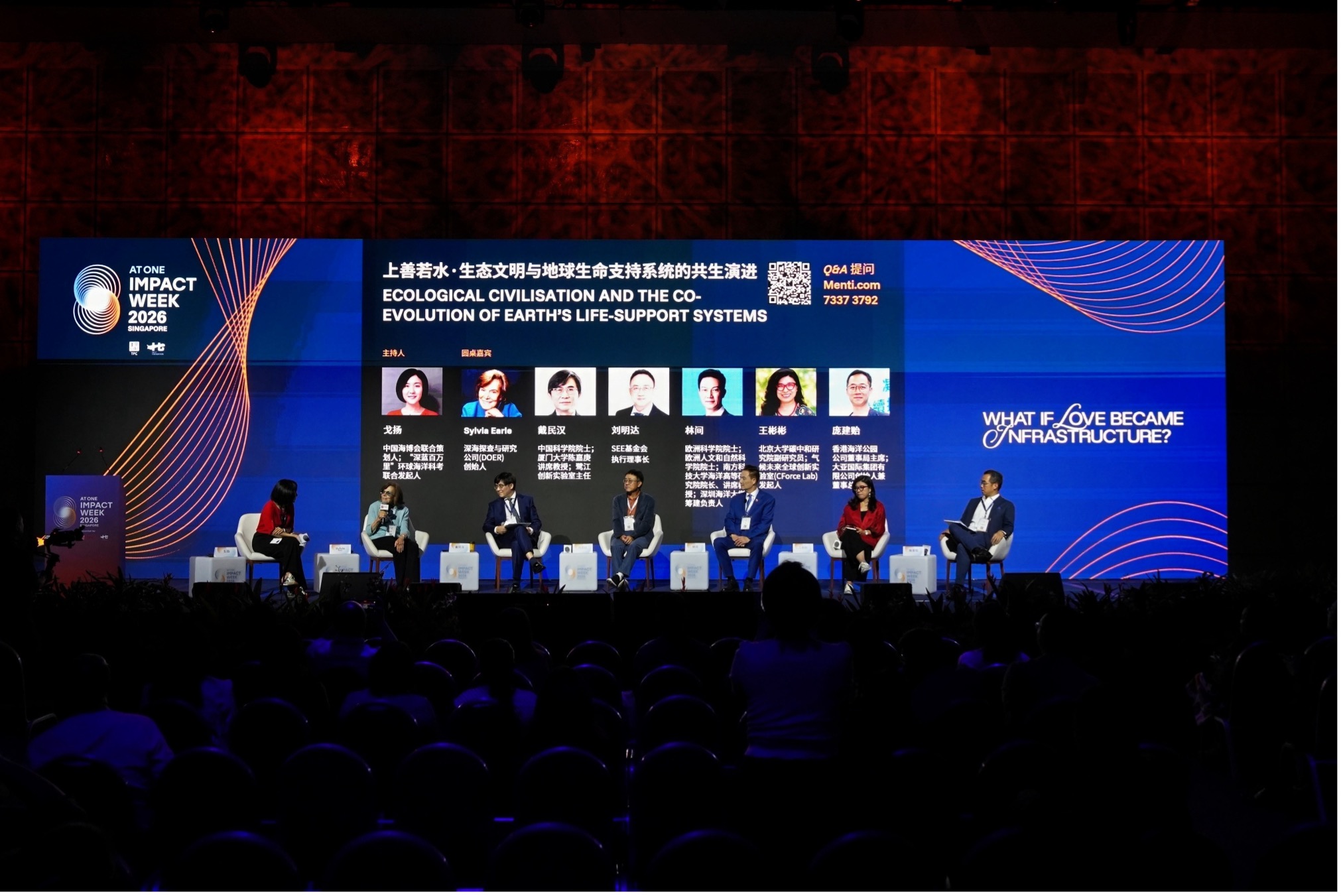
The ocean's value should be treated as a hard asset in decision-making, Dai Minhan, an academician at the Chinese Academy of Sciences and chair professor at Xiamen University, said during AT ONE IMPACT WEEK 2026, a well-being economy forum convened in Singapore by TPC (Tsao Pao Chee) and the NO.17 Foundation from Sept. 8 to 12. The ocean is like "infrastructure," he noted.
Ocean is one of four ecosystems of transformation at the event — alongside urban, rural and human consciousness — which organisers pair with four enabling infrastructures: capital, human development, energy and nature, and community and culture.
The gap between the ocean's economic value and the capital and attention devoted to it was a recurring theme at the event. The global ocean economy reached nearly USD3 trillion last year, while that in China stood at around CNY11 trillion (USD1.5 trillion).
However, awareness has not kept pace with that value, Dai stressed, pointing out that humanity knows less about the seabed than it does about the surface of the moon.
"The budget of NASA, depending on the years and the administration, is every year USD25 billion. If you put together all the oceanographic institutions in the world, you get USD10 billion," said Ashok Adicéam, executive director and managing director of the Neptune Mission. “Only 0.001 percent of the ocean has been explored.”
The SEE Foundation places more weight on getting entrepreneurs directly involved in conservation work, which creates value beyond the businesses themselves, said Chairman Liu Mingda, pointing to two early-stage environmental projects he backed 16 years ago that have since gone public.
Decades of ocean observation have revealed a steep ecological cost, where large shark populations have collapsed, with some species down to as little as 1 percent of historic numbers, noted Sylvia Earle, founder of Deep Ocean Exploration and Research, also know also as DOER Marine. “We do know what to do. We need to protect nature, land, and sea.”
Deep-Sea Development and International Rules
A third of the world's oil comes from deep water, while the United States, China, Japan, and India have all begun exploring deep-sea minerals, noted Lin Jian, a member of Academia Europaea. Avoiding development is not realistic, he said, adding that the real question is how to do it sustainably, which requires advances in science and technology alongside political coordination.
"We have reached a consensus, so we should develop the ocean," Lin stressed. “However, we should develop responsibly.”
On the international governance front, there is the implementation of the Agreement on Biodiversity Beyond National Jurisdiction, also known as the High Seas Treaty, Dai said. The product of 19 years of negotiation, the agreement was adopted on June 19, 2023, triggered a 120-day countdown when Morocco deposited the 60th ratification on Sept. 19 last year, and entered into force on Jan. 17 this year, he added.
The BBNJ Agreement is the first legally binding international framework for high-seas biodiversity governance, covering roughly 64 percent of the ocean and about 46 percent of the Earth's surface, Dai pointed out. It has four core elements: benefit-sharing of marine genetic resources, area-based management tools including marine protected areas, environmental impact assessments for ocean activities, and capacity-building and technology transfer for developing countries, he said, adding that 93 countries had completed domestic ratification, with the treaty's first Conference of the Parties expected next January.
"It's good news that you have three very good candidates to host the secretariat (of the High Seas Treaty)," Adicéam added. “You have Chile's Valparaíso, Brussels, and China with Xiamen.”
Valparaíso launched its bid in March 2023, followed by Brussels in January last year and Xiamen this January. At the treaty's third preparatory committee session in March and April this year, Valparaíso and Brussels pledged to cover venue costs for the first five years, while Xiamen proposed a comprehensive hosting package featuring dedicated headquarters premises, infrastructure support, and financial backing for delegates from developing countries.
The host city will be chosen by a two-thirds vote at the first Conference of the Parties.
Talent and Industrial Ecosystem
Wang Binbin, a researcher at Peking University's Institute of Carbon Neutrality, outlined a "3C" leadership framework to reshape humanity's relationship with nature: curiosity, courage, and compassion. Grounded in a systemic perspective, ocean action extends far beyond coastal communities, she noted, adding that even small inland lifestyle changes—like adjusting air conditioning to save energy—contribute directly to the health of global oceans.
Ocean Park Hong Kong's "Mission R" education initiative has engaged more than 700 schools through a conservation alliance involving around 14,000 "student ambassadors," while also running a plastic-reduction campaign with local restaurants and fisheries for over a decade, said Chairman Paulo Kin-Yee Pong. Many local restaurants have started to appreciate the movement, because they feel they are contributing to protecting nature, he pointed out.
On global coordination, the Neptune Mission network offers one model, Adicéam said. Launched following the United Nations Ocean Conference co-hosted by France and Costa Rica in June last year, the initiative has grown to over 80 partners across more than 50 cities and 20 countries in just over a year, he noted.
TPC (Tsao Pao Chee) Chairman Chavalit Frederick Tsao is among the initiative's patrons, alongside Earle, FMG Group Chairman Andrew Forrest, and Bridgewater founder Ray Dalio, Adicéam said. In China, the mission has signed an agreement with Shenzhen's Deep Blue Voyager expedition and partnered with Xiamen University's Fujian Ocean Innovation Center, with plans to launch a joint "Explorer X" pavilion at the China Marine Economy Expo in Shenzhen next month, where France will be the guest of honor, he pointed out.
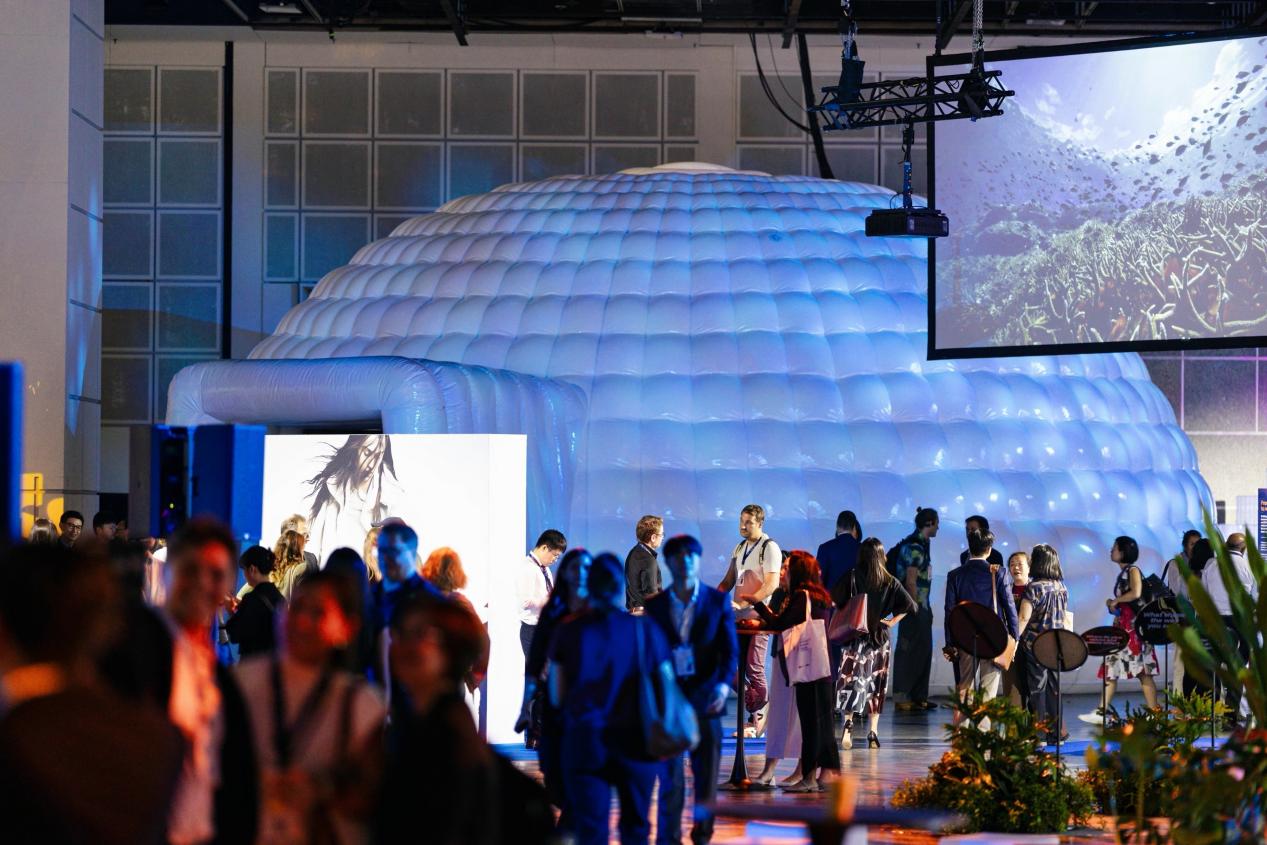
“We must move from exploring themes to building living economic systems. Business must lead this, with government and philanthropy. Come as builders,” Tsao said.
From capital and investment to deep-sea development, global rules, talent, and industrial networks, discussions at the event pointed to a broader shift in how the ocean economy is developing, with capital, technology, governance, and international cooperation converging around new opportunities.
Editor: Martin Kadiev





