



 Hong Kong Dollar’s Strength Drives Shoppers to Shenzhen
(Yicai) Aug. 9 -- Hong Kong residents have been taking advantage of the local currency’s gains versus the Chinese yuan this year to head across the border to neighboring Shenzhen for shopping.
The number of arrivals and departures rose by nearly 20 percent to 20.7 million last month from June, the highest since February, according to the Hong Kong Immigration Department. Hong Kong residents made up about 60 percent and Chinese mainland visitors nearly 30 percent.
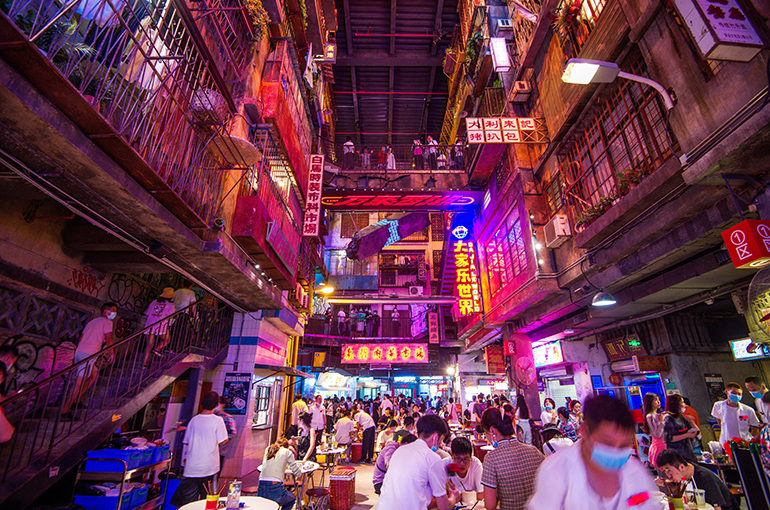
Shenzhen has become a hot destination as social media platforms used by Hong Kongers are flooded with travel and consumption tips for the tech hub just a quick train ride away from Hong Kong.
Part of the appeal lies in the favorable exchange rate. The Hong Kong dollar strengthened to a new high of 0.928 against the yuan early last month from 0.856 at the beginning of the year, according to Wind data.
As a result, shopping is nearly 5 percent cheaper in Shenzhen than in Hong Kong, some Hong Kong shoppers in the city told Yicai. Moreover, the variety of products is larger.
The inflows have not gone unnoticed by local businesses. A staff member at a Haidilao hot-pot restaurant near the Port of Shenzhen told Yicai that in the past two months it may have had more customers from Hong Kong than from the mainland, and they often come for family meals.
Yuan Bargains
Falling incomes and economic pressures in the Hong Kong Special Administrative Region are another reason for residents to look for more affordable options in Shenzhen.
When excluding price changes, the gross income of Hong Kong residents fell 3.6 percent in real terms last year from 2021, according to the Census and Statistics Department of Hong Kong.
An investment banker in Hong Kong told Yicai that the mainland is becoming an increasingly attractive destination for high-cost services such as getting new prescription eyeglasses make up or going to the dentist.
The pressures can be seen in the SAR’s financial sector, as some 47 securities companies shut up shop in 2022, the most ever, according to statistics from the Hong Kong Stock Exchange.
In the second quarter of this year, Hong Kong’s gross domestic product is expected to have shrunk and investment and exports are predicted to have fallen short of market expectations, according to the statistics department.
Early this year, Hong Kong’s government forecast annual GDP growth of 3.5 percent to 5.5 percent, but many experts believe the numbers are too optimistic.
New Directions
Hong Kong’s status as an international financial center is changing, driving the local government to seek new directions of development, involving talent, trade, and investment.
One of the measures is the Top Talent Pass Scheme, introduced in December, aimed at attracting at least 35,000 highly paid or highly educated individuals to settle in the city every year.
In terms of foreign trade, the local government has signed eight free trade agreements with 20 economies and 22 investment promotion and protection deals with 31 regions.
The SAR is also looking to attract ultra-high-net-worth individuals. In June, it set up the Network of Family Office Service Providers, a platform that aims to promote the region for structures or companies that take care of affluent families’ wealth and interests. Through this measure, Hong Kong is stepping up its rivalry with Singapore, according to insiders.
Hong Kong is also trying to widen its appeal to tourists. This year, the SAR plans to spend more than HKD250 million (USD32 million) to organize and promote a number of big tourism events, according to the latest budget.
Editor: Emmi Laine





