 Hong Kong Proposes Relaxing Rules for Non-Local Doctors to Tackle Chronic Shortage
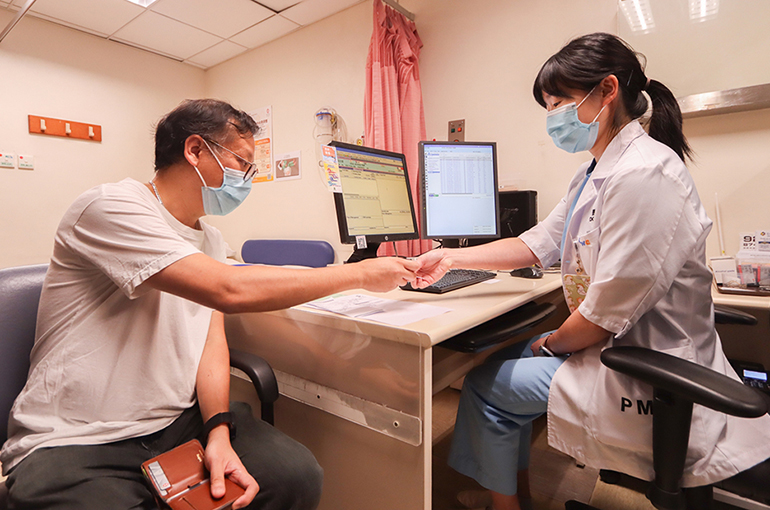
(Yicai) March 23 -- Hong Kong's health authority is proposing to allow non-locally trained doctors, including those from the Chinese mainland, to practice medicine in the special administrative region because of a severe and persistent shortage of physicians.
A draft amendment to the Medical Registration Ordinance and supporting measures put forward by the Health Bureau to the Legislative Council, Hong Kong’s legislature, seek to further liberalize the Special Registration and Limited Registration regimes introduced in 2021 to allow non-locally trained doctors and nurses to practice in the city’s public sector.
The proposals would permit doctors to apply for positions without Hong Kong permanent residency, lower qualification thresholds, and directly recognize medical degrees from nine leading mainland universities without requiring the Licensing Examination of the Medical Council of Hong Kong, while still requiring them to complete five years of service at designated institutions.
Hong Kong had about 16,000 registered doctors in 2024, with a median age of 53, according to official figures, pointing to a looming wave of retirements over the next 10 years. The shortfall in the public healthcare system is set to exceed 1,600 by 2030 and about 1,950 by 2040.
The registration regimes were intended to address the scarcity, but eligibility has been limited to permanent residents or non-permanent residents with specialist qualifications. In addition, employers hold interviews entirely in English, greatly reducing the number of mainland doctors able to meet all the criteria.
Hong Kong has only two universities with medical schools, producing just 200 to 300 graduates a year, underscoring a severe shortage that has also contributed to high salaries for local physicians, a medical expert on secondment to the University of Hong Kong's Shenzhen Medical School told Yicai.
Medical graduates start on monthly salaries of HKD70,000 (USD8,940), per official figures, far more than graduates in other fields. Consultants in public hospitals can earn around HKD3 million (USD383,080) a year, while doctors in private hospitals can earn up to 10 times more.
Five-Year Route for Mainlanders
The most attractive part of the policy shift is that mainland doctors who have not yet completed specialist training also have the opportunity to apply to practice in Hong Kong, the chief cardiologist at a top Shanghai hospital said, adding that all they need is to complete five years at designated medical institutions and pass the assessment.
Some of his students applied to practice in Hong Kong through the Special Registration system but were unsuccessful, largely because mainland doctors outside of Guangdong province -- which borders the SAR -- find it difficult to meet the language requirements, which demand fluency in both English and Cantonese.
Policy would still require applicants to serve as general practitioners for five years before they can become specialists, according to the chief physician of the sports medicine department in a large hospital in South China. “This will be attractive to less experienced mainland doctors, but not so much for specialists like me,” he noted.
Doctors’ salaries in private mainland hospitals approach those of their counterparts in public hospitals in Hong Kong, so the new policy does not have a particularly strong appeal for senior and highly paid mainland physicians, according to a private hospital cardiologist in the Greater Bay Area.
“My annual salary is over CNY1 million (USD144,707), and although the salary in Hong Kong might be a bit higher, the requirements for English proficiency there are high, while the workload may not be any lighter,” he pointed out.
Still, Hong Kong remains attractive for doctors from mainland public hospitals, noting that some of his former colleagues have moved there to fill specialties with shortfalls, such as anesthesiology and otolaryngology. “Their income in Hong Kong is about two to three times higher than their pay was in public hospitals in the mainland,” he added.
Editors: Tang Shihua, Martin Kadiev