



 JW Therapeutics’ CAR-T Drug Enters China’s Reimbursement List With 78% Price Cut; Can Still Be Profitable, CEO Says
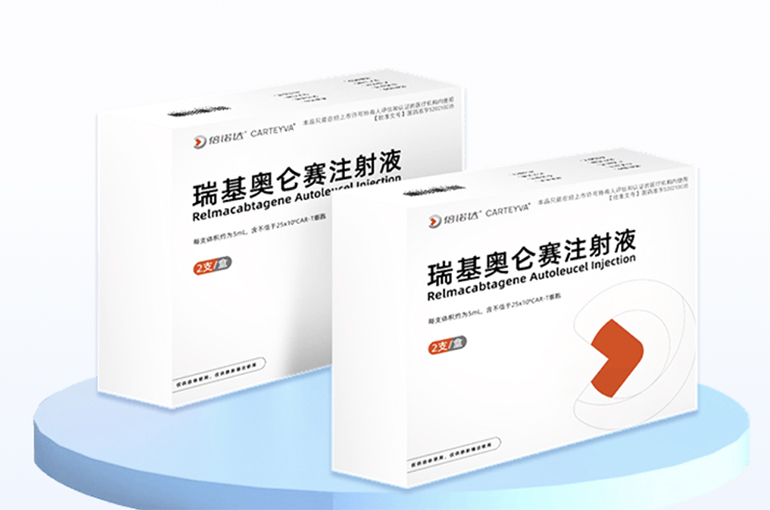
(Yicai) Nov. 16 -- JW Therapeutic’s innovative CAR-T cell therapy Carteyva has been included in China’s newly released 2026 National Reimbursement Drug List, making it eligible for coverage under the country's medical insurance system. Despite the 78 percent price drop, the Chinese drugmaker’s chairman still believes the product can remain profitable.
Carteyva, also known as the relmacabtagene autoleucel injection, has been added to the National Reimbursement Drug List, Tian Feng, who is also chief executive officer of Shanghai-based JW Therapeutics, said during an investor briefing yesterday.
The reimbursement price has been slashed by 78 percent from its previous selling price to roughly CNY288,600 (USD 42,984) per dose. Under China’s current medical insurance reimbursement arrangements, patients will be expected to pay less than CNY100,000 (USD14,895) out of pocket for the treatment.
The new pricing was the result of a very careful decision-making process, Tian said. “I can state clearly that the reimbursement price is sufficient to support the firm’s sustainable operations. We will not lose money on every dose we sell.”
The high price of CAR-T therapies is mainly due to substantial manufacturing costs. In particular, lentiviral vectors, a key raw material, are expensive. As a result, the fully loaded production cost of one dose of Carteyva was as high as CNY550,000 (USD81,922) last year.
The company plans to cut manufacturing costs by developing its own lentiviral vectors and localising the production of selected raw materials and consumables, Tian said. Combined with economies of scale resulting from increased patient demand following inclusion in the national reimbursement scheme, these initiatives are expected to help the product reach profitability.
JW Therapeutic’s proprietary lentiviral vector manufacturing platform has reached an advanced stage of development, according to the firm’s WeChat account. Last year, the company out-licensed this technology to multinational pharmaceutical firms on two separate occasions.
Tian also noted that CAR-T therapies are used in fewer than 4 percent of cancer treatments in China, far below the approximately 50 percent level in developed Western markets, largely due to the high cost.
Demand Boost
With Carteyva now included in the National Medical Reimbursement List, demand is expected to increase. Since it was launched six years ago, only just over 1,200 patients have received the treatment.
Based on Carteyva’s three approved indications for the third-line treatment of patients with relapsed or refractory lymphoma, Tian estimated that inclusion in the reimbursement list could bring in an extra 11,000 patients a year. This would significantly expand the drug’s commercial potential, giving the firm confidence that Careyva will gradually achieve profitability.
The inclusion of JW Therapeutic’s flagship therapy in the national medical insurance scheme is expected to provide a significant boost to demand. However, the substantial price reduction has raised concerns about the company’s ability to maintain profitability.
These uncertainties triggered considerable volatility in JW Therapeutics’ share price [HKG:2126] today. The stock initially surged more than 12 percent shortly after the market opened before reversing course and falling sharply. The stock closed down 8.1 percent at HKD 2.47 (USD0.31).
JW Therapeutics was established in 2016 as a joint venture between WuXi AppTec and the US’ Juno Therapeutics to develop innovative CAR-T cell therapies. Following several subsequent financing rounds, Seattle-based Juno Therapeutics is now JW Therapeutics’ largest shareholder with an approximately 16.8 percent stake, while WuXi AppTec’s shareholding has been substantially diluted. US pharmaceutical giant Bristol Myers Squibb acquired Juno Therapeutics in 2019, making it a wholly owned subsidiary.
Editors: Tang Shihua, Kim Taylor





