



 Lab Monkey Prices Top USD29,480 in China Amid New Drug R&D Boom, Source Says
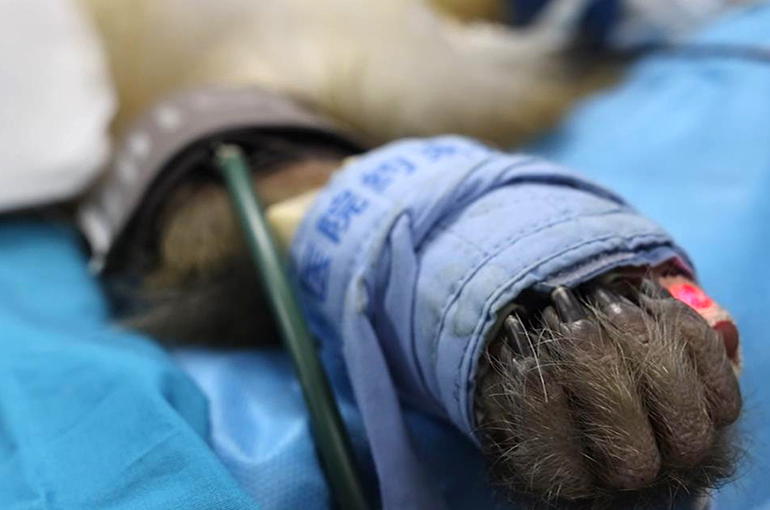
(Yicai) July 13 -- The price of a single cynomolgus monkey, a macaque species used in biomedical research because of its close biological, physiological, and immunological relevance to humans, has topped CNY200,000 (USD29,480) in China amid new drug development in the country reaching new highs, a relevant worker at a Chinese drugmaker told Yicai.
"Monkeys are not only very expensive, but more importantly, are in short supply," said Zhang Ming, head of research and development at another Chinese biopharmaceutical company. "The reservation schedule of lab monkeys of almost all pharma contract research organizations has been fully booked this year."
The number of clinical trials in China exceeded 5,000 for the first time last year, with 2,997 being of new drugs, with their proportion of the total rising to 58 percent from 40 percent the previous year, according to statistics from the National Medical Products Administration. Phase I clinical trials took up the largest share with 39 percent.
The price of cynomolgus monkeys had returned to CNY100,000 in the second half of last year before soaring to a price approaching that during the Covid-19 pandemic this year. The price of a single monkey had dropped to as low as CNY75,000 (USD11,065) around May last year.
Lab animals play an important role in basic science and clinical medicine research, being the main experimental subjects for preclinical drug studies. Rhesus and cynomolgus monkeys are most widely used in experiments due to their high similarity to humans.
For Chinese pharma CROs, having stable lab monkey resources is a core competitive advantage. For example, WuXi AppTec, Joinn Laboratories, and Pharmaron have been buying monkey farms and building their own lab monkey breeding bases since 2018.
The net profit of Joinn Labs surged 4.8 times in the first quarter of this year from a year earlier after tripling last year from 2024, thanks to the recovery in lab monkey prices.
China needs about 30,000 lab monkeys a year, but there is a shortage of around 10,000, said Sun Qiang, director of Sun Yat-sen University Institute of Advanced Studies Hong Kong's Preclinical Research Center. Given the long cultivation period of lab monkeys, the supply and demand gap is difficult to alleviate in the short term, Sun added.
Industry insiders suggest the watchdog to lift Chinese over 10-year import control policies of cynomolgus monkeys on a temporary basis, aiming to solve or alleviate the problem by importing animals from Southeast Asia.
Editor: Martin Kadiev





