



 Airfares Surge on Direct China-Europe Routes Amid Mideast Crisis
(Yicai) March 3 -- The widespread suspension of Middle East transit routes has pushed travelers onto direct China-Europe flights, which fly around the conflict zone, causing fares to spike and limiting availability.
The cheapest economy class ticket on Air France’s nonstop flight from Beijing to Paris on March 8 has climbed to CNY25,934 (USD3,760). On the same route, Air China’s economy cabin is sold out, with only business class seats left at nearly CNY80,000 each, according to online travel agency listings.
China-Europe itineraries transiting in non-conflict regions, including services operated by Turkish Airlines, Xiamen Airlines, and China Southern Airlines, are also subject to strong demand, with economy fares generally no lower than CNY16,000.
In recent days, China Eastern Airlines’ nonstop flights from Shanghai to Paris were sold out, and many business class seats are no longer available. Economy class tickets for direct Shanghai-Paris flights are usually around CNY5,000 (USD725).
Chinese airlines enjoy a cost advantage over European carriers on routes linking the two regions because they do not skirt Russian airspace. After many Middle East transit services were suspended, nonstop Europe-bound flights operated by Chinese airlines sold out more quickly than comparable services offered by European rivals, aviation industry insider Lin Zhijie told Yicai.
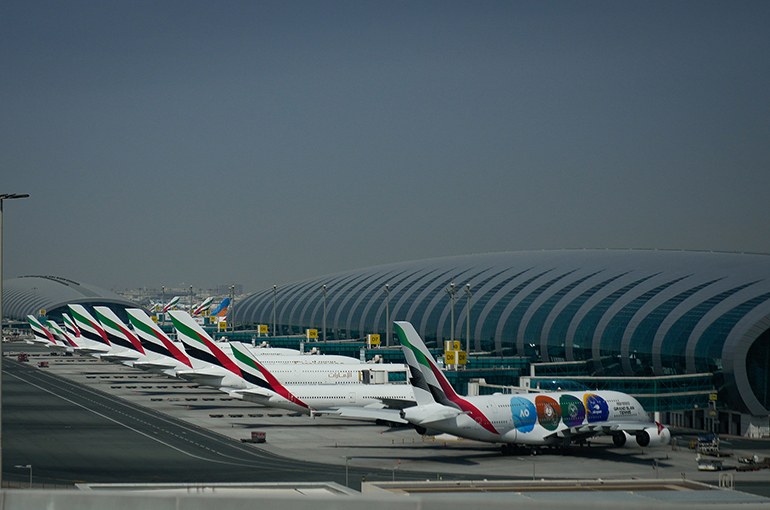
The immediate cause of the spike in demand for nonstop flights is the suspension of services run by Middle Eastern carriers such as Emirates and Qatar Airways after the United States and Israel attacked Iran on Feb. 28, leading to an escalating regional crisis.
The region’s airlines have built bases into popular transit hubs between China and Europe, playing to their geographical location. Prior to the outbreak of hostilities, roughly 80 percent of travelers departing China on these carriers were transit passengers bound for Europe.
If the conflict drags on, it could dampen travel demand to or through the Gulf region, weighing on the appeal of the international hubs that Middle Eastern airlines have spent years cultivating, according to analysts. Some airline executives view the disruption as temporary and expect services to return to normal soon, though the timeline depends on how long the conflict lasts.
Editors: Tang Shihua, Futura Costaglione





