



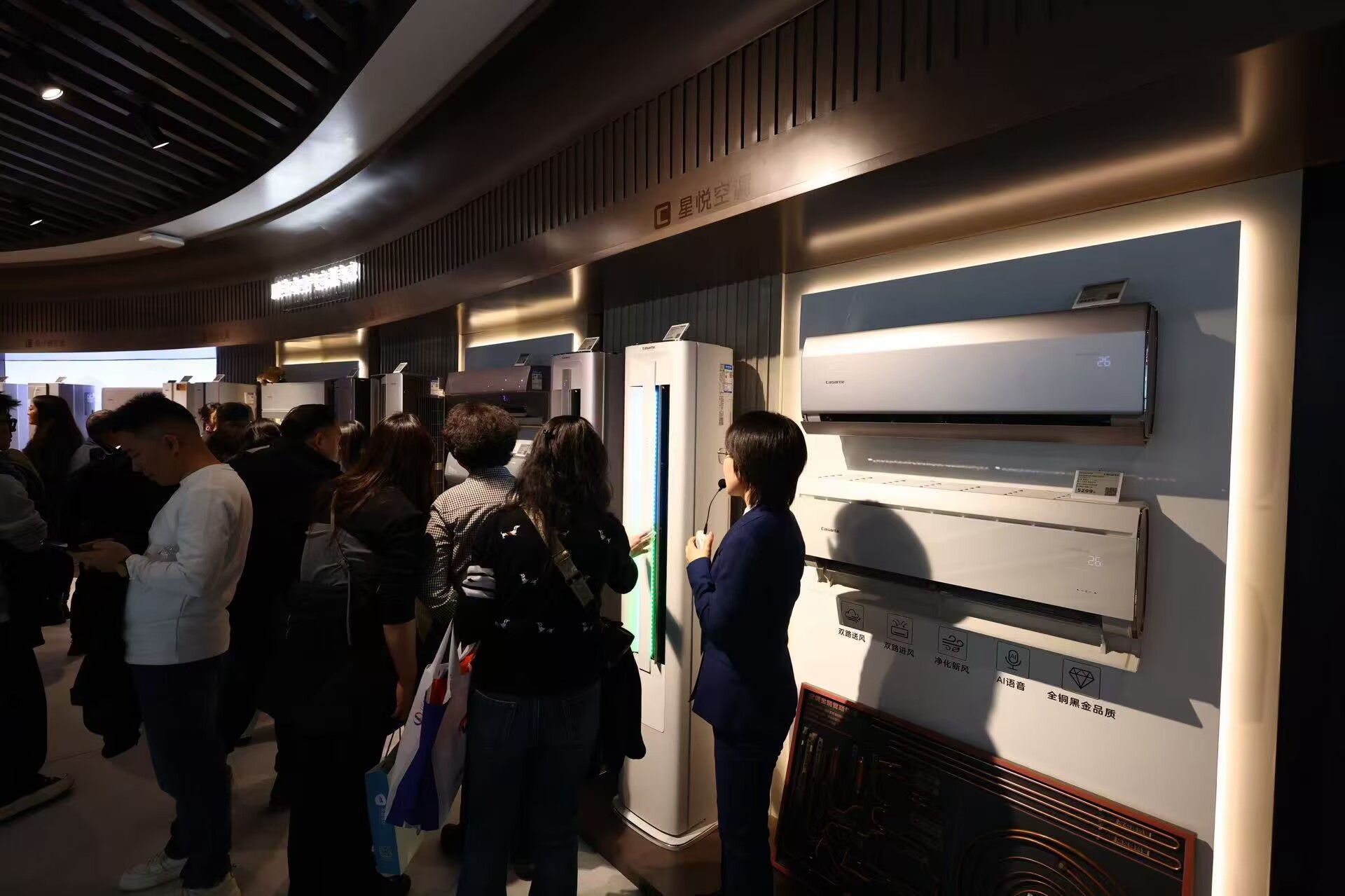
 Rising Oil, Chip Costs Force China’s Home Appliance Makers to Hike Prices
(Yicai) April 2 -- China’s home appliance sector is feeling the pressure as oil prices surge amid the Middle East conflict, memory chip prices climb due to the expansion of artificial intelligence data centers and other raw materials become more expensive, and manufacturers are now passing these higher costs on to consumers.
Some home appliance makers have already raised the wholesale price for certain models of televisions, air conditioners, refrigerators and washing machines by between 2 percent and 10 percent, Yicai learned. Prices for large kitchen appliances such as range hoods and stoves have gone up even more, by around 10 percent to 20 percent.
Skyworth began raising supply prices to retailers for its refrigerators, washing machines and air conditioners yesterday, with hikes of around 10 percent, a source from the Shenzhen-based company’s white goods division said. Refrigerator prices have gone up more as they rely heavily on chemical materials, which have seen bigger cost increases.
The prices of non-ferrous metals such as copper and aluminum also climbed in the first quarter. The Middle East conflict has further driven up the cost of bulk commodities and chemical materials, including crude oil.
As a result, Skyworth’s overall production costs have risen by about 10 percent, leading to a similar increase in its product prices, the person said.
As of the end of March, copper prices had risen 18.6 percent compared with the average price last year, while that of electrolytic aluminum jumped 18.85 percent, that of polyurethane insulation materials surged 20.77 percent, that of ABS plastics soared 51.7 percent and that of propylene copolymers advanced 26.47 percent, according to data provided by the source.
And the appreciation of the yuan could also push up export prices this year, the person added.
A staff member from TCL's South China branch said that the company’s wholesale prices for TVs, refrigerators, washing machines and air conditioners have all been increased by between 2 percent and 10 percent on average and retail prices are expected to gradually follow. Entry-level models are likely to see bigger price increases, while mid-to-high-end products may see smaller adjustments.
TV manufacturers started raising their prices earlier, with some doing so as early as February, a source from Hisense’s South China unit said. Hisense raised the prices of its TV products by 3 percent to 10 percent, mainly driven by the sharp rise in memory chip costs.
Retailers Stay Cautious
However, despite higher factory prices, retailers have yet to adjust their prices noticeably due to sluggish market demand, a home appliance retailer in central China said.
"Price hikes are still mostly talk for now," a retailer in eastern China told Yicai. Current inventories were purchased before February, before manufacturers raised prices, easing immediate cost pressure. They are waiting to see how things play out before deciding whether to increase prices.
A retailer in northwest China said most home appliance brands have issued price increase notices, with only Midea and Gree yet to do so.
Nevertheless, the retailer added that since the company stocked up heavily at the end of last year, it does not plan to hike prices for the time being.
While rising raw material costs are putting real pressure on manufacturers and giving them reason to raise prices, they must take into account that demand is weak and that further price hikes could further dampen demand, said Wang Hongji, research insight director for home appliances at NIQ GfK China.
With the market still sluggish, retailers are closely watching how things develop and are wary that higher prices could increase their operating pressure, the retailer in northwest China said. Midea’s Chairman and President Fang Hongbo has recently been visiting retailers in southern Guangdong and Fujian provinces, which industry insiders believe may be an effort to find ways to cut costs in distribution.
"As distributors, we are also trying to cut costs and minimize losses to mitigate the impact of this round of price hikes on demand," the retailer added. Brands that cannot control or spread out rising costs may find it more difficult to survive.
Editors: Tang Shihua, Kim Taylor





