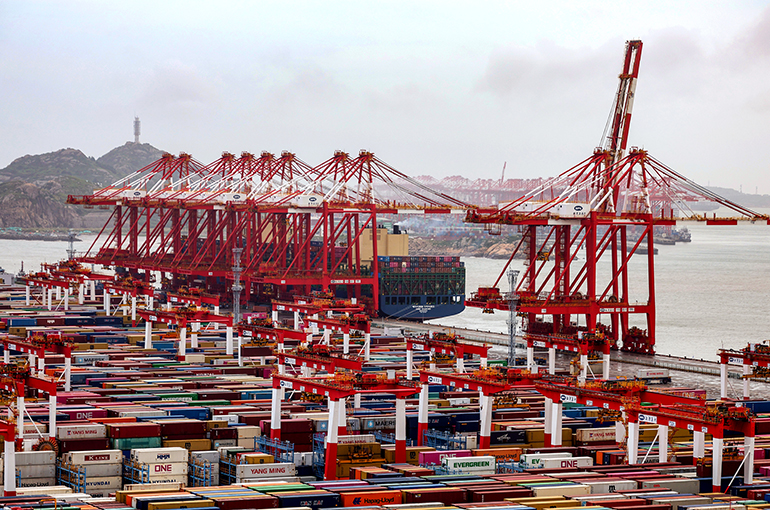
 Shanghai Sets Out to Become Leading Int’l Shipping Hub in Five Years
(Yicai) Feb. 12 -- Shanghai has issued a draft roadmap for turning the Chinese city into a world-leading global shipping center within the next five years. The policy document is open for public consultation for a month.
Released by the city’s transportation commission, the roadmap sets six key goals: consolidating Shanghai's status as a world-class shipping hub; building an efficient, networked cargo distribution system; upgrading its outward-facing shipping services; developing a comprehensive, integrated cruise economy; fostering leading smart, green, and innovative shipping capabilities; and establishing a modern governance framework for shipping.
The document defines outward-facing shipping services to include modern functions such as marine insurance, financing and settlement, maritime arbitration, shipping trading, and information consulting.
Its vision for the cruise economy places cruise operations at the core and links high-end equipment manufacturing, transportation, tourism, port services and associated commerce, finance and cultural-creative industries into a single industrial ecosystem.
Despite globalization headwinds such as tariff disputes, the broader trend of trade and economic activity gravitating toward the Asia-Pacific region is unchanged, leaving an huge opportunity for Shanghai’s shipping-center ambitions, Li Jian, researcher at the Shanghai Academy of Social Sciences, told Yicai.
The development of Shanghai into a top-tier global shipping hub will increasingly rely on the Yangtze River Delta region, according to Li. The region is “not only an important source of exports but is also a major import market,” he noted.
Advantageous Situation
“Given Shanghai’s strong capabilities in shipbuilding and design, port operations, shipping services, finance, and technological innovation, the city is well-positioned to speed up its development into a leading international shipping center,” said Zhuang Wei, Asia-Pacific general manager at the Baltic and International Maritime Council.
The roadmap correctly frames the opportunities presented by shipping’s green, low-carbon, and digital shift while also recognising fresh risks from geopolitics, trade frictions, and energy-transition changes, he said, adding that that reinforces the need for more resilient maritime governance.
Shanghai should capitalize on the energy transition by fast-tracking alternative-fuel bunkering services and create a complete industrial chain that encompasses everything, from upstream production of alternative fuels to downstream trading and certifications, Zhuang suggested.
“Shanghai does not lack the infrastructure nor cargo throughput,” said Li. “What it lacks is premium shipping services. This is also the key difference between Shanghai and other international shipping centers, such as Singapore and London.”
Shanghai needs to focus on developing sectors, such as maritime insurance and information consulting, as resources in these areas are relatively scarce, Li pointed out.
Developing modern shipping services at high quality requires deliberately cultivating an international shipping ecosystem, said Zhuang, calling on Shanghai to promote the sustainable and coordinated local growth of those services.
Editors: Tang Shihua, Futura Costaglione