



 Sinopec-CNAF Merger May Boost Aviation Sector's Green Shift, Cut Jet Fuel Prices, Analysts Say
(Yicai) Jan. 9 -- The merger of China Petroleum and Chemical, better known as Sinopec, and China National Aviation Fuel Group could aid the aviation industry’s carbon reduction goals and create scope for cheaper jet fuel, according to analysts.
The merger, announced yesterday by the State-owned Assets Supervision and Administration Commission following State Council approval, is a landmark in the latest round of state-owned enterprise restructuring, said Li Jin, chief researcher at the China Enterprise Research Institute.
The move is a proactive response to global competition and the push for green transformation, he noted. It also represents a crucial step toward optimizing core business operations and could serve as a catalyst for more specialized consolidation among state-owned enterprises, Li pointed out.
China has pursued successive waves of SOE consolidation since the mid-1990s as part of its economic reforms. The latest and most consequential push -- the era of “mega-mergers” -- began around 2013 and gathered pace in 2015, as the government seeks to forge fewer but stronger national champions, sharpen their global competitiveness, and rein in excess industrial capacity.
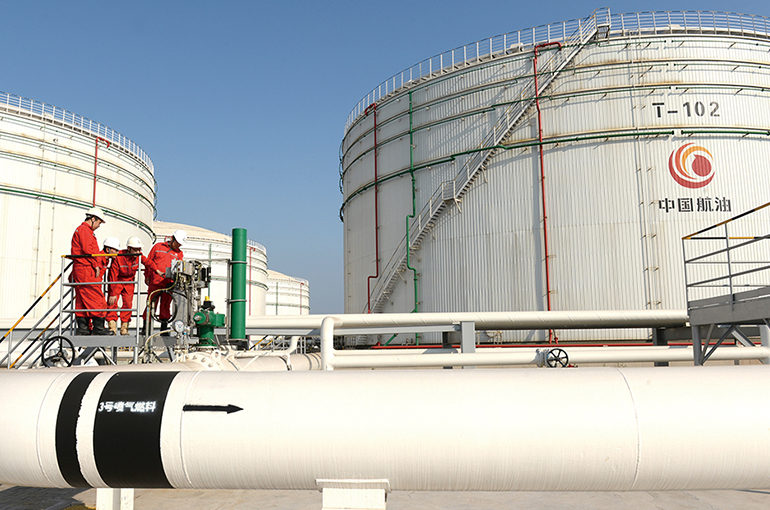
The Sinopec-CNAF combination is expected to unlock significant potential for aviation's green transition. Sinopec is the world's biggest oil refiner and second-largest chemicals producer, ranking sixth in the 2025 Fortune Global 500, while CNAF is Asia's biggest aviation fuel services provider, integrating procurement, transportation, storage, testing, sales, and refueling across aviation fuel, petroleum, logistics, international operations, and general aviation.
Sustainable aviation fuel is central to the sector’s green shift, Li noted. By combining Sinopec’s SAF production technology with CNAF’s extensive distribution network, the merger could hasten the fuel’s commercialization, helping the industry meet carbon reduction targets and integrate green fuel into regular flights, he pointed out.
China’s consumption of aviation fuel is forecast to rise to more than 75 million tons by 2040 from 39.3 million tons in 2024, according to S&P Global Ratings.
CNAF has a virtual monopoly in China’s aviation fuel market, supplying all domestic and international airlines operating in the country, while also building or managing fueling facilities at most airports. But the firm does not produce the fuel, sourcing it mainly from Sinopec, PetroChina, China National Offshore Oil Corporation, and overseas markets through its Singaporean unit.
The merger will provide CNAF with more stable supply while expanding Sinopec’s sales channels. It could also streamline intermediary layers, potentially lowering aviation fuel prices.
The union is intended to optimize the allocation of state capital and prevent redundant competition, said Zhou Lisha, a researcher at the China Enterprise Reform and Development Research Association. CNAF occupies a crucial position in the aviation fuel supply chain, with a sales network covering national airports and airline customers, so the move creates a “refining-to-distribution” system that could enhance supply chain stability and bargaining power, she noted.
Still, actual price cuts will depend on changes to domestic aviation fuel pricing mechanisms, industry insiders told Yicai. The "comprehensive procurement cost" combines factory prices with certain discounts, they said.
Factory prices are negotiated between suppliers and buyers but must not exceed the after-tax import price in the Singapore market, which is published monthly by China’s National Development and Reform Commission and reflects international oil prices, exchange rates, and taxes, they added.
Some observers cautioned that if the Sinopec-CNAF merger results in a fully integrated "production-supply-sales" chain, airlines that lack pricing power might find themselves in an even weaker position.
Editor: Martin Kadiev





