


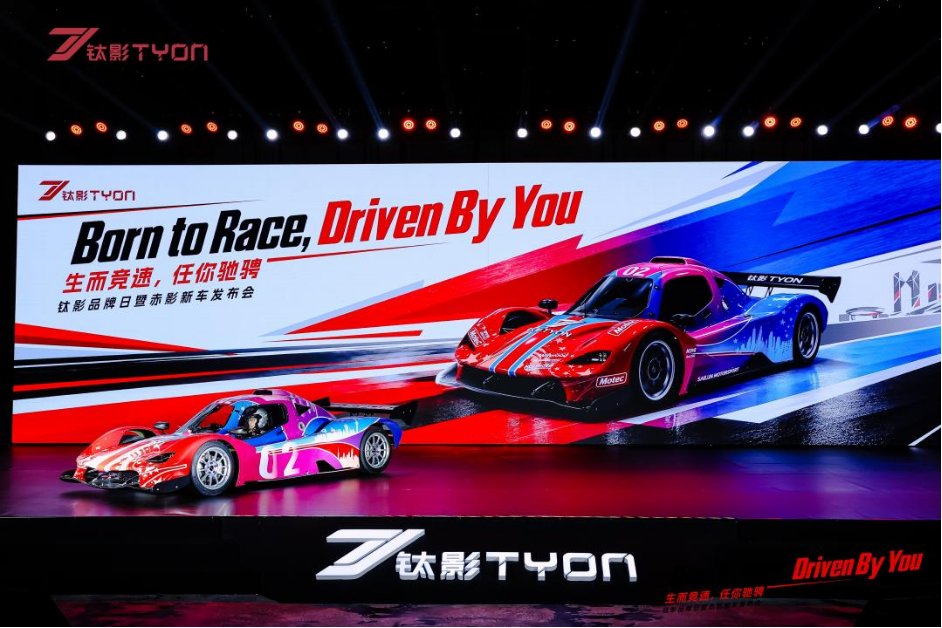
 Tyon Aims to Break China’s Reliance on Racing Car Imports With Mass Production-Ready Prototype
(Yicai) Nov. 24 -- Chinese motorsport brand Tyon Hangzhou Automotive Technology has unveiled the Chiying, or Red Shadow, the first prototype racing car to be developed and made in China that is ready for mass production.
About 95 percent of Chiying’s components are domestically sourced, with both the price and maintenance costs substantially lower than comparable products from overseas, Yang Zedai, founder and chief executive officer of Tyon, told Yicai.
Tyon has a 10,000-square-meter factory in Shanghai’s Lingang Special Area, with a planned annual capacity of 300 vehicles from next year. Its target customers include motorsport organizers, professional racing teams, and individual enthusiasts with advanced driving experience. Chiying is compatible with 70 percent to 80 percent of racing circuits in China, according to the firm.
The full life-cycle running and maintenance costs of overseas prototype racing cars comparable to Chiying often reach the tens of millions of Chinese yuan, equal to millions of US dollars, said Zhou Feng, Tyon’s technical lead. These high costs are the main barrier to the wider popularization and commercial development of motorsport in China, he added.
A prototype racing car has over 10,000 components and involves more than 200 supply chain firms, Yang noted. In the early stages of development, even small and precision parts such as the fuel tank and fuel line fittings were in short supply domestically.
Imported components were prohibitively expensive, while workshop-made alternatives lacked the stability and consistency needed for racing safety standards. So the team had to work one by one with Chinese manufacturers, gradually achieving compliant local alternatives, Yang explained.
The chief difficulty in developing China-made racing cars is not simply whether component imports can be replaced with domestic alternatives, but whether those alternatives can be manufactured and supplied consistently, reliably, and to standardized specifications over the long term, Yang said.
As a consequence, Tyon still uses some key component imports, such as the engine and gearbox, at this stage, prioritizing safety and extreme performance, he said, adding that main body components, including the body, chassis, and safety crash structures, are now produced entirely in China.
Hangzhou-based Tyon has partnered with China’s Kove Moto, planning to fully switch to domestically developed engines in two years, thereby achieve self-reliance in the core powertrain.
Chinese circuit racing has long relied heavily on imported competition vehicles. In mainstream Grand Touring, Touring Car Racing, and Formula racing series, chassis, engines, and core gearboxes, as well as key technologies, have been dominated by European and Japanese manufacturers. Chinese teams generally import complete vehicles, facing pain points such as long ordering lead times, high prices for main spare parts, and lengthy repair wait times.
Prototype racing remains a niche segment in China. Annual sales of civilian and racing cars total around 2,000 to 3,000, while the global motorsport industry generates an annual output value in the hundreds of billions of Chinese yuan, equal to tens of billions of US dollars, according to Yang.
Editor: Futura Costaglione