



 US Online Sales Jump Over Black Friday, But Some Chinese Sellers Are Left Disappointed
(Yicai) Dec. 8 -- US retail sales grew faster online than in-store during Black Friday, but there were mixed results for Chinese vendors, with livestream e-commerce sellers doing better than expected and some smaller merchants noting weaker spending power and eyeing a return to domestic platforms.
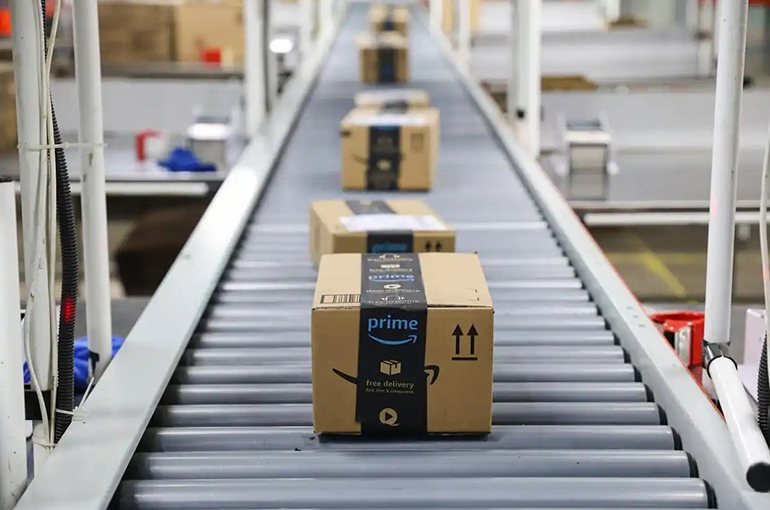
Retail sales in the United States, excluding autos, rose 4.1 percent over Black Friday from the same period last year, according to SpendingPulse, a data provider run by global payments network Mastercard. Online sales jumped 10.4 percent, while physical store sales rose 1.7 percent, reflecting growing consumer preference for speed and convenience.
TikTok Shop set a new record in the US market, with gross merchandise volume exceeding USD500 million over the four-day sales event, it announced on Dec. 4.
A 12-hour livestream collaboration with TikTok influencers on Nov. 26 topped expectations with GMV of nearly USD1.2 million, Fu She, the North American merchandise planner for Chinese live sales broadcaster Yaowang Technology, told Yicai.
Chinese online sellers need to grapple with markedly different conditions in the US, such as the fact that beauty and home appliance products with lower brand power tend to be more popular overseas than in China.
Also, more people are using artificial intelligence tools to help them make shopping decisions. The proportion of people using Amazon’s AI chatbot Rufus on Black Friday reached a high of 40 percent, up from 33 percent on Nov. 1, per data from US market research firm Sensor Tower.
Some Chinese merchants said Black Friday and Cyber Monday did not meet their expectations, including Wan Lin, a battery seller from Guangdong province, who focuses on the European and American markets and mainly operates on platforms such as Amazon, Temu -- a Chinese online retailer that focuses on overseas markets -- and TikTok Shop.
Wan told Yicai that he bagged sales of about CNY20 million (USD2.83 million) during last year’s Black Friday. This year his store launched a series of new products and offered bigger discounts, with price reductions of around 5 percent, and he set a Black Friday sales target of CNY50 million.
But actual sales were only slightly higher than last year, and well below target, Wan said, adding that he believes the shortfall is related to a weak overall consumption environment and a decline in purchasing power.
Given that the main problem was that sales via Amazon fell short of expectations, Wan said he will make adjustments for next year, with a focus on business expansion on TikTok Shop and Temu. He is also planning renewed efforts in China’s e-commerce market via Tmall and JD.com.
Livestreaming is becoming the main e-commerce sales model in China. First-half turnover hit CNY1.9 trillion (USD269 billion) as the number of livestream shoppers, served by around 23,000 livestream agencies, climbed 10 percent to 520 million.
The risks for merchants doing business on a single platform are increasing, as users, traffic costs, and operating rules vary with different companies, according to Zhang Zhouping, executive director of Bense Think Tank.
A multi-platform exposure can help merchants avoid putting all their eggs in one basket, Zhang said, allowing them to deal with the risks of sudden policy changes on a single site, a sharp increase in traffic costs, or a decline in market share.
Editor: Tom Litting





