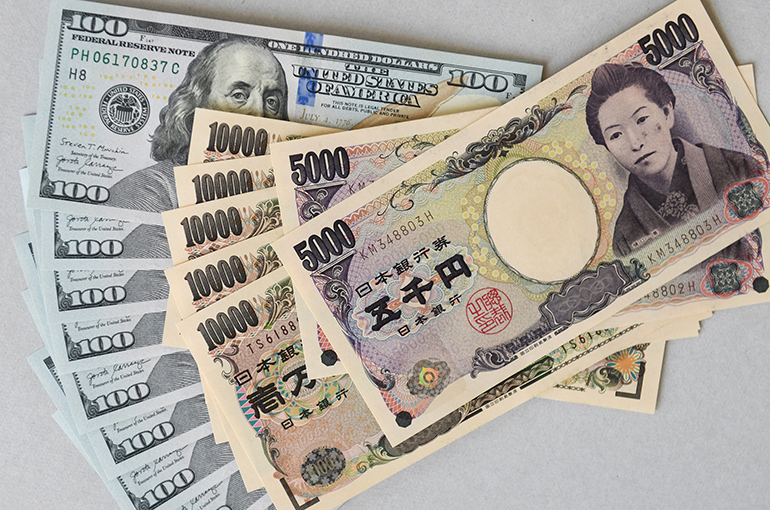
 Yen Erases Half of Intervention Gains as Markets Eye Further US-Japan Action
(Yicai) Aug. 12 -- The yen has weakened back toward 160 against the US dollar, reversing much of its surge after the first joint US-Japan intervention since 1998 and raising the prospect of further action to support the currency.
The US and Japan intervened on July 31, pushing the dollar-yen rate briefly toward 155 from nearly 164 at the end of last month. Its return toward the key 160 level has renewed questions over whether the two countries will step in again.
Market attention is also focused on the next moves by the Bank of Japan and the US Federal Reserve, including whether Japan will use the Fed’s Foreign and International Monetary Authorities Repo Facility, which allows foreign central banks to obtain US dollars by temporarily exchanging their US Treasury holdings for cash.
The BOJ and Fed’s next policy moves could favor a stronger yen, while the prospect of another joint intervention may also force investors to unwind speculative short positions in the Japanese currency, according to Tomo Kinoshita, global market strategist for Japan at Invesco.
US Intervention Capacity Faces Limits
“We will do whatever it takes to support them (Japan) in a way that helps the American economy, the American taxpayer,” US Treasury Secretary Scott Bessent told the media two days after confirming that the Treasury had joined Japan’s finance authorities in an intervention to prop up the yen.
Market analysts had previously noted that a key motivation for US support for intervention was likely to stabilize the US Treasury market as the dollar-yen exchange rate approached 164 at the end of July.
Kinoshita said that Japanese authorities may be concerned that further depreciation of the yen will push inflation higher, while US authorities may worry that a stronger US dollar could weaken the competitiveness of US exports. They may also be concerned about volatility in Japanese financial markets, including rising yields on long-term government bonds, which could spill over and push up US long-term Treasury yields. These concerns have prompted the US and Japan to strengthen coordination to address yen weakness, he added.
However, just days after the joint intervention, the yen again approached the 160 level. Market participants believe Bessent has limited ammunition for currency intervention through his main dedicated tool, the Exchange Stabilization Fund, which has less than USD220 billion.
Marco Casiraghi, a senior economist at Evercore ISI, wrote in a recent report that if the US and Japan allow the yen to continue trading above 160, the market could interpret the lack of intervention as a signal that the US is unwilling to sell dollars. This could bring additional market pressure and test both sides’ commitment to supporting a stronger yen.
BOJ, Fed Policies in Focus
Kinoshita told Yicai that the BOJ sent a more hawkish signal at its monetary policy meeting at the end of July, emphasizing that core inflation could exceed its 2 percent target.
BOJ Governor Kazuo Ueda also said at the post-meeting press conference that the pace of interest rate hikes could accelerate, remarks that may further reinforce the effects of the latest foreign exchange intervention.
A significant amount of speculative short positions in the yen had accumulated in financial markets before the intervention. If concerns about another joint US-Japan intervention intensify, these positions could be forced to cover, further driving the yen higher, Kinoshita added.
The Chief Investment Office of UBS Global Wealth Management said in its latest views sent to Yicai that the direction of Fed policy will be key to the yen’s exchange rate.
According to UBS, unless the BOJ makes a significant policy shift, including accelerating interest rate hikes and raising its terminal policy rate above current expectations, the yen’s recovery will not be sustainable.
Editor: Emmi Laine