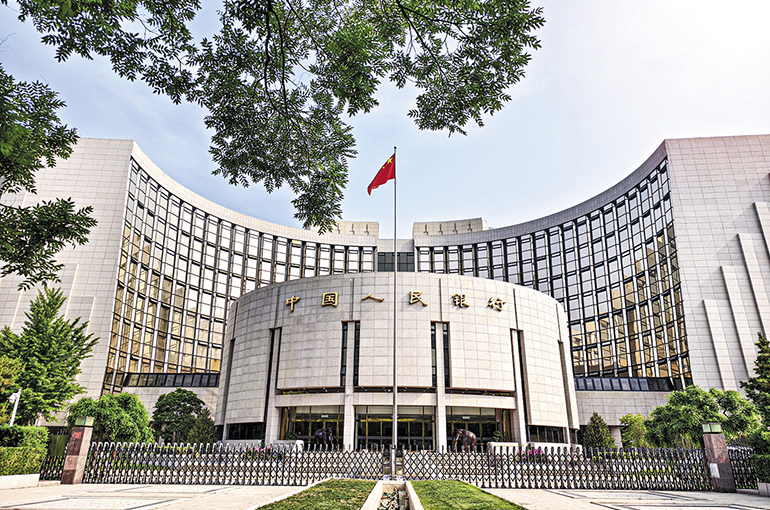
 Analysts See More Room for PBOC Monetary Easing in Second Half
(Yicai) Aug. 3 -- The People's Bank of China is expected to step up counter-cyclical monetary policy adjustments in the second half of the year, with a range of policy tools ready for flexible deployment, analysts said after reviewing the central bank's latest work plan.
The PBOC outlined its priorities for the second half of 2026 at a work meeting held on Aug. 1, identifying eight key areas of focus. These include continuing a moderately loose monetary policy, improving the quality and efficiency of financial services for the real economy, accelerating financial market development, prudently resolving risks in key sectors, and steadily advancing financial reform and opening-up.
"The room for monetary policy easing has opened up," said Wen Bin, chief economist at China Minsheng Bank. He said the meeting suggests the PBOC will respond promptly to economic conditions by making comprehensive use of aggregate policy tools, including reserve requirement ratio cuts and interest rate reductions, alongside structural monetary policy tools to create a dual-driver approach combining aggregate and structural measures.
Dong Ximiao, chief economist at Merchants Union Consumer Finance, expects the PBOC to make comprehensive use of reverse repurchase agreements, the medium-term lending facility, and government bond purchases and sales to maintain ample liquidity in the second half. At the same time, structural monetary policy tools are expected to support key areas including technological innovation, domestic demand expansion, and small and micro enterprises.
Wang Qing, chief macroeconomic analyst at Golden Credit Rating International, said credit growth will continue to follow the "slower growth with improved quality" trend in the second half. The focus, he said, will be on optimizing structural monetary policy tools and strengthening coordination with fiscal and industrial policies to support technology-related lending and inclusive financing for small and micro businesses.
Wang added that greater attention should now be paid to the structure of credit rather than relying on monthly or quarterly loan growth as the primary gauge of whether monetary policy is becoming more accommodative.
Monetary Policy Framework Continues to Evolve
In recent months, the PBOC has introduced an overnight reverse repurchase agreement facility and gradually increased the frequency of operations as part of broader efforts to stabilize short-term money market interest rates.
The central bank also said at the meeting that it will continue evaluating and improving the monetary policy framework, signaling further optimization of mechanisms such as interest rate regulation.
According to Wang, these efforts will help reduce volatility in DR001, the overnight pledged repo rate among deposit-taking institutions in China's interbank market, creating favorable conditions for the transition toward a more price-based monetary policy framework while maintaining ample liquidity and stabilizing market expectations.
Editor: Emmi Laine