



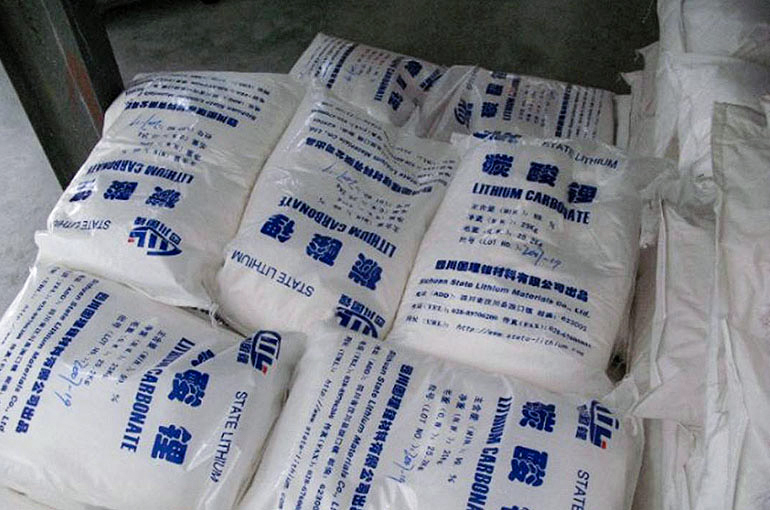
 China’s Lithium Carbonate Futures Snap One-Month Drop to Rise on Energy Storage, AI Demand
(Yicai) June 15 -- China’s most actively traded futures contract for lithium carbonate ended a near one-month decline last week, supported by growing demand for energy storage, new energy vehicles, and artificial intelligence computing infrastructure along with power market reforms.
The September contract gained 6 percent to end at CNY175,000 (USD25,865) per ton on the Guangzhou Futures Exchange last week. Lithium carbonate prices have now moved out of a deep two-year downturn, market participants generally agree.
Lithium prices briefly climbed back to the CNY200,000 mark in early May, then dropped sharply before bottoming near CNY157,000 in early June and rebounding again. Over a longer horizon, lithium carbonate has soared by about three times from a June 2025 low of CNY58,000 per ton.
Against the backdrop of sustained demand for energy storage systems, the outlook for the lithium battery sector this year may exceed expectations, Jin Xihan, who manages a selected hybrid fund at Ping An New Energy, told Yicai. Supply and demand in the lithium battery market has already achieved a temporary reversal, he said.
Looking further ahead, profitability is expected to be most durable among leading battery cell makers, followed by upstream lithium carbonate producers, and then midstream materials suppliers, Jin said. But as demand continues to materialize, the earnings rebound upstream and midstream could ultimately prove more pronounced, he pointed out.
Fundamentals are likely to shift from being driven mainly by NEVs to a three-way dynamic involving NEVs, energy storage, and AI computing power, potentially ushering in a healthier and more sustainable supply-demand cycle, according to a lithium battery industry chain analyst.
Another analyst said AI computing power is also reshaping the demand logic for lithium. AI data centers require energy storage systems with higher power-rate performance, longer cycle life, and greater safety, which could create differentiated demand for high-quality lithium carbonate and potentially generate a “computing power premium,” the person said.
Minerals such as lithium, cobalt, nickel, copper, and rare earths are indispensable raw materials for clean energy technologies, electrification, and digitalization, the United Nations Conference on Trade and Development stated in a report. It expects global lithium demand to increase by 353 percent from 2024 to 2040.
Editor: Tom Litting





