 After Seven Years and USD10 Billion, BASF Bets Its Future on China With Zhanjiang Verbund Opening
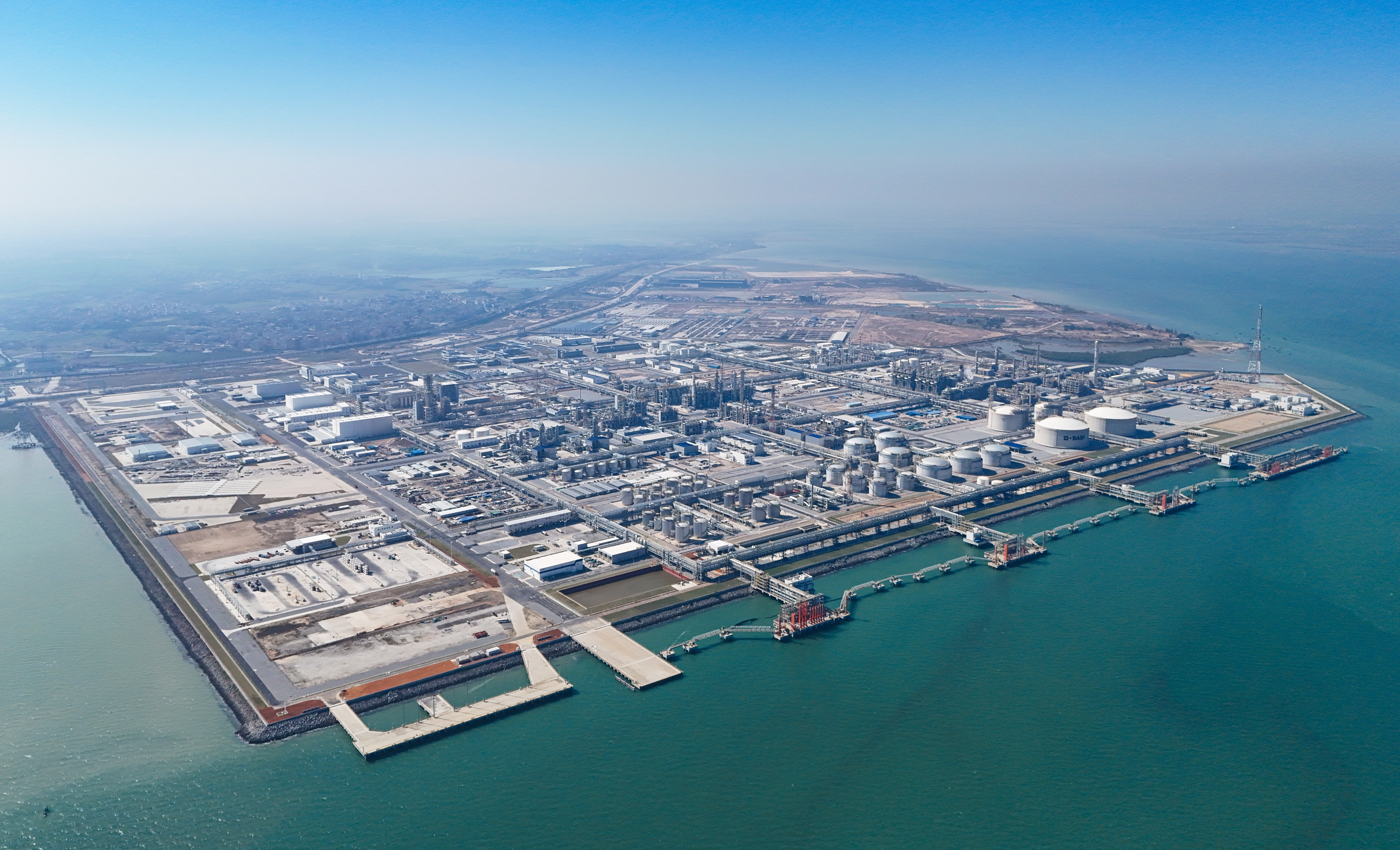
(Yicai) March 27 -- German chemical giant BASF has inaugurated its new, world-scale Verbund site in Zhanjiang, China's southern Guangdong province, setting a new global standard for sustainable, integrated chemical production.
Covering an area of four square kilometers, the Zhanjiang Verbund site officially came on stream yesterday, becoming the company's third-largest Verbund site globally. It is wholly owned and operated by BASF, employs more than 2,000 workers, and produces over 70 products, including basic chemicals, intermediates, and specialty chemicals.
BASF developed and refined the Verbund concept -- a one-source system that connects different plants, energy flows, and infrastructure -- in Ludwigshafen and later applied it to other sites worldwide. The sites, which are now seven, use the by-products from one production line as the raw materials for another to cut energy consumption, maximize the supply chain, and conserve resources.
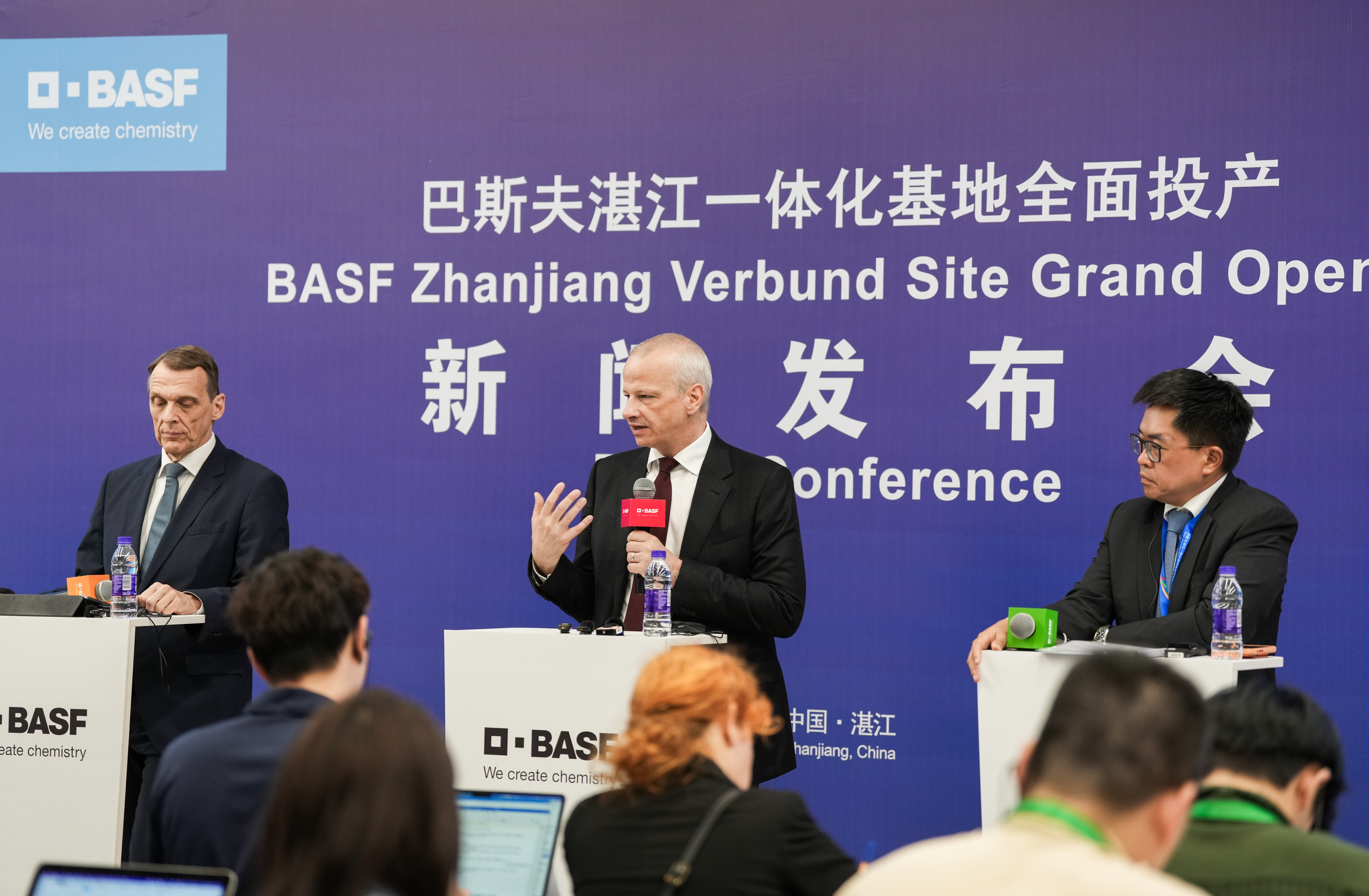
"Zhanjiang shows what the future of chemistry looks like: efficient, digital, and sustainable by design," BASF's Chief Executive Officer Markus Kamieth said at the opening ceremony. “This investment shows confidence in the world's largest chemical market in the long run.”
BASF announced it would invest EUR8.7 billion (USD10 billion) to build a Verbund site in Zhanjiang in 2018 and broke ground a year later. The project was completed on schedule and below the original budget, according the management team.
The majority of the products manufactured in Zhanjiang will directly serve customers in China, fully aligning with BASF's global 'local-for-local' approach. Around 70 percent of the site's customers are Chinese companies.
The Zhanjiang Verbund is 'in China for China,' Kamieth noted, adding that in the short term, the site may also supply clients in Japan, South Korea, and Southeast Asia.
China is BASF's second-largest market. Last year, the firm recorded sales of about EUR8.2 billion in the country, employing nearly 13,000 people across 29 production sites.
In the future, BASF will continue to invest in China, and the Zhanjiang Verbund site will be a platform for further opportunities, according to Kamieth.
When asked about BASF's deployment of artificial intelligence, Chief Technology Officer Stephan Kothrade said that there is hardly any area where AI cannot contribute to success. For example, BASF uses AI to run and optimize its warehouse logistics and to analyze and detect patterns from data collected at the plants.
New Standard for Green Production
Zhanjiang is powered entirely by renewable electricity through long-term green power purchase agreements and a co-investment in an offshore wind farm.
By using Verbund integration, process innovations, and renewable energy, carbon dioxide emissions at the site can be reduced by up to 50 percent compared with a conventional petrochemical site, BASF explained.
"I am proud of BASF's innovative strength as the basis for the startup of the most sustainable integrated chemical site in China," Kothrade noted. “It sets new benchmarks for sustainable chemical production in China and worldwide.”
The site's steam cracker, the starting point of various vale chains at the site, has a capacity of one million tons of ethylene per year and is the world's first equipped with main compressors (e-drives) powered by 100 percent renewable energy, supporting the production of high-quality, low-CO2 products.
BASF had long advocated for Chinese regulatory changes allowing industrial companies to sign direct power agreements with renewable energy providers, a model common in Europe but previously unavailable in China, said Haryono Lim, president of mega projects for Asia at BASF. The central government finally listened and introduced a new policy that opened the door for the broader industrial sector, he added.
The economics of green transformation are different in Europe and in China, according to Kamieth. In China, long-term renewable power purchase agreements deliver electricity at competitive, often lower-cost than conventional grid power, making the business case for electrification straightforward. In Europe, switching to green electricity raises costs sharply, eroding industrial competitiveness.
"If you want to significantly increase electrification in Europe, the economic damage will cause you to lose competitiveness," Kamieth noted. “That's why in Europe, a lot of decarbonization is attempted to be driven by regulation.”
China has demonstrated that the right combination of policy design and market conditions can make green transformation both mandated and economically viable, a model Europe has yet to replicate, he added.
Resilience in a Disruptive Market
The timing of the inauguration coincides with a period of significant stress in the global chemical market. The ongoing conflict in the Middle East has tightened shipping lanes through the Strait of Hormuz, disrupting raw material supply chains for Asian chemical producers, particularly those dependent on feedstocks transiting from the Persian Gulf.
BASF's long-standing 'local-for-local' approach has made the company more insulated than competitors, Kamieth said. "We typically produce in the region for the region, and we also source mostly in the region for the region," he explained. “This is why the Zhanjiang site is, despite the disruptive environment, in a very good situation to serve all customers here in China.”
Moreover, another advantage of the site is its mixed-feed steam cracker, said Kothrade. As the cracker can process both naphtha and butane, BASF can shift between feedstocks as market conditions change, a flexibility that competitors with single-feed crackers do not have. "Naphtha supply in China is short right now, but there are a few things we can still get," he noted. “This gives us a very good competitive edge.”
The utilization gap with competitors is already visible, Kamieth pointed out. Over the past two years, cracker utilization in China has broadly run between 70 percent and 80 percent, while BASF's Verbund crackers have been operating at close to 95 percent or above. "If you have a good cost position, you run high utilization," he added. “This is proof that our technologies are competitive.”
Editor: Futura Costaglione