 China Auto Sales Slide in February; BYD’s Exports Provide Bright Spot
(Yicai) March 2 -- China’s automakers broadly reported lower sales in February, weighed down by the extended Spring Festival holiday and the resumption of new energy vehicle purchase taxes at the start of the year, while BYD’s overseas deliveries surpassed its domestic sales for the first time.
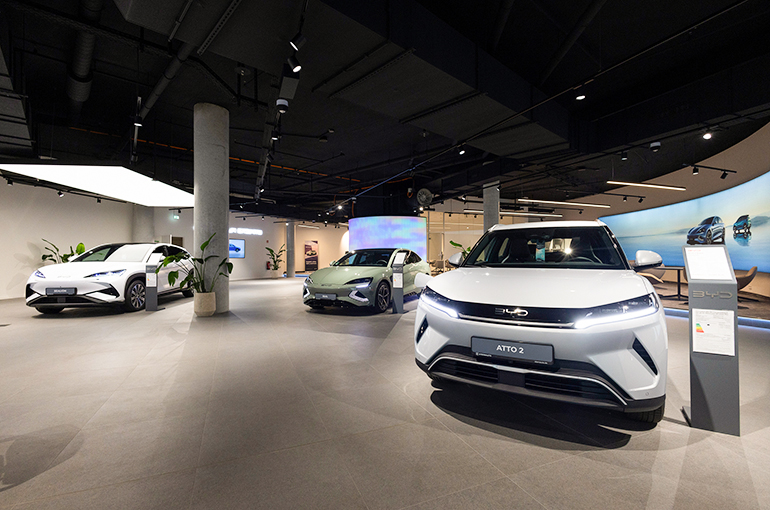
BYD sold about 190,000 vehicles in February, a year-on-year decline of more than 40 percent, according to the Shenzhen-based manufacturer. Overseas sales exceeded 100,000 units, up 41 percent from a year earlier, marking the first time they topped domestic deliveries.
SAIC Motor said it sold 269,500 vehicles in February, down 9 percent year-on-year, with NEV sales of 71,300 units falling 17 percent. Chery Automobile sold almost 160,770 vehicles, down 11 percent from a year earlier and 20 percent from January. Exports reached nearly 124,930 units, up 42 percent year-on-year, marking 10 consecutive months of monthly exports exceeding 100,000 units.
Among NEV startups, Leapmotor delivered almost 28,070 vehicles in February, up 11 percent year-on-year but down 12 percent month-on-month. Li Auto delivered over 26,420 units, with year-on-year growth of less than 1 percent and a nearly 5 percent month-on-month dip. Zeekr delivered almost 23,870 units, surging 70 percent year-on-year and ranking among the few brands to achieve both year-on-year and month-on-month growth.
Nio delivered about 20,800 vehicles, up 58 percent year-on-year but down 24 percent from January. Xiaomi Auto delivered more than 20,000 vehicles, with deliveries dropping nearly 49 percent month-on-month. Chief Executive Officer Lei Jun said the decline was mainly due to a product transition period, with the next-generation SU7 in preparation and current deliveries consisting of the YU7.
Aito, a premium brand launched by Huawei Technologies and Seres Group, reported combined sales of 58,000 units in January and February. With January accounting for about 40,000 units, February deliveries fell below 20,000. Xpeng delivered almost 15,260 vehicles, down 50 percent year-on-year, placing it last among major NEV startups.
Looking ahead, more than five provinces, including Hunan, Qinghai, Henan, Fujian, and Jiangxi, have rolled out detailed implementation rules for vehicle trade-in subsidy programs since February 10, according to Yicai’s tally. New models such as the Leapmotor A10 and the 2026 Xpeng X9 pure electric version are set to launch soon, while automakers are stepping up efforts with low-interest financing and bundled purchase incentives in a bid to spur demand.
Editor: Emmi Laine