



 China Seeks Input on NAMs Initiative to Reduce Drug Testing on Animals
(Yicai) July 28 -- China’s Center for Drug Evaluation has launched a public consultation on an initiative to hasten the adoption of new approach methodologies in drug research and development to reduce or replace animal testing.
Published by the CDE earlier this month, the proposed initiative -- Propel Innovation and Operation of NAM to Enhance Efficiency in Research and Development, or PIONEER -- is open for public comment until Aug. 7.
It seeks to encourage the use of a range of technologies that do not rely on animals, including organoids, organ-on-chip platforms, chemistry-based methods, in vitro techniques, and artificial intelligence simulations. Regulators in the United States, the United Kingdom, and other Western countries have announced similar plans.
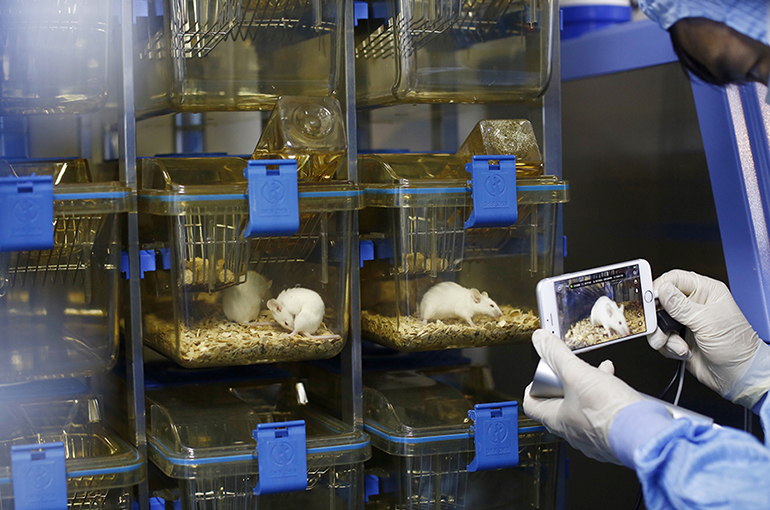
Animal testing has become ill-suited to the needs of innovative drug development because of limited accuracy in extrapolating animal results to humans due to species differences, long timelines, high costs, low throughput, and growing attention to animal welfare, the CDE noted.
Animal models predict human outcomes correctly only 50 percent to 65 percent of the time, and more than 90 percent of drug candidates fail in clinical trials, according to Xin Xie, co-founder and chief executive of Chinese organ-on-chip firm Xellar Biosystems. Organoid-based models are especially valuable for liver-toxicity studies, toxicity testing for topical treatments such as for eyes and skin, and diseases lacking suitable animal models, he said.
Reflecting growing commercial interest, the company expects tens of millions of Chinese yuan, equal to millions of US dollars, in revenue this year, with orders on hand exceeding CNY100 million (USD14.8 million), Xie noted. The company has partnerships with Sanofi, Pfizer, and Novo Nordisk.
A complete pre-clinical study typically requires about 58 lab monkeys, which cost more than half of the CNY20 million (USD3 million) usually needed for investigational new drug studies, said Niu Gang, a researcher at the Western Institute of the China Academy of Computing Technology and director of its Turing-Darwin Lab.
A single cynomolgus monkey, a macaque species used in drug research because of its close biological, physiological, and immunological resemblance to humans, costs more than CNY200,000 (USD29,555) amid a surge in new drug development in China, an employee at one Chinese drugmaker told Yicai earlier this month.
Introducing organoid models may raise R&D costs by 20 percent to 30 percent in the near term, but it is a cost of doing business that companies need to pay, Niu pointed out.
Leading contract research organizations are repositioning themselves to take part in the NAMs ecosystem, said Feng Ren, co-CEO and chief scientific officer at Insilico Medicine, which is building an automated screening platform centered on liver organoids.
Demand for NAMs-related capabilities, such as cell and gene therapy, as well as international regulatory filings, has risen sharply in recent years, a representative of listed Chinese CRO Medicilon said. But Ren cautioned against treating AI models as a panacea, arguing that efficacy prediction and safety assessment are fundamentally different scientific challenges that rely on distinct methodologies and cannot replace one another.
Organoids have not yet revolutionised drug development because they still lack important biological features, such as vascular systems, said Ding Sheng, founding dean of Tsinghua University's School of Pharmaceutical Sciences, adding that it may take at least three to five years before they deliver a genuinely transformative impact and win regulatory acceptance.
NAMs will likely remain “efficiency tools” rather than substitutes for animal-testing evidence in the near term, some insiders pointed out. Their ability to evolve into “decision-making tools” capable of supporting regulatory submissions will depend on the development of robust validation and qualification frameworks, as well as clearer regulatory pathways for acceptance, they said.
Editor: Futura Costaglione





