 Chinese AI Draws More Funding in Six Months Than All of 2025 as Investors Downplay Bubble Risks
(Yicai) Sept. 7 -- China’s artificial intelligence sector attracted more funding in the first half of this year than in all of 2025, with investors saying the resulting bubble remains within acceptable limits.
Total funding in the AI sector topped CNY300 billion (USD44.7 billion) in the first six months of this year, according to data from startup funding information provider ITjuzi, underscoring the intensity of the investment boom.
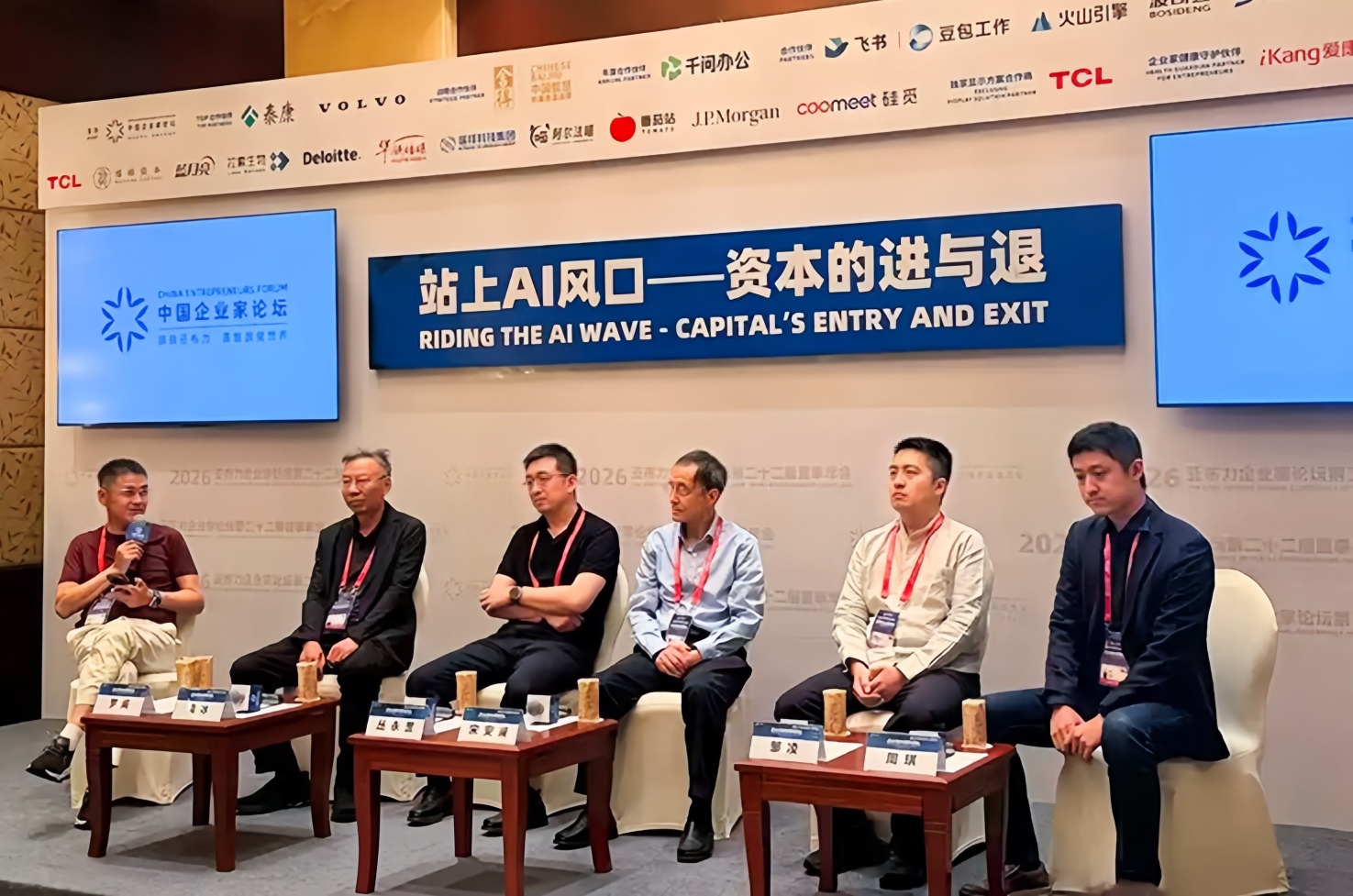
Competition for AI projects has also accelerated. “There are many people competing for AI investment projects, and if decisions are not made swiftly, the opportunities will be lost,” Alan Song, managing partner of SoftBank China Capital (SBCVC), said at the recent 22nd Summer Annual Meeting of the Yabuli China Entrepreneurs Forum.
Despite rising valuations and increasingly intense competition, investors said they remain focused on whether startups can create genuine value, maintain a technological lead, build scalable business models, and ultimately provide viable exit opportunities.
Investors Race for AI Deals
Cong Yonggang, co-chief executive and chief investment officer of Fosun Group's venture capital arm Fosun Capital, said the balance of power between investors and companies has shifted markedly amid this year’s financing boom.
“When I first entered the industry, investment institutions were more like buyers, and it was relatively easy to negotiate terms with companies. Now things are quite different. Sometimes it feels like we are service providers to companies, and we are even told what the price will be if we sign an agreement within three days, seven days, or one month,” Cong said.
The flood of capital has inevitably fueled concerns about a bubble, though some investors see it as a natural byproduct of a rapidly developing industry. “When an industry is just beginning to develop, a bubble actually represents a vibrant state. If an industry is not active, that is truly a significant problem,” said Yuan Bing, chairman of TCL Capital.
Bubbles should be assessed according to the different stages of an industry’s development and can sometimes be considered “healthy,” Yuan added.
Benjamin Zhou, managing director of Jinqiu Capital, expressed a similar view. He noted that although the fundamentals of some portfolio companies have changed little, they are pursuing two or three funding rounds at the same time.
Such a situation could also represent a healthy bubble, Zhou said, as the continuous influx of capital drives industry development and provides positive feedback for early-stage investments.
Investment institutions have developed their own methods for screening and evaluating projects amid the boom, with several investors agreeing that startups’ ability to create value and maintain technological leadership are among the most important considerations.
Luo Tian, chairman and CEO of Bojiang Capital, said his team does not blindly chase market trends. “What we value more is the ability to genuinely provide value to society; that is when we will truly invest,” he said.
“We need to assess whether the company's product is a necessity, while also hoping that it has a large market,” Song from SoftBank-backed SBCVC said.
His team also closely examines a product’s technological barriers, looking for businesses capable of maintaining a technological lead of one to three years. As SBCVC focuses on early- and mid-stage investments, it also assesses the capabilities of management teams and the scalability of their business models, Song added.
A significant portion of failures among portfolio companies is related to their teams, Song noted. Successful teams are those capable of pivoting quickly when they encounter difficulties.
Planning the Exit From Day One
Investors are also increasingly considering when and how they will exit an investment at the same time they decide whether to enter it.
Cong from Fosun Capital said investments must ultimately be made with an exit in mind. “When making early-stage investments, I assume that all companies could potentially be sold because going public is truly challenging.”
Based on that assumption, Cong requires his team to identify potential buyers and their motivations when evaluating investment projects. Common investment exit routes include initial public offerings, sales of existing shares, mergers and acquisitions, and share buybacks.
“Generally speaking, when a company's valuation increases to a certain extent, we need to sell at least a portion of our old shares to ensure the fund's distribution to paid-in capital,” SBCVC's Song said, referring to a key measure of how much money a fund has returned to investors -- an increasingly relevant consideration as surging AI valuations create opportunities to cash out earlier.
Valuations of some AI companies are rising rapidly, meaning investors could significantly accelerate the pace of recouping their investments by selling part of their equity, Song concluded.
Editor: Emmi Laine