



 China’s Alibaba to Use More Domestic Computing Power as AI Chip Production Ramps Up, CEO Says
(Yicai) Nov. 20 -- As Alibaba Group Holding gradually boosts production capacity for self-developed artificial intelligence chips, the share of domestic computing power the Chinese tech giant uses will continue to increase and become the main engine of revenue growth for its cloud computing arm, according to its chief executive officer.
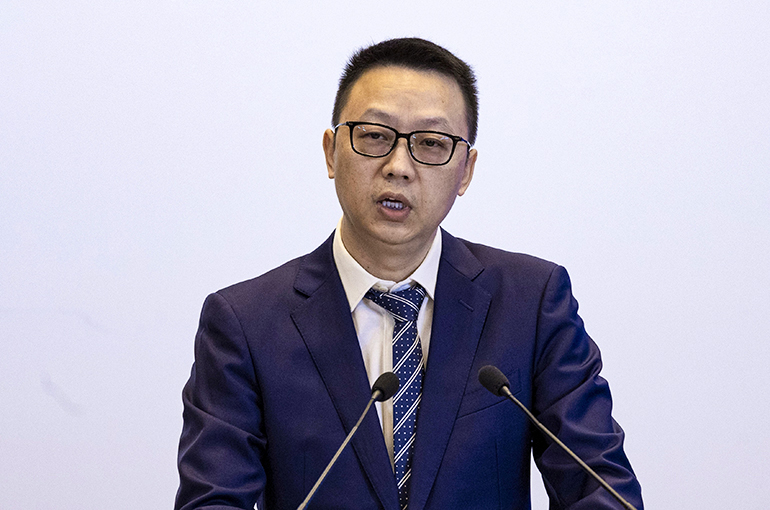
“Domestic computing power is developing faster than we expected,” Eddie Wu said at a third-quarter earnings conference call late yesterday. Alibaba has been using its self-developed chips to train the next-generation Qwen large language model and expects them to fully support ultra-large-scale model training by the first quarter of next year, he added.
After 2027, the vast majority of Alibaba’s new AI chip supply will likely come from its chip unit T-Head Semiconductor, whose flagship products will be prioritized for model iteration at the parent firm and its key deep cooperation partners, he said. On the inference side, the company will buy more chips of different types, including from other domestic producers, he pointed out.
Hangzhou-based Alibaba is moving past the period of heaviest investment in AI infrastructure, he added, noting that as domestic computing power supply chains scale up, and compared with the previous reliance mainly on externally bought chips, the profit margins of its cloud and AI businesses will likely improve significantly by 2028.
The AI industry is still in an early phase, so views differ on whether applications or models matter more, Wu said. Alibaba’s strategy is to develop applications and models together, he noted, adding that in the long run, he is more optimistic about integrated solutions that can create unique customer value by deeply combining models with application scenarios.
Alibaba Cloud’s revenue growth target for the next fiscal year, starting in April, remains 30 percent to 45 percent, Wu pointed out. However, as domestic computing power use continues to rise, the company will likely resume high-speed growth of more than 50 percent in the second half of 2028, he added.
Alibaba’s net profit more than tripled to CNY64.5 billion (USD9.7 billion) in the fiscal quarter ended Sept. 30 from a year earlier, while revenue rose 10 percent to CNY271.5 billion (USD40.7 billion). AI-related income posted triple-digit growth for the 13th straight quarter, but free cash flow ended at a CNY34.5 billion outflow due to massive cloud infrastructure investments.
Editors: Tang Shihua, Martin Kadiev





