



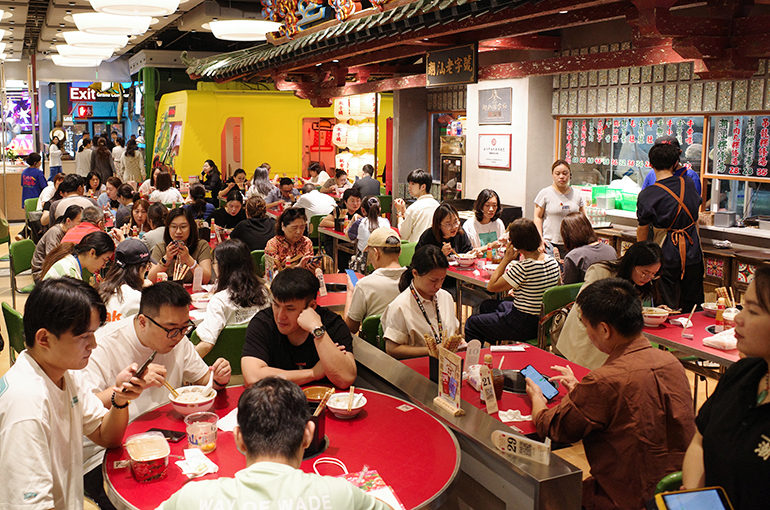
 China's Catering Sector See Revenue Grow for Third Straight Year in 2025
(Yicai) Jan. 26 -- China's catering sector, which includes restaurants, fast-food outlets, and cafes, posted its third consecutive annual gain in revenue last year, fueled by robust first-half growth.
China's catering industry saw revenue jump 3.2 percent to CNY5.8 trillion (USD833.8 billion) last year from the previous year, according to data released by the National Bureau of Statistics on Jan. 19. The sector's share of total retail sales of consumer goods increased to 11.6 percent from 11.4 percent.
The catering market saw a high growth in the first half before stabilizing in the second half, when growth rates gradually leveled off, the China Cuisine Association noted.
In addition, catering firms above the designated size, or those with an annual revenue of at least CNY20 million (USD2.9 million), faced noticeable pressure due to differences in policy implementation across regions, intensified competition driven by platform subsidies, and other factors, posting growth rates below the overall industry level for several months, reflecting ongoing adjustments and optimization within the sector's internal structure, the CCA added.
Small establishments with fresh ingredients and minimal processing are becoming more popular among consumers, the World Federation of Chinese Catering Industry recently pointed out, adding that there is an increasing demand for standardization, professionalism, technical expertise, and innovation in the sector.
The diversification of catering consumption structures is also on the rise, along with an increase in the use of automated equipment in kitchens, the WFCCI noted.
New business formats and product categories were active last year, with clear trends towards health and seasonality, the CCA said. Beverage categories such as tea and coffee accelerated innovation and capital investment, expanding into health and integration, while categories like hot pot and barbecue continued to gain momentum amid consumer upgrades, showing keen awareness of market trends.
In response to changing demands, catering firms actively strengthened product development, holiday marketing, and cultural integration, the CCA pointed out. They expanded consumption scenarios through various methods, including "catering + cultural tourism," "catering + digitalization," and "catering + local livestreaming."
Intangible cultural heritage cuisine, regional festivals, and other similar activities injected cultural significance into the catering industry, enhancing the consumer experience and brand value, the CCA noted.
Editor: Martin Kadiev





