



 China’s Central Bank Cuts RRR for Second Time This Year
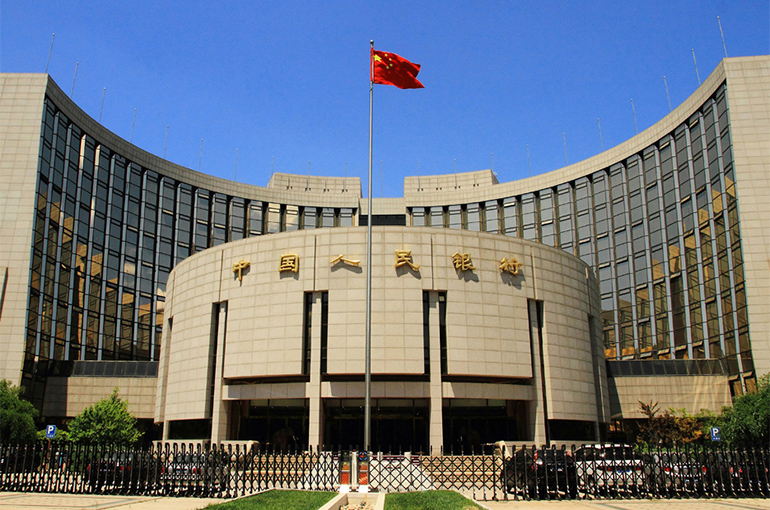
(Yicai) Sept. 15 -- The People’s Bank of China, the country’s central bank, announced it will cut the reserve requirement ratio for the second time this year to boost liquidity and support the economic recovery.
The PBOC will cut the RRR for financial institutions by 25 basis points to 7.4 percent from today, the central bank announced yesterday.
This was the second RRR reduction of the year, following another 25-bps cut on March 27.
The move will release over CNY500 billion (USD68.7 billion) medium- and long-term liquidity in the banking system, lower banks’ cost of capital by CNY7 billion to CNY8 billion (USD976.6 million to USD1.1 billion) per year, and ease pressure on lenders from interest spreads and falling profits because of lower rates on existing mortgages, Dong Ximiao, chief researcher at China Merchants Bank-China Unicom Consumption Finance, told Yicai.
The latest RRR cut also delivers a strong policy signal to the market that the PBOC is determined and able to use policy tools to help the economy pick up steadily and reserve the sentiment of market players, Dong added.
Market analysts earlier predicted the move, claiming that cutting the RRR was a good choice to hedge against factors disrupting liquidity.
The supply and demand of short-term funds will significantly change in the middle of the month because of the issuance of local government bonds, the peak tax season, and the quarter-end regulatory work evaluation, according to an industry insider.
Lowering the RRR releases liquidity with no maturity, costs, or paybacks, said Liang Si, a researcher at the Bank of China Research Institute, adding that this will help banks reduce the cost of capital and lower regulatory requirements on credit expansion, thus hiking their capabilities of granting credit loans, especially medium- and long-term loans.
More medium-term lending facilities will be due in the second half of the year, so it is necessary to cut the RRR to release MLF and thus guarantee enough liquidity in the market and reduce financial institutions’ cost of debt, Wen Bin, chief economist at China Minsheng Bank, told Yicai.
“MLF worth CNY2.8 trillion (USD384.8 billion) are maturing between August and December,” Wen pointed out.
A total of CNY2.4 trillion MLF will expire by the end of the year, with CNY400 billion due today, according to statistics from information provider Wind.
Reducing the RRR can also stimulate the Chinese yuan exchange rate. Five of the eight RRR cuts made since 2020 caused the offshore yuan to appreciate against the US dollar. After the RRR cut in March, the offshore yuan closed up 125 basis points against the US dollar.
Moreover, lowering the RRR can raise investors’ capabilities of investing more in the financial market, an industry insider said. The Shanghai Composite Index rose the day after six of the eight RRR cuts made since 2020. The index rose over 30 percent after the RRR cut in April 2020.
The PBOC lowered both the interest rates and the RRR twice this year, greatly reducing the financing cost of the real economy.
Corporate loan rates fell to historic lows in the first eight months of the year, and the personal housing loan rates declined 0.95 percentage point in the period, data showed.
This latest RRR cut will significantly curb surging interest rates, which will build up strength for the macroeconomic recovery and benefit the capital market, Wang Qing, chief macro analyst at Golden Credit Rating International, predicted.
Editor: Futura Costaglione





