 China's First-Quarter Export Surge Was Down to Trade Diversification, Experts Say
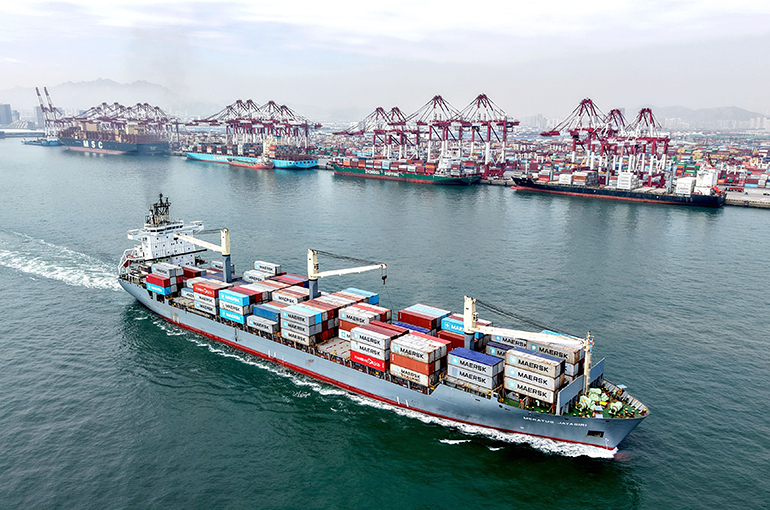
(Yicai) April 15 -- China's goods exports experienced double-digit growth in the first quarter of the year, mainly thanks to increased exports to countries and regions other than the United States, according to experts.
Despite a big decline in exports to the US under a high-tariff environment, China's trade diversification effect continued to intensify, which led to a rapid growth in exports to markets outside the US, Feng Lin, executive director of research and development at Golden Credit Rating International, told Yicai.
China's exports surged 15 percent to USD977 billion in the three months ended March 31 from a year earlier, while imports climbed 23 percent to USD713.2 billion, generating a trade surplus of USD264.3 billion, according to data released by the General Administration of Customs yesterday. Last month alone, they gained 3 percent and 28 percent to USD321 billion and USD269.9 billion, respectively.
The primary driver of China's faster export growth in the first half was the substantial increase in exports to countries along the Belt and Road Initiative, Feng noted.
China's foreign trade in goods with BRI countries in Chinese yuan terms expanded more than 14 percent in the first three months of the year from a year earlier, accounting for 51 percent of the total. Meanwhile, trade with Latin America and members of the Association of Southeast Asian Nations rose 15 percent.
In the first quarter, international trade maintained robust growth, and the global manufacturing sector experienced an expansion phase, with surging exports from South Korea and Vietnam, which also contributed to the acceleration of China's export growth in the period, Feng said.
The impact of geopolitical tensions on the global industrial and supply chains in the first quarter is another factor that must be considered when analyzing China's foreign trade data.
"China's foreign trade with the Middle East shifted from year-on-year growth in January and February to a decline in March," said Lv Daliang, spokesperson for the GAC.
The Strait of Hormuz is a critical passage for global goods and energy trade, accounting for 25 percent of global maritime oil trade, 19 percent of liquefied natural gas trade, 29 percent of liquefied petroleum gas trade, and 13 percent of chemical trade, making it one of the world's key maritime transport choke points, Lv noted.
After the war in the Middle East broke out, fuel prices surged sharply, significantly raising transportation costs, according to the United Nations Conference on Trade and Development. As these factors are driving up the costs of global commodity production and transportation, the growth rate of global trade in goods is expected to decline.
Sudden changes in the Middle East last month had a certain weight on China's exports to the region, but the overall impact on its total exports remained limited, Feng said.
As the effects of the Chinese New Year holiday dissipate, export fluctuations are expected to stabilize in April, with growth rates returning to normal levels, Feng predicted. In the short term, exports of key products, such as new energy vehicles, will continue to provide significant support for overall exports.
However, under the influence of the Middle East conflict, there is a possibility that weakening external demand could affect China's exports, Feng noted.
China's export growth will likely rebound to around 6 percent in April, with exports to the US also expected to recover from this month, given the low base last year after the US implementation of additional import tariffs, according to Feng.
Editor: Futura Costaglione