



 China’s 'Green Super Rice' Takes Root in Senegal, Boosting Yields and Incomes
(Yicai) Dec. 22 -- A village more than 100 kilometers from Dakar has recorded a bumper rice harvest after adopting China’s "green super rice," underscoring how agricultural technology cooperation is beginning to improve livelihoods and food security in Senegal.
Ndianda village harvested rice for the third time in its history in October. For generations, local farmers had planted millet and peanuts, but the shift to rice became possible after the introduction of the variety known locally as ISRIZ-12, Yicai learned.
First proposed by Chinese scientists in 2005, the green super rice concept entered large-scale development in 2008 through cooperation with the Bill & Melinda Gates Foundation, with a focus on creating resilient varieties suitable for Asia and Africa.
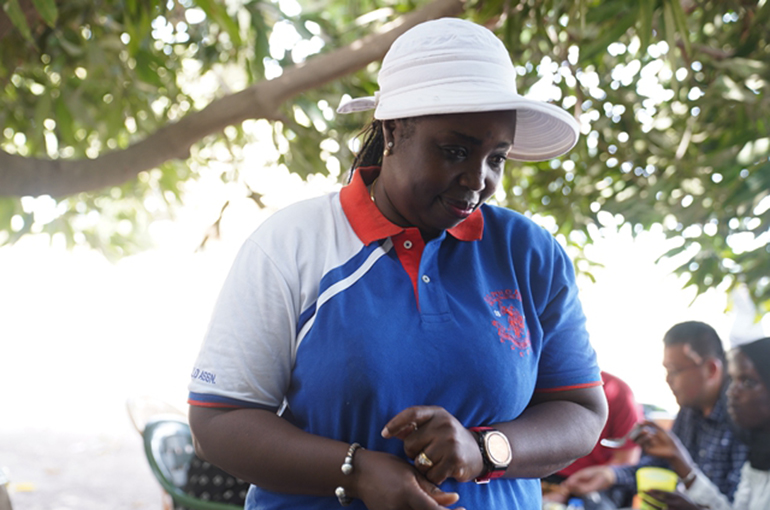
In Senegal, the transformation began with entrepreneur Awa Diop, who introduced ISRIZ-12 seeds obtained from Senegal’s agricultural research institute. The green super rice variety is water-efficient and drought-resistant, requires less pesticide and chemical fertilizer, and delivers high yields, making it well-suited to Senegal’s tropical savanna climate.
Just over three months after planting, Ndianda produced its first full rice ears, drawing attention from nearby villagers and local officials. As word spread, more farmers began experimenting with ISRIZ-12, accelerating the adoption of the new variety.
Diop said the first farmers she hired were women willing to try new technologies to earn higher incomes. Their success later encouraged their husbands to join, helping the rice variety gain wider acceptance.
Korka Diaw, chairwoman of the Women’s Agricultural Network in northern Senegal, told Yicai that the organization, which has 16,000 members, is also shifting toward planting green super rice.
At the national level, ISRIZ-12 offers hope for reducing Senegal’s reliance on imported rice. The country imports around one million tons of rice annually, accounting for about 70 percent of domestic consumption. It is Africa’s third-largest rice importer, spending substantial funds on imports that could otherwise support development.
“Solving the food problem is not just a matter for our village, but also a major issue for Senegal,” Diop said. “Only when everyone has enough food to eat can society remain stable and plan for long-term development.”
Editor: Emmi Laine





