



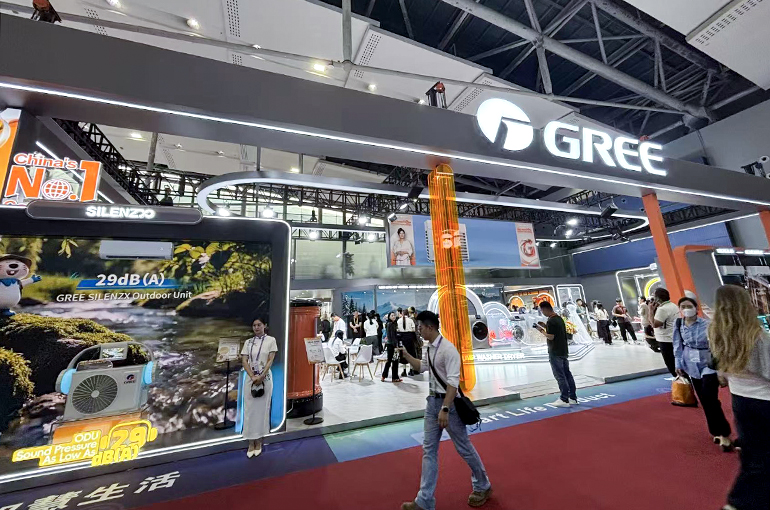
 Hisense Denies Breaching Gree's Rights by Using 'Genuine Copper Materials' in Air-Con Adverts
(Yicai) April 17 -- A brand manager at Hisense Group said the Chinese white goods giant has not infringed on the intellectual property rights of rival Gree Electric Appliances by using the phrase "genuine copper materials" in its advertizing for air conditioners.
On April 14, Gree’s Chief Marketing Officer Zhu Lei accused Hisense of doing just that. “Genuine copper materials” was a phrase originally coined by Zhuhai-based Gree, he said in a post on social media platform Weibo.
In response to the accusation, Yang Xiangxi, brand director of Hisense Home Appliances Group's air-con division, told Yicai that Hisense, together with four other air-con makers, was among the first recipients of the "genuine copper materials" certification jointly launched by the China Consumers Association and the International Copper Association a decade ago.
The phrase was not created by Gree, Yang stressed.
Hisense uses copper tubing for condensers, evaporators, and connecting pipes in both indoor and outdoor air-con units, with high-efficiency models using double-row copper tubes, Yang said. Most of Gree’s exported air-conditioner products use aluminum-wire motors, he noted.
Zhu acknowledged that Gree uses aluminum materials in air-cons sold overseas because the dry climates in some countries pose no corrosion risks. However, all models sold in China use pure copper as aluminum may fail to meet the 10-year free warranty requirement, he pointed out.
Replacing copper with aluminum in the raw materials used in air conditioners is necessary and feasible, according to industry experts. Leading manufacturers should not take the lead in stigmatizing the use of aluminum over copper, they told Yicai.
Aluminum Prejudice
There is public prejudice against aluminum-for-copper technology, but aluminum is not an inferior substitute, Chen Jianmin, dean of Xi'an University of Technology's Reliability Research Institute, told Yicai. With improved corrosion resistance, slower heat exchange performance degradation, and longer service life, the reliability of air-cons using aluminum can be enhanced, he pointed out.
Chen urged the industry and the public to abandon stereotypes and view aluminum's strategic value and practical performance rationally and scientifically.
“China's air-con industry is accelerating the establishment of a third-party reliability evaluation system for aluminum substitution, launching product certification and publicity with authoritative testing institutions, and promoting revisions to relevant national standards," Chen said.
“In the future, technical indicators, verification methods, and third-party evaluation requirements for 'aluminum replacing copper' will be incorporated into national standards, so as to ensure the standardized implementation of related technologies at the institutional level,” he added.
The use of "genuine copper materials” as a selling point by leading manufacturers will hinder the widespread adoption and promotion of aluminum-for-copper technology in the sector, said He Jinming, vice president of market consultancy AVC.
The industry’s efforts to replace copper with aluminum still faces the test of practical use and consumer acceptance, He noted. In addition, the cost advantages of aluminum evaporators remain limited due to low output and high processing fees, he said.
China's air-con industry is under pressure from surging copper prices, saturated demand, and fierce competition. The average price of a split-type air-con unit fell nearly 5 percent to CNY3,099 (USD428) last year, while retail sales will likely drop 6.9 percent to CNY219.5 billion (USD30.4 billion) this year, according to AVC.
Editors: Tang Shihua, Martin Kadiev





