



 China’s Household Savings Slow as Non-Bank Deposits Soar in January; Analysts Call It a Structural Shift
(Yicai) Feb. 24 -- Chinese yuan deposits saw strong year-on-year growth in January, but the pattern of slower household deposit growth alongside faster non-bank deposit growth persisted. Industry insiders said this does not mean that money is leaving the banking system, nor does it suggest that the stock market will suddenly see a massive influx of new capital.
January’s numbers continued the trend observed since last year, where household deposit growth has been slowing, while non-bank deposits keep growing faster.
Last month, yuan deposits increased by CNY3.8 trillion (USD551.2 billion) year-on-year, according to data released by the People's Bank of China on Feb. 13. Notably, thanks to the low base last year and a strong start to the equity market, non-bank deposits added CNY1.5 trillion (USD218 billion), a gain of CNY2.6 trillion from the year before. Meanwhile, household deposits increased by CNY2.1 trillion, reflecting a year-on-year decrease of CNY3.4 trillion.
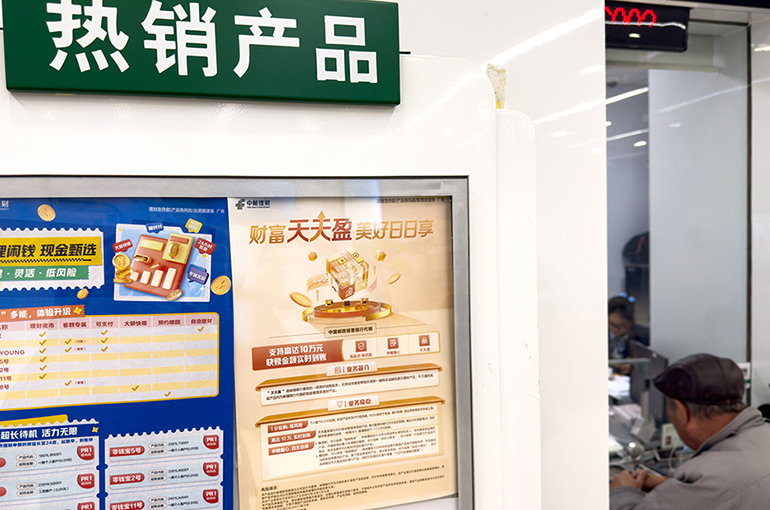
Households and companies are moving from bank deposits to wealth management products, mutual funds and other asset management products in search of better returns.
When households buy asset management products, those funds may in turn be placed in interbank deposits or certificates of deposit, which increases the deposits of non-bank institutions in banks, Zeng said. Even if the money is invested in other underlying assets, it ultimately becomes deposits held by companies or related institutions. From a flow perspective, this capital will eventually return to the banking system. In other words, ‘deposit migration’ is more a structural adjustment in where deposits sit, rather than a migration of liquidity out of the system.
The new regulations on interbank deposit rates which took effect on Dec. 1, 2024, directly caused a big drop in non-bank deposits in January 2025, creating a low-base effect, according to a research report by China Merchants Securities. On top of that, the recent strong capital market performance encouraged households to move money from bank deposits to non-bank products, ultimately resulting in slower household deposit growth and faster non-bank deposit growth.
Non-bank deposits increased by CNY2.5 trillion (USD363.3 billion) year-on-year, according to a research report by China Galaxy Securities. This growth is due to the low base in 2025 and is also due to the active stock market at the start of the year which attracted household funds. Average daily trading volume in January jumped 58 percent from the previous month.
Zhong Linnan, a senior macro analyst at GF Securities, said deposits are only one potential source of liquidity for the equity market. Funds currently allocated to insurance and bond assets may have even greater room to shift into stocks.
Asset management products adjust their strategies based on market conditions, yield curves and regulatory changes, which makes non-bank deposits relatively less stable, Zeng said. If markets swing sharply, concentrated redemptions could force non-bank institutions to withdraw large amounts of bank deposits.
Although non-bank deposits may cost banks 10 to 15 basis points less than regular deposits, such volatility can significantly increase liquidity management pressure, meaning overall funding costs may not actually fall.
Editor: Kim Taylor





