



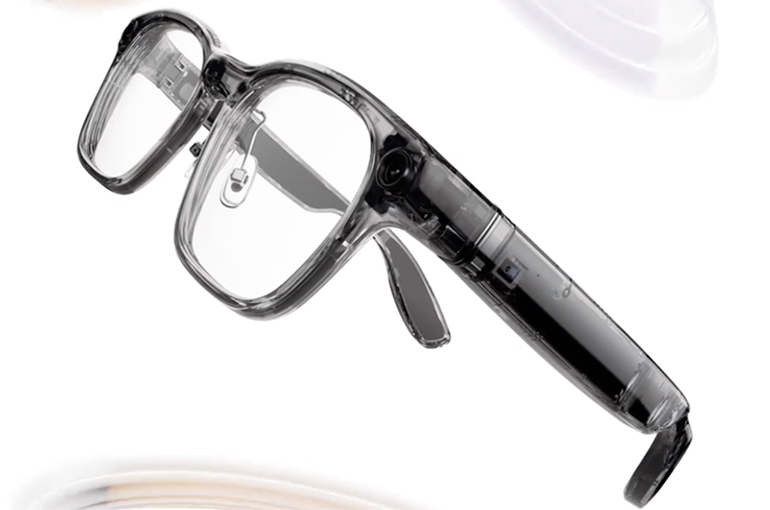
 China's Li Auto Launches First AI Smart Glasses for USD285
(Yicai) Dec. 4 -- Chinese electric vehicle startup Li Auto has begun selling its first artificial intelligence smart glasses at a starting price of CNY1,999 (USD285), becoming the latest of many Chinese companies in the emerging market.
The 36-gram Livis smart glasses boast a battery life of 18.8 hours, support wireless charging, and are equipped with an upgraded version of Li Auto's self-developed AI assistant Li Xiang Tong Xue as well as a proprietary operating system, the Beijing-based firm announced yesterday. They come with Zeiss lenses, offering diopter-adjustable, photochromic, and sunglasses options, it added.
Over the past year, multiple Chinese firms have launched their first smart glasses, including Baidu and Alibaba Group Holding last month and Xiaomi in June, while traditional players such as Rokid have released new models.
The core focus of Li Auto's AI glasses business is optimizing basic performance, including weight, battery life, response speed, and intelligence, while striving for a sleek and elegant product design, Senior Vice President of Product Fan Haoyu told Yicai. "If we excel in these aspects, we will already be the best in the industry," he said, adding that the company will not rush to "let the AI glasses take on more tasks to profit from them" before their capabilities are sufficiently robust.
Li Xiang Tong Xue has served nearly 1.5 million car owners, executing hundreds of millions of commands and in-depth conversations, Li Auto pointed out. Validated through real-world scenarios, it has evolved into a reliable smart companion for users, it noted.
Li Auto will continue to iterate and optimize the AI glasses in the future, Fan noted. The first step is to improve the weight and battery life of the display-less version, followed by the launch of a model with a display co-developed with Zeiss, he pointed out.
The third step is to create a standalone device form factor that does not require connection to a smartphone, Fan stressed. "Demand will then usher in an explosive phase."
The "iPhone moment" for AI glasses will likely arrive between 2027 and 2028, according to Fan. By then, products will be able to seamlessly connect and collaborate with multiple devices, perceive user actions in real-time, and respond intelligently, becoming a natural interaction hub linking users to the digital world, he said.
Li Auto's AI glasses business falls under its Wearable Robot Division, established earlier this year, because AI glasses are essentially "robots worn on the head," Fan noted.
Li Auto's new products revolve around AI, Fan said. In addition to the AI glasses, it also includes car robots, namely Level-4 self-driving vehicles, and the upgraded smart cockpit, which serves as a thinking "spatial intelligence agent," he added.
AI glasses are becoming a competitive hotspot in China's smart products market. Shipments of smart glasses may surge 121 percent to over 2.9 million this year, International Data Corporation has predicted. Nearly 2.17 million will be audio and audio-capturing glasses, and about 742,000 will be AR/virtual reality glasses, up 178 percent and 38 percent, respectively.
Editors: Tang Shihua, Martin Kadiev





