


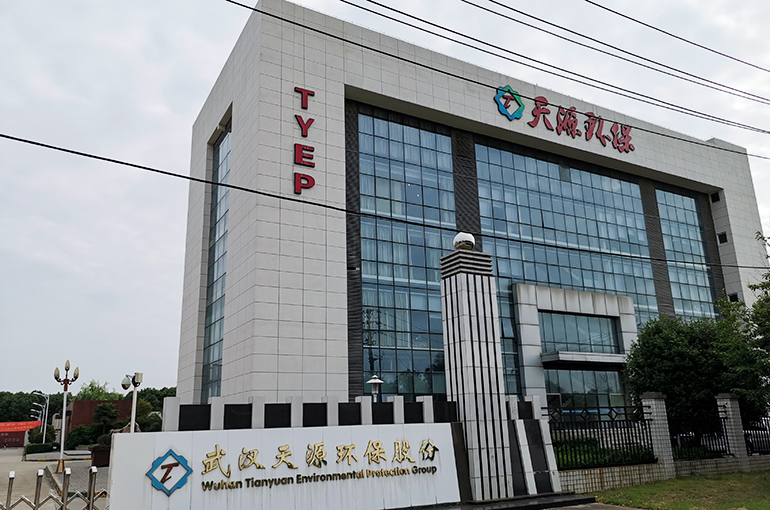
 China's Tianyuan Rises on USD68.7 Million Plan to Build Compound Semiconductor Material Plant in Yunnan
(Yicai) Oct. 15 -- Tianyuan Group rose after the Chinese provider of energy-saving and environmental protection services said it plans to invest CNY500 million (USD68.7 million) building a high-purity indium phosphide and high-purity indium factory in Yunnan province, a southern region rich in upstream raw material resources, to capture new opportunities brought by the computing infrastructure boom.
Tianyuan [SHE: 301127] closed 2.5 percent higher at CNY14.70 (USD2.20) a share today, after surging by as much as 10 percent at one point. Chinese stocks were under selling pressure during the whole day, with Shenzhen's tech-focused ChiNext Index falling 2.9 percent.
The project will be located in the zero-carbon park within the Chuxiong High-Tech Industrial Development Zone, with the base having an annual production capacity of 100 tons of indium phosphide polycrystal products and 200 tons of 6N/7N-grade high-purity indium, Wuhan-based Tianyuan said in a stock exchange filing late yesterday. Construction should take 12 months.
The administrative committee of Chuxiong High-Tech Industrial Development Zone pledged to help Tianyuan establish a long-term and stable alliance with producers of high-purity phosphorus and crude indium in the zone to secure raw material supply for the project, the company noted. Indium phosphide polycrystal is synthesized using high-purity indium and high-purity phosphorus as raw materials.
Yunnan boasts abundant crude indium resources. Crude indium is a byproduct recovered during the smelting of non-ferrous metals such as zinc and lead, with high-purity indium refined from crude indium.
Tianyuan entered the emerging semiconductor materials industry in August after acquiring a 60 percent stake in Zhongxun Semiconductor Jiangsu, a startup researching and developing compound semiconductor substrate materials including indium phosphide, according to its latest earnings report. Zhongxun has mastered production technologies for optoelectronic semiconductor materials such as indium phosphide single crystal, though it has yet to generate operating revenue.
Indium phosphide single crystal is produced from indium phosphide polycrystal. Further processing yields indium phosphide substrates with excellent photoelectric conversion properties. The substrates serve as the core base material for high-speed optical communication lasers, radio-frequency devices, and infrared optoelectronic chips, the latter of which are core components packaged inside high-speed optical modules.
Editor: Martin Kadiev