



 China's Trensor Eyes ‘Second Takeoff,' Malaysian GM Says as Its Plant in Malaysia Nears Completion
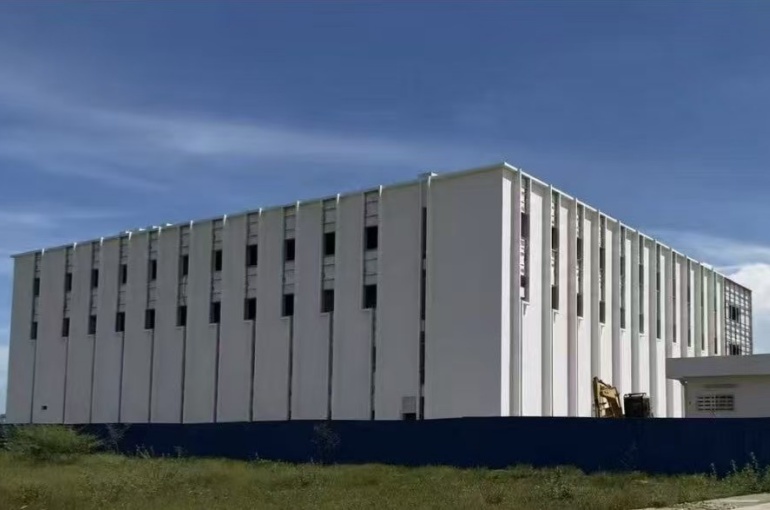
(Yicai) June 30 -- Trensor, a Chinese manufacturer of pressure sensors for the automotive and industrial fields, is about to complete the construction of its first overseas plant in Malaysia. The general manager of its local branch believes that this milestone can help the company achieve a “second takeoff.”
"I hope Trensor can achieve its own 'second takeoff' in financial performance through its operations in Malaysia, alongside the future trajectory of the country," Zhou Wenbo told Yicai in an interview, quoting the book 'Second Takeoff: Strategies for Malaysia's Economic Resurgence,' written by Malaysia's Deputy Finance Minister Liew Chin Tong.
In the book 'Second Takeoff,' published in 2024, Liew wrote that Malaysia stands at a rare historical juncture where global supply chain realignment is driving a fresh wave of foreign investment that could mark Malaysia's second economic takeoff after the first one between 1988 and 1997.
Trensor's Malaysian pressure sensor plant is located in the Penang Technology Park @Bertam, across the strait from Penang Island. Nearby, there is also the USD300 million integrated circuit packaging and testing project of China's Forehope Electronic, showing that more and more Chinese firms are setting up shop in Penang.
Founded in 2009, Trensor has three plants in Wuxi. Overseas sales have long accounted for more than half of its total revenue, so building a factory outside China was a natural move. Construction at the Malaysian plant began in May last year, with an investment of nearly MYR100 million (USD24.6million). Once operational, it will have an annual capacity of 10 million pressure sensors.
The original driver for building a factory overseas was customer demand, as global manufacturers seek to diversify their supply chains, Zhou said. Clients have responded positively to the project's progress, he noted, adding that some of them have already increased order volume, with others pushing the company to move faster.
Low-cost manufacturing hubs, such as Vietnam and Cambodia, were never on Trensor's radar because high-value-added products are not particularly sensitive to labor costs, according to Zhou. What the company wanted was a location where Western customers would feel confident about sourcing, with solid infrastructure, policy stability, an adequate pool of technical talent, and no language barrier.
Zhou first set foot in Penang in November 2023. "Walking into Penang International Airport, the interior reminded me of public buildings in Britain," he said. He was also struck by the fact that overseas Chinese communities had been living there for over a century. Moreover, major Western semiconductor companies had operated there for decades, which made Penang immediately feel like a strong fit.
Malaysia accounts for about 13 percent of the global chip packaging, assembly, and testing market, according to the Malaysian Investment Development Authority. Since Intel set up operations in Penang in 1972, the state has drawn more than 350 multinational companies.
The Chinese community, which makes up nearly half of the population, combined with the English-language fluency inherited from its time as a British colony, helped Penang stand out among Southeast Asian investment destinations.
Building From the Ground Up
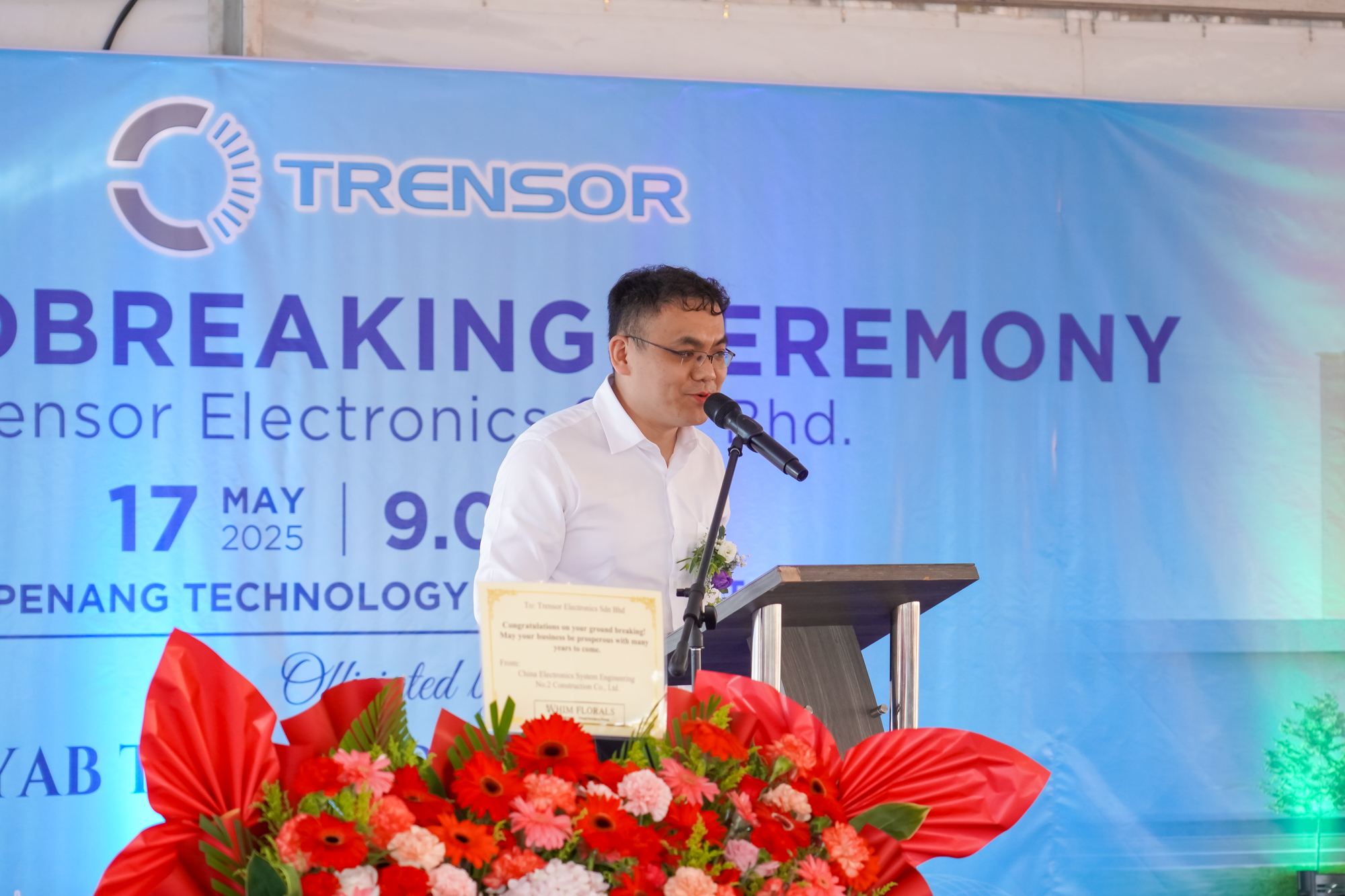
Once Trensor settled on Penang, the company quickly decided to buy land and build its own factory, rather than lease and retrofit an existing facility. It ultimately chose the Penang Technology Park @ Bertam, an area that is also home to a cluster of Chinese-invested plants, including PROPAC International Sdn.Bhd, INV New Material Technology, and SuperSiC.
The design and supervision work was carried out by M.E.I Engineers, a local engineering firm with nearly four decades of experience in Penang. After more than two years of collaboration, Zhou was most impressed by the firm's consistent professionalism and patience, and the fact that it never makes promises it cannot keep.
There have been some difficulties during the plant's construction process. Building materials and service costs in Penang are much higher than in China, Zhou noted, reassuring that construction standards were not compromised in the end.
Malaysia's legal system, heavily influenced by British common law, is clear and well-structured, offering companies a form of protection, Zhou explained. However, approval processes can be complex, and time costs are real.
Industrial land purchases require an environmental assessment before construction can begin. Securing a manufacturing license and tax incentives means working with the MIDA, which reviews the quality and positioning of a company's development. Procedures and timelines also vary by state, and even by local governments within the same state.
"Things are never that perfect in real life," Zhou said. “Following the rules may be less efficient in the short run, but it pays off in the long run.”
Trensor set aside additional land for future expansion, a decision shaped by a lesson learned at the company's Wuxi headquarters, where a new building was found to be too small shortly after it was occupied, Zhou noted.
Finding Personnel
The factory is not yet finished, but hiring has already started. Zhou believes that the main difference between Malaysia's and China's labor market is the supply and demand dynamic.
At Trensor's Wuxi plants, most of the personnel, from line workers to senior managers, come from outside Jiangsu province, as labor mobility is the norm in China. However, Malaysia's population is less than half that of Jiangsu, and Penang's population is less than a third of Wuxi's. Locals are generally reluctant to relocate. Therefore, the scarcity and immobility underpin every hiring challenge the company faces.
Penang observes about 19 public holidays a year, but the labor law only requires employers to grant 11 of them. Most foreign-invested companies offer 15 days, and some Western ones give as many as 18. "If you only offer 11, it's very hard to recruit white-collar staff," Zhou noted.
About promotions, Zhou believes in meritocracy, regardless of nationality or ethnicity. When asked whether a Malaysian national could one day serve as GM of the plant, he said: “I see no reason to rule that out.”
Precision sensor manufacturing demands strict process control, and employees in key roles will be first sent to Wuxi for training. Trensor's production lines are highly automated.
The Malaysian factory is the first that Trensor has built entirely from scratch. Zhou said that the company's level of involvement has gone far beyond anything seen domestically, “even our chairman was deeply involved in the design, from start to finish.”
The future is unpredictable, but the important thing is to adapt to local conditions and not be overconfident that experience from China can be replicated in Malaysia, he noted.
Editor: Futura Costaglione





