


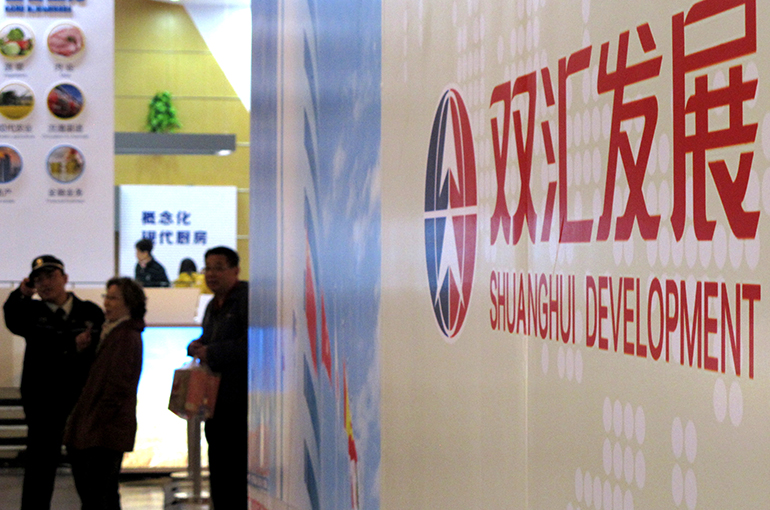
 Chinese Local Gov’ts Fine Shuanghui, Its Execs USD19 Million for Excessive Drug Residues in Pork
(Yicai) Oct. 13 -- China’s Shuanghui Investment and Development, the world’s largest pork processing company, and its executives were fined a total of CNY129 million (USD19.3 million) for violations including selling pork containing excessive veterinary drug residues.
During a food safety inspection in August last year, pork produced by Shuanghui’s Wangkui-based unit Shuanghui Beidahuang Food was found to contain lincomycin at 37.5 times the limit, the Luohe-based parent company announced on Oct. 10, citing the Heilongjiang Provincial Market Supervision Administration. The violation involved 910 pigs, which generated illegal gains of CNY1.7 million (USD253,985).
Wangkui’s agriculture and rural affairs bureau and Luohe’s animal husbandry bureau and market supervision administration imposed fines and confiscated assets worth a total of CNY72.5 million (USD10.8 million) on Shuanghui and related entities. Chairman Wan Hongwei was fined CNY37.7 million, and three other executives CNY18.7 million.
The penalties will reduce the company’s net profit for fiscal 2026 by CNY63.8 million, but they will not cause any other serious issues, such as mandatory delisting, nor will they affect production and operations, Shuanghui noted, adding that it committed to making improvements in six areas, including sourcing, testing capabilities, and process control.
The pork had high veterinary drug residues because of the illegal use of medications at the breeding level and inadequate control of withdrawal periods, according to an experienced pig farming industry insider.
If the breeding process is not properly controlled at the slaughtering stage, problems are likely to accumulate and emerge, the insider explained. A reasonable resting period allows time to test for veterinary drug residues. Once pigs are slaughtered and the carcasses are formed, detecting excess residues results in significant losses with no room for recourse.
The core issue is not the separation of breeding and slaughtering, but a structural shortcoming that amplifies risks, the insider noted. The lack of data connectivity among breeding, transportation, and slaughtering makes it difficult for slaughtering companies to grasp the true medication situation upstream.
Enterprises that do not yet have the conditions for integrated supply chain management should strengthen connections between upstream and downstream processes, streamline data, and ensure product sources and destinations can be traced, the insider suggested.
Editor: Futura Costaglione