 China’s Booming AI Toy Industry Faces Shakeout Soon, Experts Predict
(Yicai) Dec. 4 -- China’s market for artificial intelligence toys is growing fast as tech titans such as Huawei Technologies launch products. But industry insiders warn that most are built with the same basic hardware and offer intelligence that still falls short of expectations, leading them to predict a market consolidation as early as next year.
China is pushing to grow its AI toy industry, with the government announcing recently that it will encourage toymakers and AI developers to work together. The market was worth about CNY24.6 billion (USD3.48 billion) last year, and is expected to increase to CNY29 billion this year, according to the Ministry of Industry and Information Technology.
AI toy sales surged in the first six months of this year, more than tripling from a year earlier and growing sixfold compared with the second half of last year, according to data from e-commerce giant JD.Com.
Clever Buddy, Huawei’s first AI-driven emotional companion for kids, has become a bestseller. Priced at just CNY399 (USD56), it sold out almost immediately after being released on Nov. 28.
AI toys on sale at the well-known Huaqiangbei electronics market in Shenzhen are generally priced at more than CNY200, Securities Times reported today. Products under CNY300 typically rely on off-the-shelf large language models such as ByteDance's Doubao and offer only basic features like companion chat, storytelling, long-term memory, and voice calls, it said.
More expensive products add hardware like cameras, enabling them to recognize human emotions through facial expressions, according to the report.
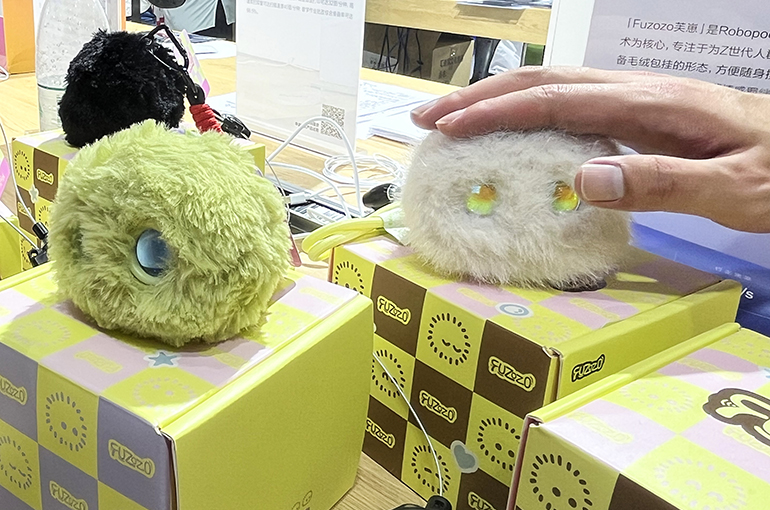
A shop assistant at the bazaar said standard plush toys can be converted into “AI toys” simply by fitting a chip module, some sensors, and batteries. A representative for the Shenzhen Internet of Things Association added that the core chip module can cost as little as CNY20 (USD2.83).
Consumers have complained online that AI toys often tell the same stories, and the advertised features of long-term memory and emotional interaction are completely missing. A store owner on Alibaba Group Holding's Taobao e-commerce site said return rates for AI toys were initially as high as 40 percent. While that has fallen to less than 20 percent, returns remain a persistent issue, they added.
A major industry shake-out is likely next year because many manufacturers that are genuinely trying to build quality products face high hidden costs, as cloud computing, content moderation, and privacy compliance all erode profit margins, according to Luke Lin, founder and chief executive of Lockin.
Three types of players will survive, Lu pointed out. Consumer electronics giants, including Huawei and Xiaomi, content giants such as The Lego Group and The Walt Disney Company, and service providers focused on vertical scenarios like early education, chronic illness companionship, and elderly care, he noted.
Editor: Martin Kadiev