



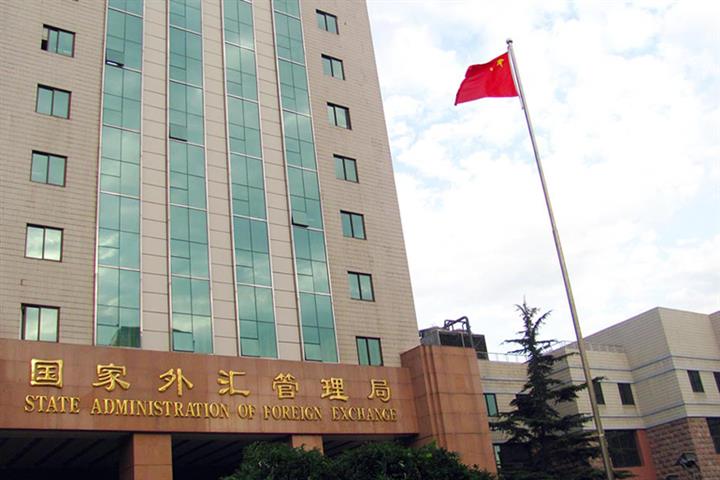
 Chinese Yuan to Remain Stable in Second Half, SAFE Says
(Yicai Global) July 22 -- China’s currency will remain fundamentally stable on foreign exchange markets in the second half of the year as the country’s main economic indicators are improving while supply and industrial chains remain steady, according to the State Administration of Foreign Exchange.
Economic fundamentals will continue to play an important role in supporting the yuan, SAFE Deputy Administrator Wang Chungying told reporters today, noting that given the stronger resilience of foreign trade, funds into the real economy will continue to be the basis of inflows, which is conducive to the basic balance between forex supply and demand.
In the first half of the year, the yuan’s exchange rate was stable globally and became more flexible, she added.
The government also better coordinated Covid-19 restrictions with economic and social development, Wang said. With strong economic resilience, great potential, and ample room to make adjustments, China laid sound foundations for the forex market’s stable operation and made the country better able to cope with changes in the external environment, she added.
The US dollar has strengthened this year because of the US Federal Reserve’s interest rate hikes, geopolitical risks, and other factors. As of yesterday, the US Dollar Index has gained more than 11 percent in 2022, with the euro, UK pound, and Japanese yen depreciating by between 10 percent and 17 percent. The yuan has only softened 5.8 percent against the US dollar.
The yuan remained basically stable against a basket of currencies, with the RMB Index rising 0.1 percent over the period.
Cross-border capital flows are generally stable and relatively balanced, Wang said. In the first half, Chinese banks had a net forex settlement surplus of USD85.2 billion. The surplus of foreign-related receipts and payments on behalf of customers was USD83.4 billion.
Moreover, the current account surplus and long-term capital inflows remain the main factors leading to a balanced cross-border capital flows. The current account surplus rose 25 percent to USD89.9 billion in the first quarter from a year earlier, equal to 2.1 percent of gross domestic product and the most for a first quarter.
From January to May, actual use of foreign capital was USD87.8 billion, up 23 percent from the same period a year ago.
Editor: Futura Costaglione





