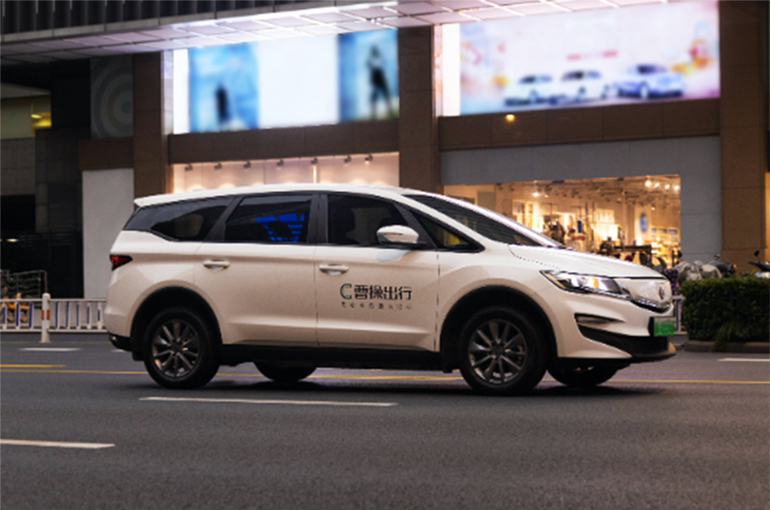
 Didi, T3 Go, and CaoCao Mobility Race to Scale China Robotaxi Services
(Yicai) May 8 -- Chinese ride-hailing platforms, including Didi Chuxing, are stepping up their robotaxi businesses this year as technological advances and looser regulation create more room for commercialization.
Robotaxis could significantly lower operating costs for ride-hailing firms and open up new growth space as the technology moves from premium services to the mass market, analysts said.
Didi will work with partners in the United Arab Emirates to promote robotaxi applications and plans to begin tests and pilot programs this year, Zhang Bo, co-founder of Didi and chief executive of Didi Autonomous Driving, said at the UAE-China Business Promotion Conference last month. The R2, a new-generation robotaxi jointly developed by Didi Autonomous Driving and GAC Aion, obtained a Beijing intelligent connected vehicle road test license in March.
More supportive policies from central and local governments are expected to accelerate technical standardization and commercial deployment, with cities including Guangzhou and Shanghai rolling out measures such as financial support and broader application scenarios.
Platforms Expand Robotaxi Testing
According to the prospectus T3 Go submitted in April, the company had connected a fleet of more than 300 robotaxis by the end of last year and was conducting road tests in Nanjing and Suzhou.
CaoCao Mobility said in March that it had put more than 3,600 virtual robotaxi pick-up and drop-off points into operation in two areas of Hangzhou.
The per-kilometer operating cost of robotaxis is expected to be 50 percent to 80 percent lower than that of traditional ride-hailing services, which will unlock significant profit potential, Chen Liteng, a senior analyst for digital life at 100EC’s e-commerce research center, told Yicai. As technology matures and costs fall, robotaxis will gradually penetrate the mass market from the high-end segment, creating a new growth area for ride-hailing platforms, Chen added.
Policy Support Accelerates Commercialization
China’s unmanned vehicle service market is expected to expand to CNY92.8 billion (USD12.9 billion) in 2030 from CNY1 billion (USD139 million) in 2025, with a compound annual growth rate exceeding 149 percent, according to China Insights Consultancy.
The main reason multiple platforms are accelerating their robotaxi deployments is technological breakthroughs and a more open regulatory environment, industry insider Chen Min told Yicai, adding that several policies have sent positive signals this year.
Since the start of the year, central and local authorities have introduced policies to speed up robotaxi standardization and commercialization. In March, ministries and commissions, including China’s industry and information technology ministry, held a symposium with new energy vehicle companies, calling for faster breakthroughs in autonomous driving technology, optimized pilot access procedures, and quicker formulation of related standards to create favorable conditions for mass production.
Editor: Emmi Laine