



 DR Congo's Export Ban to Have Limited Impact on Chinese Copper, Cobalt Miners, Expert Says
(Yicai) Aug. 10 -- The Democratic Republic of the Congo, the world's second-largest copper supplier and biggest cobalt producer, recently announced a new ban on the export of copper and cobalt concentrate, but the move will have limited impact on Chinese mining companies operating in the region, according to an expert.
Many Chinese companies have been operating in the DRC for years, setting processing lines and exporting refined mineral products rather than raw ore, so they fall outside the scope of the new policy, Zhu Ming, director of the regional cooperation office at the Shanghai Institutes for International Studies, told Yicai.
On Aug. 6, Reuters reported that the latest government order from the DRC to ban copper and cobalt concentrates exports came into effect that day, with the measure aiming to promote the in-country processing of mineral products and increase the added value of mineral resources. The Minister of Mines has the authority to grant one-year export exemptions for specific projects, it added.
The DRC has issued export bans on copper and cobalt concentrates in 2013, 2019, and 2023, which were eventually lifted due to insufficient domestic smelting capacity. Zhejiang Huayou Cobalt, Zijin Mining Group, and CMOC Group, three major Chinese firms operating in the country, have made comments on the latest measures.
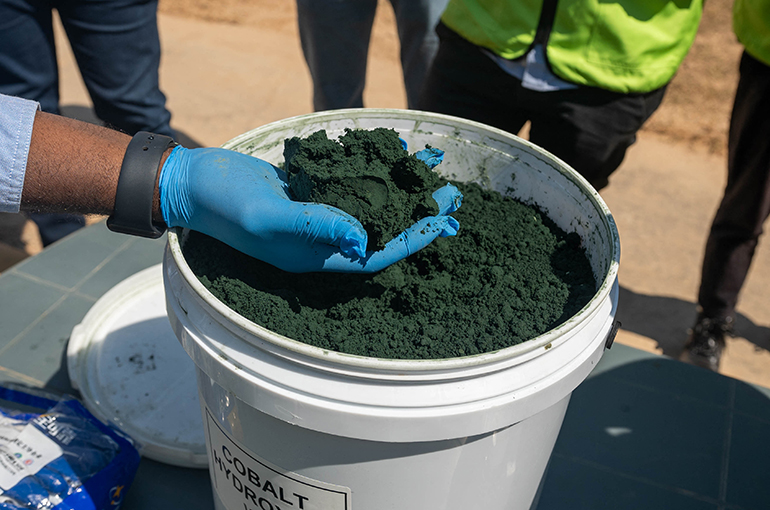
Huayou Cobalt produces crude cobalt hydroxide and electrowon copper in the DRC, which does not involve the export of primary mineral products such as copper and cobalt concentrates, the Tongxiang-based company told investors on Aug. 7.
Zijin Mining's Kolwezi Copper Mine in the DRC produces crude and electrowon copper, while its Kamoa-Kakula Copper Mine produces anode plates and crude copper, the Longyan-based company noted on the same day, adding that these products do not fall under the new policy.
An insider from CMOC also said on social media on the same day that the company's TFM and KFM mines in the DRC produce cathode copper and cobalt hydroxide, respectively, involving no concentrates.
The DRC still needs to overcome several shortcomings to implement the new policy, Zhu pointed out. Starting with an insufficient power supply, which makes it difficult to support the local large-scale deep processing of mineral products, and followed by an underdeveloped upstream and downstream supply chain for mineral processing, creating a significant bottleneck in local capacity to process raw ore, Zhu said.
The DRC, Zimbabwe, and other resource-rich African countries have repeatedly introduced mineral export bans or mandates for local mineral processing, Zhu stressed. However, such measures have often been difficult to enforce strictly over the long term due to objective conditions, leading to subsequent exemptions or relaxed restrictions, Zhu added.
Editors: Dou Shicong, Martin Kadiev





