



 Faster, Cheaper Access Is Turning China Into a CAR-T Therapy Hub for Cancer Patients
(Yicai) Dec. 5 -- China is becoming a global center for chimeric antigen receptor-T cell therapy, which re-engineers a patient’s own white blood cells to recognize and attack cancer, because of faster access to treatment, lower costs, and expanding hospital capacity.
Since launching its international CAR-T cell therapy center in May, Shanghai-based private medical provider SinoUnited Health has received more than 100 overseas inquiries and treated over 20 foreign patients from 12 countries, including New Zealand, the United Kingdom, Germany, France, Canada, and Singapore.
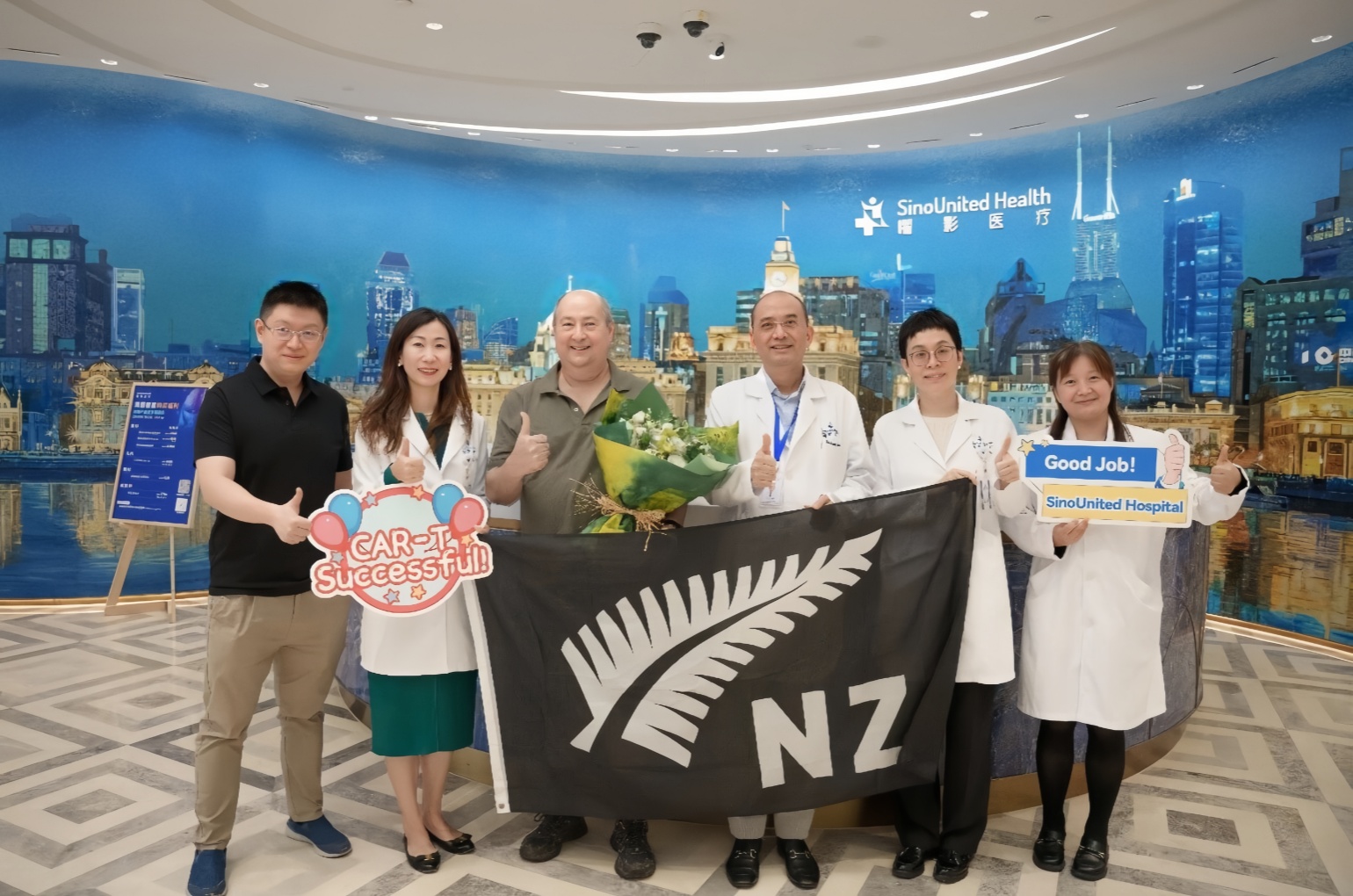
One such patient -- New Zealand businessman Dale De Penning -- made the trip to Shanghai after being told he has only months to live and should consider palliative care back home. Following bridge therapy, a temporary treatment, and then CAR-T infusion at SinoUnited Health, his tumor disappeared in just three months, and he has since resumed a normal life.
“The most rewarding moment is when we get feedback from overseas patients, seeing them recover and return home, back to normal life,” Dr. Lily Zhou, director of hematology at SinoUnited Health, said at the medical provider's international health forum on Nov. 28.
The growing number of patients coming to China for advanced cancer treatment shows how the country’s fast progress in novel therapies is starting to reshape the global map of high-end medical services, according to industry insiders.
China’s Advantages
China’s appeal as a medical tourism destination for CAR-T therapy lies in the size of its healthcare system, treatment speeds, and cost advantages compared with overseas markets.
“In the last one or two years, we have probably performed more CAR-T cell therapies in China than anywhere around the world,” said Kwong Yok Lam, a professor at the University of Hong Kong's medical school and hematologist at Queen Mary Hospital.
Since China gave the green light to its first CAR-T cell therapy in 2021, eight products had been approved as of late last month, covering both blood cancers and solid tumors. The United States has approved seven CAR-T therapies, mostly for blood cancers, in the same time.
High clinical volume enables shorter cardiac cycles, faster patient enrollment, and doctors with extensive experience managing complex side effects, all of which are critical advantages for relapsed or refractory lymphoma patients whose conditions can worsen within weeks.
Kathy Shi, founder and CEO of SinoUnited Health, called this “China landing speed” -- the ability to mobilize medical teams, facilities, and supply chains in days rather than months.
“It's remarkable to see that China is really leading the advances and innovations in CAR-T cell therapy,” said Yi Lin, medical director of Immune Effector Cell Program at Mayo Clinic, a major US non-profit academic medical center.
Although speakers at the forum did not provide exact prices, industry observers point to major cost differences. In the US, CAR-T cell therapies can cost from USD273,000 to USD475,000, while in China they start from CNY1 million (USD141,430). For self-funding patients, who are still the majority, these cost gaps can be decisive.
“The financial aspect is really the biggest challenge” even in China, Kwong said. “Not every patient can afford the treatment, and not every government is in a position to support it.”
Healthcare institutions in emerging markets face similar constraints. Medical City Clark in the Philippines referred patients to Shanghai because CAR-T therapies are unavailable in the country, while there is minimal government support and very few insured patients, noted Alma Calavera, a doctor at the hospital.
Private Sector Shift
The rise of CAR-T therapies marks a shift in private healthcare in China, which has traditionally focused on general practice, pediatrics, and preventive care. Now, those healthcare providers are moving into oncology, hematology, and advanced therapeutics.
CAR-T treatment has significant infrastructure needs due to risks including cytokine release syndrome and neurotoxicity, requiring 24-hour intensive care unit access, multi-disciplinary teams, and long-term monitoring. For overseas patients, additional logistical hurdles include visas, accommodation, and data sharing between differing healthcare systems.
“International medical services need more than innovation, they need full-cycle management,” according to Shen Hua, SinoUnited Health’s co-chief medical officer.
In De Penning's case, treatment required coordinated care across multiple locations, with Chinese and New Zealand teams jointly planning bridge therapy, infusion, and follow-ups.
Toward Global Standard Setting
The shift in oncology medical tourism reflects a deeper sea change. While the internationalization of China's pharmaceutical sector has long centered on license-out deals, inbound patient flows suggest a new dimension of high-end medical service exports.
China's large patient population, streamlined regulatory pathways, experienced clinicians, and competitive pricing are positioning it as an access point for advanced therapies.
China can help shape global standards, said Prof. Du Juan from Renji Hospital, who leads several CAR-T clinical programs. "We need international, multi-center trials.” he said. “CAR-T therapy should benefit patients everywhere, not just in China or the US."
"As companies think about doing these trials worldwide, they need to prospectively plan for more in-depth studies," said Mayo Clinic’s Yi, emphasizing the importance of global collaboration and noting that US regulators mandate better ethnic diversity in clinical trials.
Medical tourism for advanced therapies shows that China’s biotech sector is maturing from fast follower to innovation contributor, while private institutions build capabilities in complex care previously concentrated in public hospitals.
Editor: Martin Kadiev





