



 Foreign Carmakers With Low Sales in China Face High Market Exit Odds, Think Tank Says
(Yicai) Dec. 17 -- Foreign automakers with relatively low sales in China face a high probability of exiting the market amid a dramatic shift in market share toward domestic brands, with five to six expected to pull out in coming years, according to a new report by think tank China EV100.
A foreign or joint venture carmaker’s likelihood of quitting the Chinese market is strongly correlated with sales, per the report released yesterday. Those selling fewer than 300,000 units a year face an up to 80 percent probability of exiting, with at least four predicted to leave.
Those selling between 100,000 and 300,000 cars annually face a 50 percent to 80 percent exit probability, with four to five likely to give up, while those in the 300,000 to 600,000 range face a 20 percent to 50 percent chance of quitting, with two to three likely departures.
More than 45 foreign and JV carmakers operate in China, accounting for about 40 percent of passenger vehicle manufacturers, the report said.
Among JVs, Dongfeng Peugeot-Citroën, Chery Jaguar Land Rover, Smart Automobile, Changan Lincoln, Changan Mazda, and Jiangling Ford all sold fewer than 100,000 vehicles in the past year, according to insurance registration data.
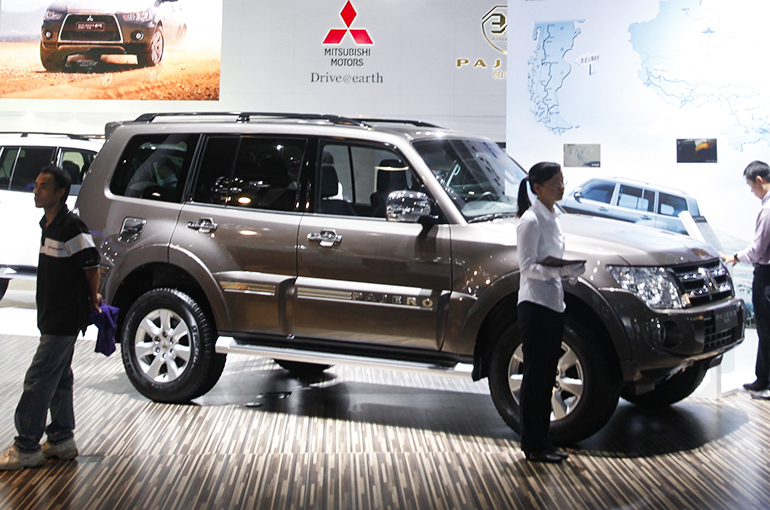
Domestic auto brands saw their market share climb to 65 percent in the first 10 months of this year from 36 percent in 2020, while that of foreign rivals dropped to 35 percent from 64 percent. Japan's Suzuki Motor and Mitsubishi Motors have already exited.
German brands made up 14 percent of China's retail auto sales last month, Japanese brands 12 percent, US brands 5.7 percent, and South Korean brands just 0.9 percent, data from the China Passenger Car Association showed.
In response to a changing market, major foreign producers have stepped up their shift to an "in China, for China" strategy, and within JVs, Chinese teams are gaining more influence in product definition.
Volkswagen Group set up its China Technology Research Center in Hefei and has developed a common modular platform electric vehicle architecture exclusively for the country. Toyota Motor opened a smart EV research and development center in Changshu, while Nissan Motor opened Nissan Technology Development Shanghai for self-driving tech, connectivity, and new energy research.
Some foreign carmakers have even begun an "in China, for the world" approach to capitalize on the country's lead in electrification and intelligence, sharing local R&D achievements worldwide. BMW Group has developed a voice interaction system based on Alibaba Group Holdings and DeepSeek's large language models for its Neue Klasse models.
In addition, Tesla has integrated more than 60 Chinese suppliers into its global procurement system, while European automaker Stellantis has taken the reverse approach by forming a JV with China's biggest EV startup Leapmotor to use its autos to fill gaps in the affordable EV market.
Editor: Martin Kadiev





