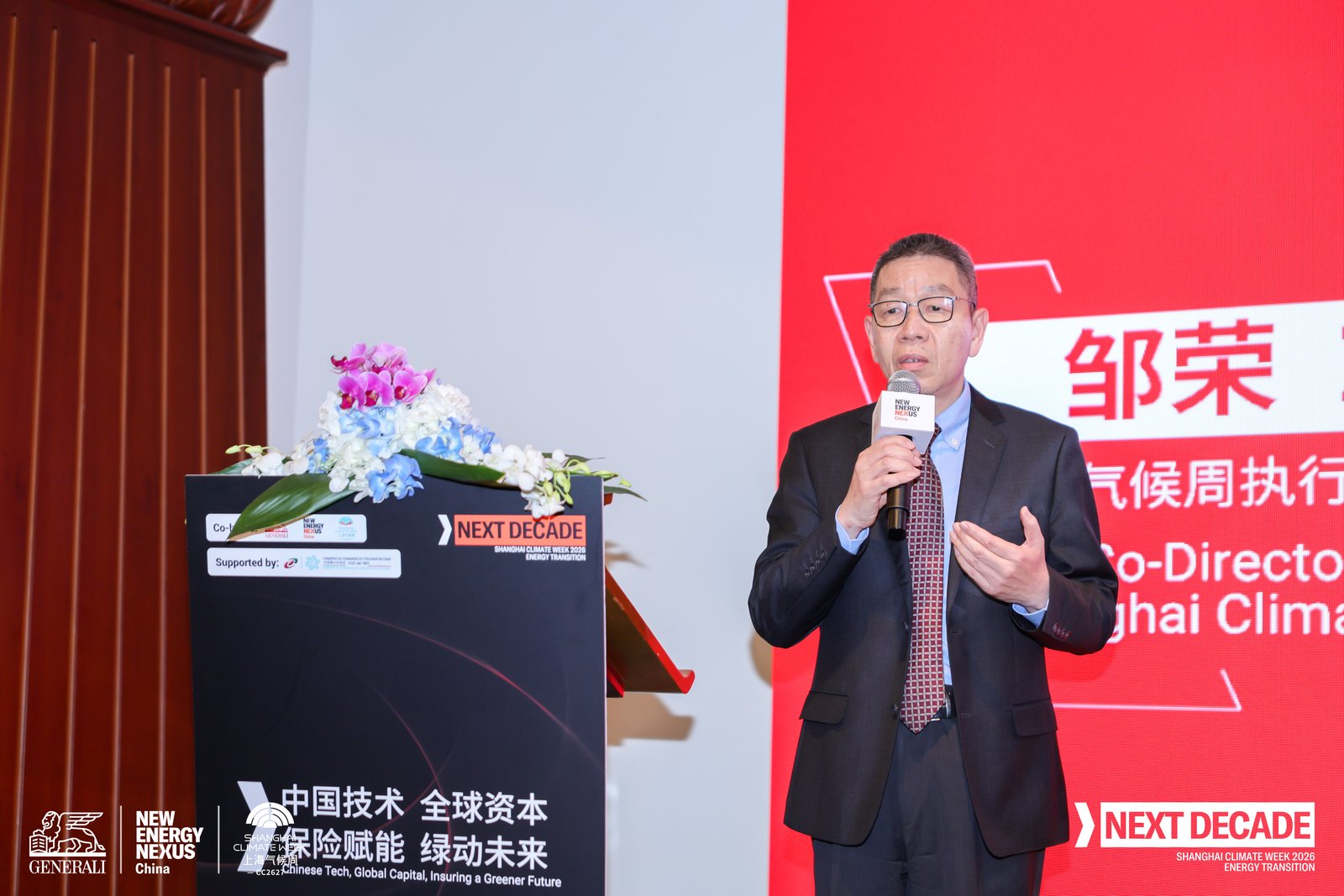
 Foreign Delegates Seek Alliances Not to Sell Things at Shanghai Climate Week, Co-Chair Says
(Yicai) April 24 -- Delegations from many countries have come to this year's Shanghai Climate Week looking for cooperation opportunities and models to learn from, unlike three years ago, when they were here to sell things, according to the co-chair of the event's executive committee.
The shift in delegates' approach to the Shanghai Climate Week is "amazing," Zou Rong told Yicai at a concurrent forum yesterday.
Delegations from Southeast and South Asia, Europe, and North America converged on Shanghai for a series of activities spanning industrial park tours, finance forums, technology exhibits, and community events, aiming to understand the many dimensions of China's energy transition approach.
Despite China's green industries leading the world, the information gap remains striking, Xiao Jie, general manager of New Energy Nexus China, told Yicai. Many overseas delegations, including experts from well-known think tanks and relevant industries, still hold views on the country's development that are 10 to 15 years out of date, Xiao pointed out.
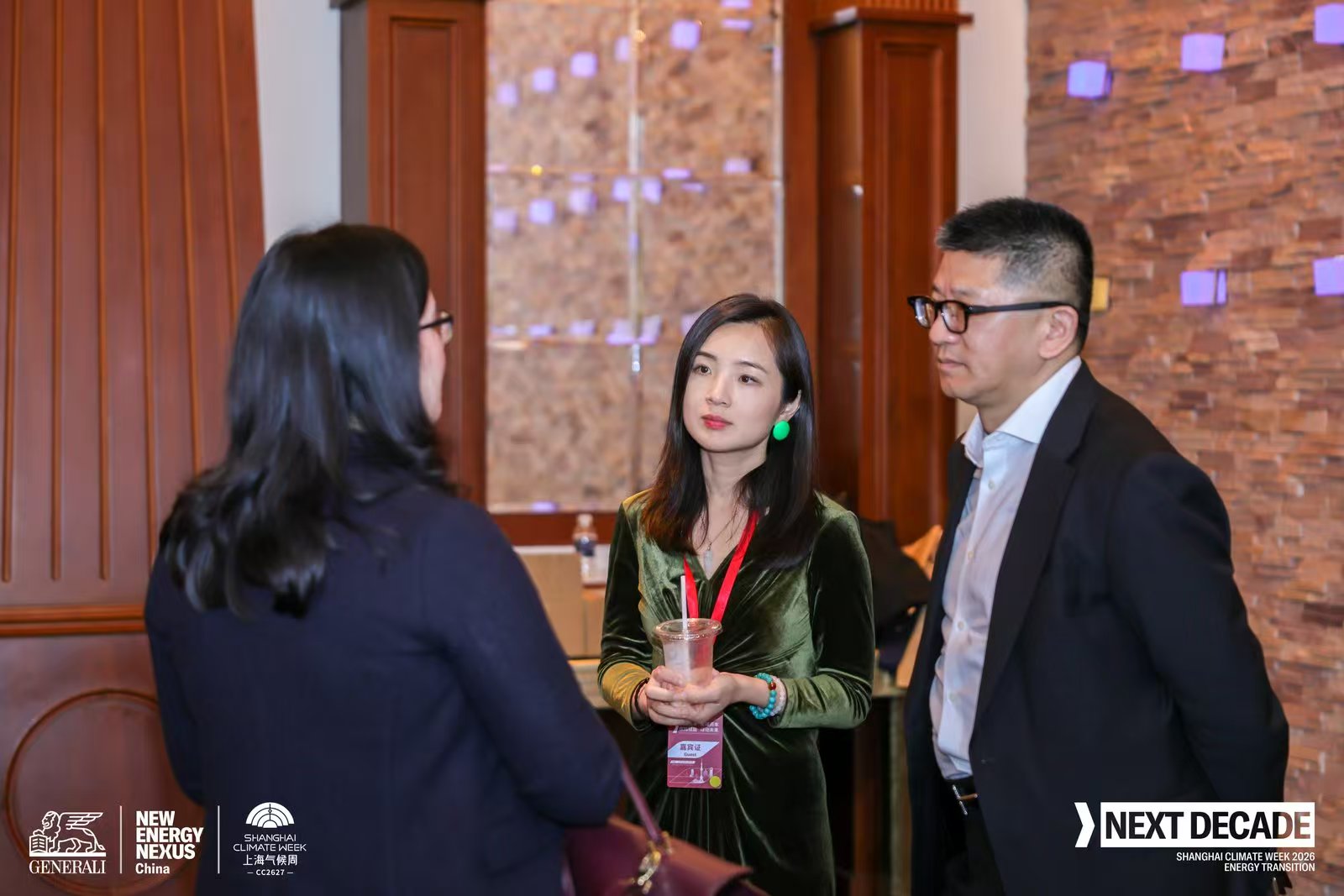
What has astonished visitors is not just the policy framework, but the speed of technological iteration, the degree to which firms aligned with policies, and the business logic underpinning the entire transition, Xiao noted, adding that it is not only the products, but China's outstanding business and operation models that deserve to serve as global reference.
However, exporting China's experience abroad is far from a simple copy-paste job, she stressed.
Radtasiri Wachirapunyanont, program director for Thailand at the Tara Climate Foundation, told Yicai that the organization saw firsthand how "the Chinese government works with the private sector to scale up" the promotion and production of solar panels during a visit to the Suzhou Industrial Park. "We are inspired by the depth and efficiency of this public-private partnership."
However, "copying" China's success will not be easy, considering its political stability, infrastructure, and technology, Wachirapunyanont noted. Without a modernized grid and financial incentives like "soft loans" to stimulate local demand, Chinese technology remains a stranded asset, he said.
The Tara Climate Foundation needs a "knowledge transfer from China" to identify which part of the supply chain makes sense to adopt locally, Wachirapunyanont added.
"It's more like assembling Lego bricks, you break finance, technology, and policy apart and then reassemble them according to local conditions," Xiao pointed out. For example, the Philippines has abundant solar resources but suffers from policy implementation gaps, so what China's experience can provide is a modular reference, not a ready-made solution, she said, adding that New Energy Nexus's first Philippine distributed solar pilot project has achieved phased results.
Regarding the narrative circulating in Western media that China's new energy sector suffers from "overcapacity," Xiao said that "there is no overcapacity at all; rather, demand in other countries hasn't been fully unlocked." Without China's supply chain, the cost and scale targets of the global energy transition would be virtually impossible to achieve, she stressed.
Despite a commanding position in clean energy manufacturing, China still lacks commensurate recognition of its value and a voice in shaping global governance rules, Zou pointed out. "In the application of standards and the articulation of ideas in an international context, our voice is still very small. We are earning mostly the hard-working money from products, and have not yet fully captured the premium on value."
Climate issues have long ceased to be purely environmental concerns, "reaching into the economy, and even touching on culture, politics, and broader strategic configurations," Zou said. "This is precisely why the Climate Week exists, not only to share technical experience, but to carve out space for China's green actions to be understood and accepted within an international context."
Shanghai Climate Week has positioned itself under the slogan "China Action, Asian Voice, World Standards." Last year, the organizing committee expanded its activities to seven cities across Asia, from the textile sector's green transition in Bangladesh to water governance in Malaysia and green supply chains and energy systems in Thailand, progressively testing the applicability of the "Asian Voice" concept across different environments.
Those accumulated experiences have presented a clear sense that Southeast Asia's appetite for China's green development path is real and pressing, Zou said, adding that the next step is to "build dialogue and break through bottlenecks."
As Chinese companies expand overseas, the challenge has shifted from selling equipment to delivering systems engineering, which requires technological adaptation, risk management, and cross-sector collaboration, or as one participant at the event put it: "You have to make others understand your model before it can be accepted."
Editor: Martin Kadiev