 China’s Geely to Take Over Idle Ford Workshop in Valencia, Spain, Report Says
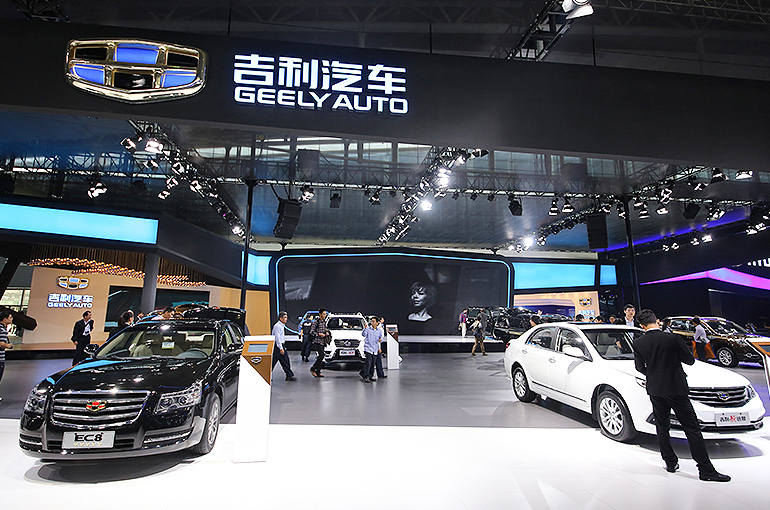
(Yicai) May 7 -- China’s Geely Automobile Holdings, whose brands include Lotus, Polestar, and Volvo Cars, has agreed to buy Ford Motor's idle workshop in Valencia so as to build cars in Spain, according to a media report.
Geely will buy the Body 3 assembly shop of Ford's Almussafes plant, La Tribuna de Automoción reported yesterday, citing industry sources. Geely plans to manufacture at the factory a new energy vehicle model based on its Global Intelligent New Energy Architecture, as well as another model for Ford, the report said.
Ford said no final decision has been reached and Geely's spokesperson for Europe said the Chinese company does not comment on speculative reports.
A source familiar with the matter told Yicai that Geely and the US automaker have been in contact for some time, but it is still uncertain whether a final agreement has been reached.
If a deal goes ahead, Geely could save on high import tariffs, and Ford could enhance the capacity utilization rate of its Valencia factory, according to analysts.
Last year, production at the plant dropped nearly 18 percent to 98,500 vehicles from 2024, well below its designed annual 400,000 capacity.
Taxes on Chinese electric vehicles exported to the European Union can reach as much as 45 percent, so in recent years China’s carmakers have been setting up overseas production facilities and building local supply chains, as well as acquiring idle production capacity abroad.
BYD bought Ford's Camaçari plant in Brazil in 2023, and Great Wall Motor acquired General Motors' assembly plant in Thailand in 2020. Mercedes-Benz Group was reported in March to be considering selling its South African factory to Great Wall Motor, and Chery Automobile reached a deal with Nissan Motor in January to buy its Rosslyn plant in South Africa by mid-2026.
Given the EU’s anti-subsidy tariffs on Chinese EVs and the high import tariffs on complete vehicles in emerging markets, acquiring and retrofitting existing production lines overseas has become one of the best ways for Chinese automakers to expand internationally. Compared with greenfield construction projects, which often takes three to five years, buying and upgrading an existing factory can usually bring production online in about a year.
The sustained growth of Chinese auto sales abroad reflects the country's industrial advantages during the global transition from the internal combustion engine to new energies, said Cui Dongshu, secretary-general of the China Passenger Car Association.
That shift is pushing the global car industry away from a structure dominated by Europe, the United States, and Japan toward one involving China, the US, Europe, and Japan, Cui added.
Still, data from Roland Berger shows that the localization rate of Chinese automakers overseas remains in the third rank, much lower than the more than 80 percent localization level of Japanese and European brands.
Editor: Futura Costaglione