



 Hang Seng Tech Index to Add Almost 70% More Stocks, Opening Door to AI Firms and Volatility
(Yicai) Oct. 8 -- Hong Kong's Hang Seng Tech Index will expand to 50 constituent stocks from 30 in a move aimed at reducing its reliance on internet giants and increasing its exposure to smaller, high-growth technology companies.
The index, which tracks leading technology companies listed in Hong Kong, will add 20 stocks to broaden its market coverage. The new constituents will be announced on Nov. 20, with the changes taking effect on Dec. 7, Hong Kong-based index provider Hang Seng Indexes said yesterday.
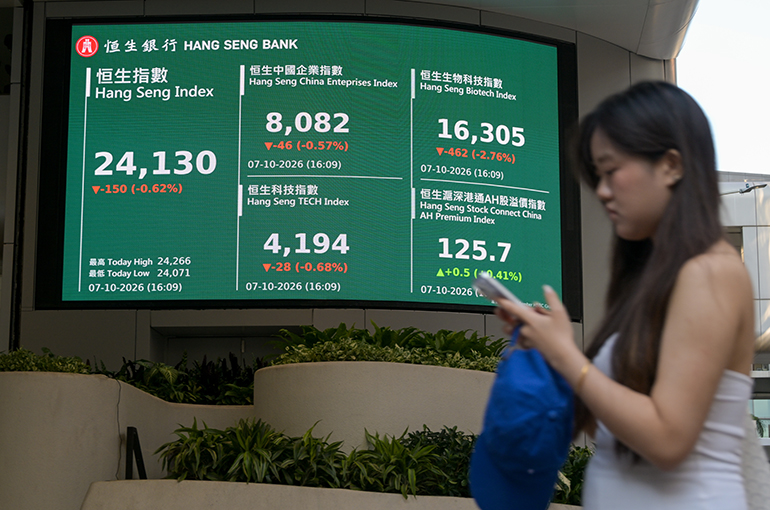
The announcement failed to lift the Hang Seng Tech Index today, with the benchmark closing down 2.9 percent. Amid expectations of interest rate hikes by the US Federal Reserve, the index has been on a sustained downward trend since Aug. 11, hitting a two-year intraday low of 4,065.18 points today.
Still, existing stocks will dominate the index. Hang Seng Indexes' latest estimates show that the 20 new constituents will account for about 10 percent of the index's weighting, while the existing 30 stocks will retain around 90 percent.
The expansion could give smaller, high-growth companies, particularly those involved in artificial intelligence, greater representation in the benchmark. However, analysts warned that adding more volatile and unprofitable businesses could increase fluctuations in the index and put pressure on its long-term performance.
Expanding the number of constituents will make the index more representative of Hong Kong's technology sector and reduce its excessive dependence on share price movements among a few internet giants, Ronald Wan, chief executive of Partners Capital International, told Yicai.
The change will also allow smaller, high-growth companies specializing in advanced technologies, such as AI, to enter the index, significantly broadening its coverage, raising its median revenue growth rate, and reducing its concentration, Wan said.
Greater AI Exposure Brings New Risks
Yu Fenghui, an adviser to the Top 100 Hong Kong Listed Companies Research Center, said the expansion will help reduce the weighting of major technology companies while increasing the representation of AI-related stocks.
The change essentially marks a shift in the index's positioning from an indicator of leading platform economy companies to a broader technology growth benchmark, allowing index investors to benefit from growth across the AI industry chain, Yu noted.
However, Hong Kong's stock market still has relatively few companies with proprietary core AI technologies and the ability to generate profits at scale, Yu pointed out.
The expansion could therefore bring in some companies that are still largely driven by market expectations, have yet to turn profitable, or derive only a small proportion of their revenue from relevant technology businesses, he said. Including such volatile stocks could push up the index's valuation levels while also increasing fluctuations in its performance.
Li Zemin, chief investment officer of Blue Water Capital Management, said the index's long-term investment returns will ultimately depend on the sustained operating growth of its constituent companies.
Some newly listed technology stocks have surged so sharply following their market debuts that their valuations already reflect more than a decade of expected earnings and revenue growth, Li noted. Including these stocks could weigh on the index's long-term performance, he warned.
Editors: Tang Shihua, Emmi Laine





