



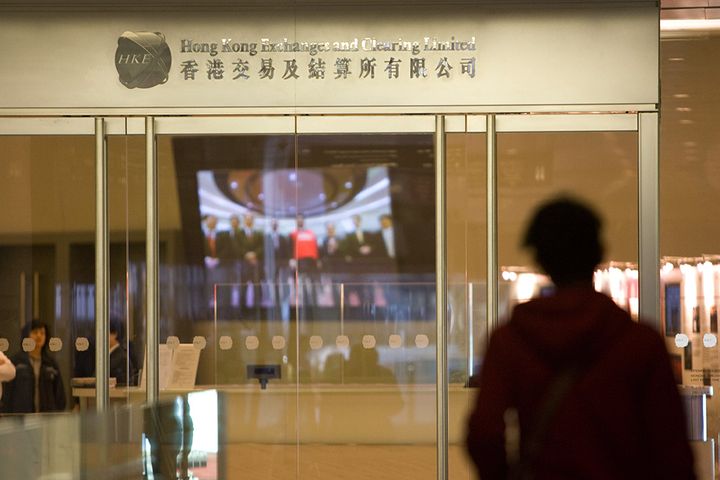
 Hong Kong Exchange's New Board Will Attract Excellent New-Economy Companies, JPMorgan Says
(Yicai Global) July 27 -- The Hong Kong stock exchange's move to set up the New Board is an excellent way to attract new-economy companies to go public in the city, said Houston Huang, head of global investment banking for China at JPMorgan Chase & Co. [NYSE:JPM]
Huang believes the New Board will be historic and revolutionary for the Hong Kong market. If the proportion of companies running traditional businesses is too high, the market's overall value will be lower. This goes against long-term development and attracting new-economy companies, he added.
The Hong Kong exchange issued a consulting paper on the establishment of the New Board in June.
Traditional-economy companies dominate the Hong Kong market with a 60-percent share, Huang said, while the proportion of new-economy firms, excluding Chinese tech giant Tencent Holdings Ltd. [HKG:0700], is less than 5 percent.
"The new economy includes areas like fintech, new retail, smart technology, intelligent logistics, new-energy vehicles and biotech, which can really drive China's economic development," he added.
"The New Board provides a platform for new-economy enterprises to take advantage of the capital market by discovering value and seeking further development," Dr. Wenli Zhao, chief strategist at China Merchants Securities Hong Kong told Yicai Global. "Even if only a few companies can evolve into leading tech stocks and move onto the main board, it will help fuel the vitality and potential of Hong Kong stocks in the long run."
Profit should not be the primary criteria for new-economy companies listing in Hong Kong, Huang added. They should instead focus on the volume of customers, development scale and speed or its market position in certain segments. The stock exchange has realized this issue and will actively reform, he said.
The New Board may include firms with "the same share but with different rights" to endow listed companies' management with more freedom to avoid hostile takeovers, Huang continued. Of the 116 US-listed companies from mainland China, 33 of them adopt a structure with different voting rights, including 18 tech firms.
He suggested programs be rolled out to enable eligible companies to take this share to the New Board, but the exchange should bring in regulation to cover information disclosure and governance structure to protect the interests of small- to medium-sized investors.
Many Chinese customers have shown a lot of interest in the New Board, Huang said, including some US-floated companies that are preparing to de-list.
"If the New Board can be put in place quickly, some companies will be very interested in listing in Hong Kong," he added, "and JPMorgan is willing to make suggestions for the launch of the New Board.
"Hong Kong's capital market has adequate funds but lacks startups with cutting-edge technologies. The New Board will help shareholders, entrepreneurs and other parties all come out on top."





