



 League Soccer Teams Are Taking Shape at County Level in China as Local Interest Grows
(Yicai Global) July 4 -- Chinese Super League and China League One soccer teams used to be found only in big cities, but as local spending power grows they are now appearing in smaller urban areas and counties as well.
On July 1, Guangxi Pingguo Haliao Football Club announced the signing of five new players, including Li Xuepeng and Hu Rentian, two former national team players. The team already has two former national team players.
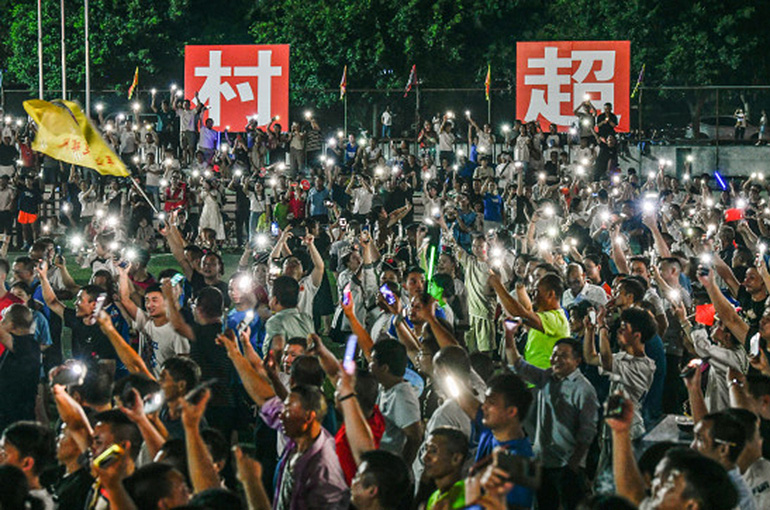
Pingguo has a permanent population of only 450,000, with 210,000 not living in the urban area. But since the first game of the new season on April 22, Pingguo City Stadium has welcomed more than 15,000 fans for almost every game, ranking first for League One attendances.
Chinese counties are also home to three Super League teams, including Meizhou Hakka and Nantong Zhiyun.
A few years ago, teams were mainly based in first- and second-tier cities and some prefecture-level cities. For example, in the 2015 Super League, all of the 16 teams were in cities directly under the central government and provincial capitals.
At that time, Chinese Super League teams often invested hundreds of millions of yuan (tens of millions of US dollars), which meant that only large businesses in big cities could support their development. But amid the shifting fortunes and popularity of league soccer in recent years, team investment and player salaries have tumbled, making funding less of an issue.
County residents have increasingly diverse interests and spare time pursuits, with sport and new forms of entertainment becoming more popular, Niu Fengrui, president of the Chinese Small and Medium-sized Cities Research Institute, told Yicai Global, adding that hosting sports events helps to drive the development of local economies by boosting the tourism and catering industries.
Having a Chinese Super League or China League One team also has a big effect on improving the image of small cities, so local authorities have been supporting soccer teams. At the same time, the improvement of China’s transportation infrastructure in recent years has made it easier for fans to travel and support their teams.
Zhang Yi, head of commerce at Guangxi Pingguo Haliao Football Club, told Yicai Global that the team’s home stadium has been full for each game this season, and many fans are from surrounding cities. The hotels and night market restaurants around the stadium are always crowded on game days, which has boosted Pingguo’s economy.
Editor: Tom Litting





